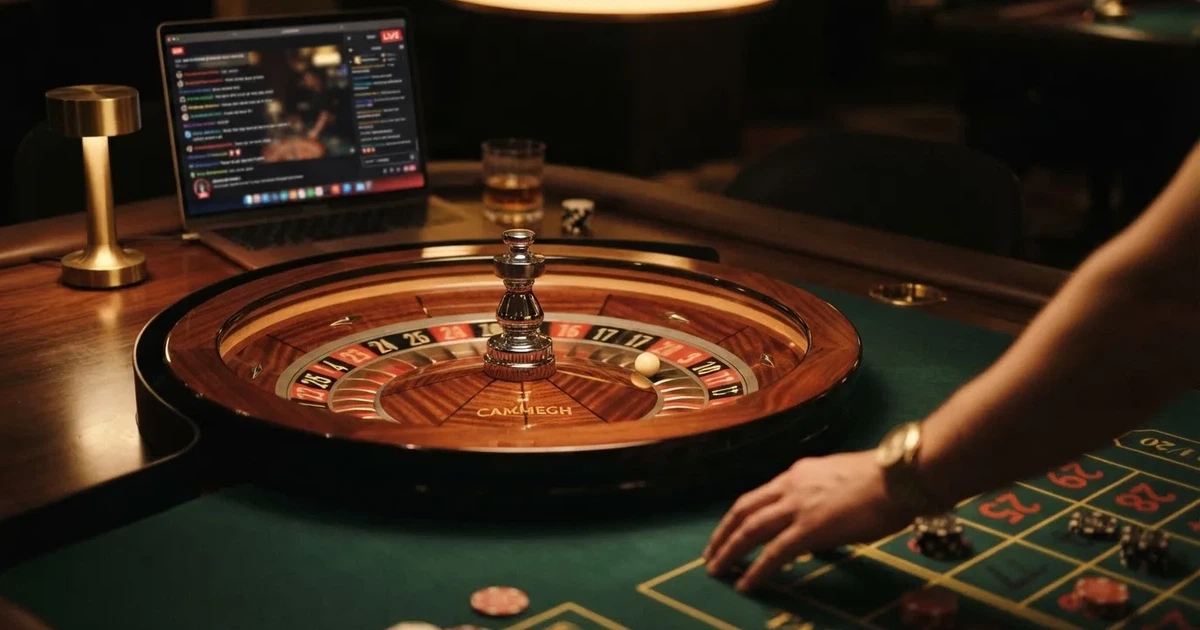
UK Live Casino Game Shows in 2026: Studios, Limits and the Real Cost of a Bonus
 Available in GB
Data current as of 24 September 2026; licence claims checked against the Gambling Commission’s public register.

The first live casino game show was Evolution’s Dream Catcher, launched in 2017. The category now includes wheel, card and crash formats streamed from purpose-built studios, all running under the same Gambling Commission licence that binds online slots. A UK player weighing a game-show bonus today is weighing it against the 10x wagering cap that took effect on 19 December 2025, the GAMSTOP obligation every licence carries, and the credit-card ban in force since April 2020.
Table of Contents
The Jurisdictional Frame: What a UK Licence Actually Means
The Gambling Commission is the regulator. Sponsored by the Department for Culture, Media and Sport and operating under the Gambling Act 2005, it covers Great Britain — England, Scotland and Wales, not Northern Ireland. The 2014 Gambling (Licensing and Advertising) Act closed the offshore route: any operator taking customers in Great Britain needs a Commission licence wherever in the world it sits. A Curaçao, Maltese or Gibraltar licence is not a substitute. Section 33 of the 2005 Act makes it an offence to provide gambling to people in Great Britain without one — aimed at the operator, not the player.

As of 18 September 2026, the Commission’s public register listed 139 businesses holding an active remote casino operating licence. The register is searchable online and downloadable in full as CSV or Excel. It is the whole test of whether a brand holds a licence: the domain name goes in, the account number and licence number come out. A remote casino licence on the register takes the form account-R-number-suffix, where the leading six digits repeat the licence holder’s account number, the R marks it as remote, and the suffix is the revision count.
Three further layers stack on top of the statute. The Licensing Conditions and Codes of Practice — LCCP — bind every licence to a social responsibility code and ordinary code provisions. The social responsibility code requires age and identity verification before any play, and that requirement has been in force since 7 May 2019. The Remote Technical Standards — RTS — bind the operator on the operational side: revised standards took effect on 17 January 2025, extending rules that already applied to online slots, including autoplay restrictions and a minimum speed of play, to other online gaming products. Live game shows fall into that category. The same standards require systems not to use winning-style auditory or visual effects to celebrate a return that is less than or equal to the player’s total stake, and require net spend and net time in play to be displayed on the player interface.
For the player, the practical shape of the licence is a set of ceilings and gates. Minimum age 18, verified before any deposit or wager. A stake ceiling of £5 per game cycle for players aged 25 and over, in force from 9 April 2025; £2 for 18-to-24-year-olds, in force from 21 May 2025. There is no state-set deposit or loss ceiling, but a prompt to set a financial limit before the first deposit has been required since 31 October 2025. Auto-play was banned on online slots, with operators given until 31 October 2021 to fully implement the change, after research indicated the feature caused players to lose track of their gambling activity. A slot spin may not be faster than 2.5 seconds. Losses disguised as wins are banned. Bonuses are capped at 10x the bonus amount, with mixed-product offers — bet on sport, get casino spins — banned under the same rule.
The Commission’s enforcement does not include ISP-level blocking. What it has is disruption: cease-and-desist notices, search-engine delisting, payment and hosting referrals. For a player at an unlicensed site, the consequence is the absence of everything the licence brings. No GAMSTOP, no Commission complaints route, no approved alternative dispute resolution. The penalty is not a criminal one aimed at the player; it is the loss of the framework.
The age-based stake limits are anchored to a public-health case the UK government set out when announcing the change. That case cited 18-to-24-year-olds as having the highest average problem gambling score of any age group, alongside lower disposable income and ongoing neurological development. The reasoning was directed at online slots, but the broader safer-gambling regime — speed of play, autoplay, identity, deposit prompts — applies across online gaming products including live game shows.
Players pay no tax on gambling winnings in the UK. Operators pay Remote Gaming Duty, raised from 21% to 40% from 1 April 2026. Treat the 40% as a model figure, not an HMRC-confirmed rate.
Safer Gambling Around the Wheel
GAMSTOP is the national online self-exclusion scheme, and since 31 March 2020 every online licence has carried GAMSTOP participation as a mandatory condition. Self-exclusion runs for six months, one year or five years, and cannot be cancelled early — the operator cannot override it, and the player cannot undo it inside the period. A Commission-licensed site that does not check GAMSTOP on sign-up is in breach of its licence. For someone playing a live game show, GAMSTOP excludes them across every Commission-licensed operator simultaneously, regardless of which studio’s wheel they prefer.
Identity verification runs before any play. The Commission’s rules require the operator to confirm the customer’s name, address and date of birth against documents or against data the operator holds, with the requirement in force since 7 May 2019. No deposit can be taken and no wager placed until that check has cleared. Anonymous play is not possible at a Commission-licensed site — even where the payment method is an e-wallet, the customer is on file.
Financial vulnerability checks run at £150 net deposits in a rolling 30-day window, in force from 28 February 2025. The check uses public data only, not credit-file data. Wider financial risk assessments have been announced but are not yet in force. The £150 trigger is the level at which the operator must look; it is not itself a deposit limit. A player passing £150 in net deposits over a 30-day window has triggered an affordability check, not a stop.
The customer-facing layer runs deeper still. Every licensed site must offer deposit limits; since 31 October 2025, the operator must prompt the customer to set one before the first deposit. Time-out, reality checks, net spend and net time in play are required under the revised Remote Technical Standards. Auto-play is banned on slots, and reverse withdrawals were banned from 31 October 2021 — funds the customer has requested to withdraw cannot be put back into play. A player who has set a deposit limit on Monday and tries to override it on Friday cannot do so without a cool-down period the operator is obliged to enforce.
Credit cards have been banned for gambling since 14 April 2020, including credit-card-funded deposits routed through e-wallets. There is no exception for live game shows: a credit card cannot fund a bet on Crazy Time or on Aviator at a Commission-licensed site. The bank or the e-wallet will block the transaction; the operator cannot accept it.
Help is at the National Gambling Helpline, run by GamCare, and through GambleAware. The Commission’s complaints route runs in parallel — for a player at a licensed site, the route is documented in the operator’s terms, ending in an approved alternative dispute resolution provider. For someone who has not set any of the safer-gambling tools up before playing a game show, the protections still bite on the next session: GAMSTOP will exclude them across every Commission-licensed operator simultaneously, and the operator they last played at must close the account under the GAMSTOP process.
The credit-card ban and the GAMSTOP obligation apply to live game shows as they apply to slots. The 2.5-second slot-spin floor does not have a direct game-show equivalent — wheel spins and crash rounds run on different timers — but the spirit of the rule, slowing the loop, is the same. A round every few seconds on a wheel, a multiplier curve updating several times a second on a crash game, is the production value a player is paying for with their time as much as their stake.
Paytables and Wheels: How the Studios Structure a Game Show
Evolution AB is the studio that named the format. Founded in 2006 and headquartered in Stockholm, the company launched its first live game show, Dream Catcher, in 2017, and has used the “Game Shows” label for the category since. Dream Catcher is played on a vertically mounted wheel with 54 segments: 52 are numbered (1, 2, 5, 10, 20 or 40) and two are multiplier segments (2x and 7x). The player bets on which number the wheel will stop on. If the wheel lands on a multiplier, the next spin’s payout is multiplied by that value before the result is taken. The format is deliberately simple: pick a number, watch a presenter, win or lose on the spin. It reads as television more than it reads as a casino.
Evolution expanded the category in 2019 with MONOPOLY Live and Deal or No Deal Live. MONOPOLY Live pairs the money-wheel format with a virtual 3D bonus round built on the Hasbro property; Deal or No Deal Live replicates the television show’s banker-offer mechanic inside a studio set. Both titles reach the player through the same vertically mounted wheel as Dream Catcher, with the same numbered segments — the difference is the bonus layer above the wheel.
Crazy Time followed in 2020 and is among the better-known Evolution game shows. It uses a two-reel Top Slot above the main money wheel, plus four bonus rounds (Coin Flip, Cash Hunt, Pachinko and Crazy Time). Funky Time, a 1970s disco-themed live game show, arrived in 2023, building on the same underlying wheel mechanic with a different visual frame. In 2020, Evolution acquired NetEnt and Red Tiger — both slot and game-content studios — bringing the slot catalogue under the same roof as the live studios, and tightening the integration between the two halves of the platform.
Outside the wheel formats, Spribe’s Aviator is the live game show category’s notable counter-example. Aviator is a crash-style multiplayer casino game: a multiplier curve rises from 1.00x, and the player must cash out before the curve randomly crashes. The round is not hosted by a presenter in the same sense as a wheel game; the curve is animated, and the multiplayer chat is the social layer. Spribe was founded in 2018; Aviator was released in 2019. Spribe’s CEO has described Aviator as “the first true multiplayer crash game in the regulated igaming space”, and the studio reports more than 42 million active users with around 350,000 bets per minute across more than 5,000 operators worldwide. The figure is for the global market, not the UK specifically, and the crash-format product sits under the same Commission licence regime as the wheel formats when it is offered to UK players.
The wider live casino lobby sits alongside game shows without crossing the line. Its origins are disputed: some accounts trace baccarat to 19th-century France, others to Italian soldiers at the end of the 15th century, and the modern Punto Banco variant that dominates online play developed in Havana during the 1940s. In Punto Banco the casino banks the game at all times, and both hands are dealt out according to fixed drawing rules; the player makes no strategic decisions. Chemin de Fer, the most popular French variant, gives players a strategic choice and includes an element of skill that Punto Banco does not. A live casino game show, by contrast, can offer strategy in places — which bonus to enter, which multiplier band to back — but the wheel or the curve decides the round, not the player.
The formats diverge on the production side. They share the regulatory frame. Every live game show streamed to a UK player runs under the same revised Remote Technical Standards as online slots — net spend and net time in play must be displayed, winning-style auditory or visual effects are banned for returns at or below stake, autoplay is restricted, and the spin (or in this case the round) cannot be faster than the prescribed minimum. The 2.5-second slot floor has no exact mirror on a wheel game, but the spirit is identical: slow the loop, give the customer time to see what they have spent, and forbid the product from sounding a fanfare for a return that paid back less than the stake.
The category is nine years old at the outside, with Dream Catcher’s 2017 launch as its starting point. A decade from now the format will be ancient by iGaming standards. Right now it is the youngest corner of a Commission-regulated live casino lobby, and the rules that bind it are still being written.
Licensed Sites Compared
The brands below are taken from the Commission’s public register. Each domain is listed against the licence account that runs it, with the remote casino operating licence number. Several brands can share one licensee: Virgin Games and Jackpotjoy both sit under Gamesys Operations Limited on the same account, 38905. That is not a quirk — it is the way the register is set up, and it is the only proof a brand is licensed at all. The subject-support column reflects what the Commission register itself records; the register does not catalogue which studios or which titles a site carries, so that column carries the no-data marker across the row.
| Brand | Licence holder and remote casino licence | Domain status on the Commission register | Subject support |
|---|---|---|---|
| Virgin Games | Gamesys Operations Limited · 038905-R-319430-022 | White-label domain | — |
| Betfred | Petfre (Gibraltar) Limited · 039544-R-319290-010 | Active domain | — |
| Betfair | PPB Games Limited · 039411-R-319335-010 | Active domain | — |
| Sky Vegas | Bonne Terre Gaming Limited · 065519-R-339675-002 | Active domain | — |
| Gala Bingo | LC International Limited · 054743-R-330863-014 | Active domain | — |
| 32Red | Platinum Gaming Limited · 045322-R-324275-019 | Active domain | — |
| Casumo | Recro Limited · 061549-R-336718-002 | Active domain | — |
| Midnite | Dribble Media Limited · 042647-R-321653-022 | Active domain | — |
| PokerStars | Stars Interactive Limited · 039108-R-319334-026 | Active domain | — |
| Jackpotjoy | Gamesys Operations Limited · 038905-R-319430-022 | Active domain | — |
The register is not a comparison of studios or game-show catalogues. It is a comparison of licence holders. What it tells a player is which entity sits behind the cashier, which Commission account would receive a complaint, and whether the brand is running on its own licence or trading under another company’s name. The studio lineup, the bonus structure and the live-casino floor are set by the operator under the licence’s frame, and that frame is what the table above confirms.
Virgin Games — UK-Licensed Remote Casino on a White-Label Arrangement
Virgin Games is listed as a white-label domain of account 38905, Gamesys Operations Limited, holding the active remote casino operating licence 038905-R-319430-022. A white-label site trades under another company’s licence: Gamesys runs the operation; the Virgin brand is licensed through it. That arrangement is recorded on the register exactly as it stands — the player signs up at Virgin Games, but the regulated entity behind the cashier and the complaints route is Gamesys. For a player raising an issue through the operator’s ADR route, the resolution runs against the licence held by Gamesys, not against any separate Virgin entity. The licence number on the cashier page at Virgin Games is the same licence number Jackpotjoy carries on its own — because both sites are Gamesys, with two different front ends.
Betfred — UK-Licensed Remote Casino Behind a Sportsbook
Betfred is listed as an active domain of account 39544, Petfre (Gibraltar) Limited, holding the active remote casino operating licence 039544-R-319290-010. Petfre is a Gibraltar-registered company; the Commission licence is what allows it to take customers in Great Britain. The “R” in the licence number marks it as remote. The brand’s roots are on the high street; the online casino sits beside the sportsbook rather than apart from it. Both halves of the operation clear the same GAMSTOP and identity-verification gates as any other Commission licensee, and the licence account is the one the Commission registers complaints against. A player at Betfred Casino is a player under Petfre (Gibraltar) Limited, not under any other parent — and the Gibraltar registration is a corporate choice, not a regulatory shortcut around the Commission.
Betfair — UK-Licensed Remote Casino From an Exchange Group
Betfair is listed as an active domain of account 39411, PPB Games Limited, holding the active remote casino operating licence 039411-R-319335-010. PPB Games is the casino-facing arm of a group that grew out of a betting exchange; the casino and the exchange sit on different Commission accounts. The casino product must meet the same standards as any other licensee — the 10x bonus cap, the GAMSTOP participation, the deposit-limit prompt — and it does. The exchange does not. A player using Betfair for casino and Betfair for exchange is interacting with two separately licensed entities, both inside the same group.
Sky Vegas — UK-Licensed Remote Casino With a Broadcast Front
Sky Vegas is listed as an active domain of account 65519, Bonne Terre Gaming Limited, holding the active remote casino operating licence 065519-R-339675-002. The Sky name comes from a broadcast partnership; the licensed entity is Bonne Terre Gaming, and the licence is what allows Sky Vegas to operate in Great Britain. The broadcast tie changes nothing about the Commission’s regulatory reach: GAMSTOP, identity verification, the 10x cap and the deposit-limit prompt apply to Sky Vegas on exactly the same basis they apply to any other licensee. What changes is the brand on the front end — and a player looking for the regulated entity checks the licence number, not the broadcast logo.
Gala Bingo — UK-Licensed Remote Casino Under LC International
Gala Bingo is listed as an active domain of account 54743, LC International Limited, holding the active remote casino operating licence 054743-R-330863-014. LC International is the same group that runs Ladbrokes and Coral; the licence number on the Gala Bingo cashier page is the LC International number, not a separate Gala entity. A player comparing Gala Bingo to its siblings — Ladbrokes, Coral — is comparing three routes to the same account, with three different customer-facing skins. The casino product sits beside the bingo product on the same licence; the studio lineup, the bonus structure and the safer-gambling tooling are set by LC International across all three.
32Red — UK-Licensed Remote Casino Under Platinum Gaming
32Red is listed as an active domain of account 45322, Platinum Gaming Limited, holding the active remote casino operating licence 045322-R-324275-019. The 32Red brand predates most of the modern UK-licensed casino market, but the licence account is current. The brand’s age is unrelated to the licence’s currency — a long-standing brand on a current Commission register is no safer or less safe than a newer one, because the framework the licence imposes is the same across the field. What differs between a 32Red-style long-running brand and a newer entrant is the catalogue, the bonus structure and the front-end product, none of which are recorded on the register.
Casumo — UK-Licensed Remote Casino Under Recro Limited
Casumo is listed as an active domain of account 61519, Recro Limited, holding the active remote casino operating licence 061549-R-336718-002. The Casumo name is the customer-facing brand; the regulated entity is Recro. The Commission’s account for Recro has fewer revisions than the long-standing casino operators above it in the table, which reflects a younger account rather than a more lenient one — the licence conditions are identical, applied to a newer operator under the same statutory frame.
Midnite — UK-Licensed Remote Casino Under Dribble Media
Midnite is listed as an active domain of account 42647, Dribble Media Limited, holding the active remote casino operating licence 042647-R-321653-022. Midnite is one of the newer brands on the Commission’s register, and the licence suffix is low — a sign of fewer revisions on this account. The newer-brands carry the same obligations: GAMSTOP, identity checks, deposit-limit prompts, the 10x cap, the credit-card ban, all live. A newer entry on the register does not mean a softer operator; it means a shorter history under Commission scrutiny, which is information a player can weigh alongside the brand’s front-end catalogue.
PokerStars — UK-Licensed Remote Casino Rooted in Poker
PokerStars is listed as an active domain of account 39108, Stars Interactive Limited, holding the active remote casino operating licence 039108-R-319334-026. The brand is rooted in poker; the casino sits beside the poker product under the same Stars Interactive account, with the live game show floor one of several verticals under the same Commission licence. The framework applies to the casino product exactly as it applies to the poker product — and a player moving between poker and casino on the same site moves within a single regulated entity.
Jackpotjoy — UK-Licensed Remote Casino Sharing a Gamesys Account
Jackpotjoy is listed as an active domain of account 38905, Gamesys Operations Limited, holding the active remote casino operating licence 038905-R-319430-022. The licence is the same number carried by Virgin Games; both sites run under Gamesys, and the ADR route is the same on each. A Jackpotjoy sign-up is a Gamesys sign-up, and a complaint at Jackpotjoy resolves against the Gamesys Operations Limited licence, not against a separate Jackpotjoy entity. The shared-account structure is the standout of the comparison: a player signing up at either front end is signing up under the same regulator-facing entity, with the same safer-gambling tooling, the same 10x cap, and the same Commission complaints procedure.
The shared-account structure is the standout of the comparison as a whole. Of the ten brands above, only Gamesys Operations Limited appears twice — running both Virgin Games (as a white-label) and Jackpotjoy (as an active domain). LC International sits behind three of the best-known high-street gambling names in the UK, but only Gala Bingo appears in this list; the table is a snapshot of ten front ends, not of every brand under each parent. The lesson is operational: a player comparing two sites on the table above may be comparing two routes to the same building, and the cashier page — not the homepage — is where that fact shows up.
The Fundamentals: How a Live Casino Game Show Is Built
A live casino game show is a real-money betting product streamed from a studio, presented by a host, with rounds that run on a wheel, a card-draw mechanic or a multiplier curve. The format sits inside the broader live casino lobby — the same studios that stream baccarat and roulette in the evening run the wheel games during the day. The production layer is closer to a television show than to a slot: cameras move between the host and the wheel, the betting window opens and closes, the round resolves on air.
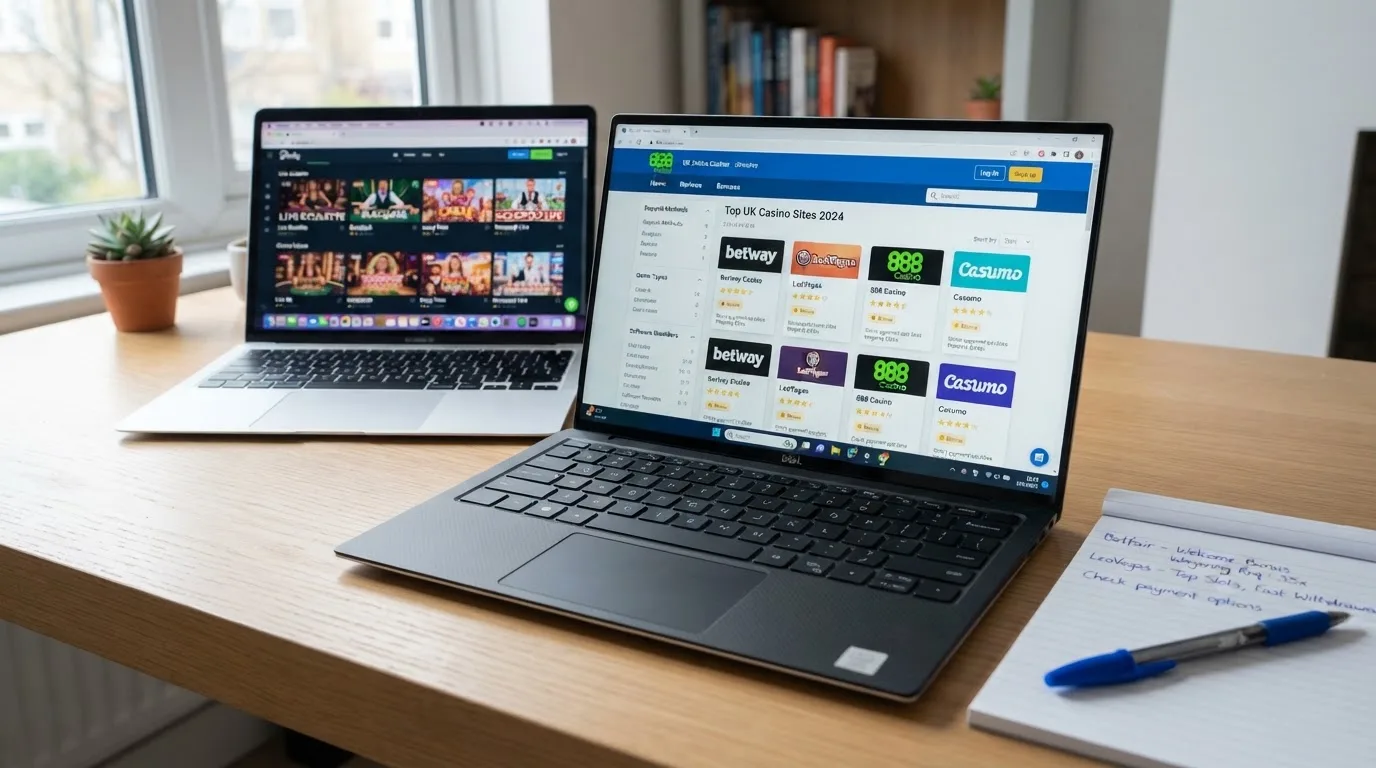
Three structural differences separate a game show from a table game. First, the betting options are designed to be legible at a glance — pick a number, pick a segment, pick a multiplier band. A roulette or baccarat layout reads as a grid; a wheel game reads as a wheel. Second, the round has a presenter and a set. The host is on camera, the studio is lit, the production values are part of the product. Third, the bonus mechanics — Coin Flip, the MONOPOLY board, the Deal or No Deal banker, the crash curve on Aviator — are the point. In a table game the round is the round; in a game show the round is also a route to a bonus layer.
The wider UK online casino market is bigger than the game-show category. As of 18 September 2026, the Commission’s domain list held 1,065 active and 361 white-label website entries — that is the population a UK player can choose from, across every product a Commission licensee can offer. Slots, live casino, sports betting, bingo, poker — all sit under the same licence regime. A wheel-format live game show is one product in that mix, and a relatively young one.
The UK government’s framing for the safer-gambling limits under which game shows now sit cites 18-to-24-year-olds as the highest average problem gambling score of any age group, alongside lower disposable income and ongoing neurological development, as the reasons for a lower online slot stake limit. That reasoning is not stated to extend explicitly to live game shows, but the revised Remote Technical Standards of 17 January 2025 cover both. A spin speed minimum and an autoplay ban apply across slots and other online gaming products. The credit-card ban applies across all gambling products. The 10x wagering cap applies across all bonuses, regardless of which game the bonus is wagered on.
The game show is not a softer product than a slot. The mechanics differ, but the regulatory envelope is the same. What changes is the production frame, and the production frame is what makes a game show what it is.
What a Bonus Costs at the 10x Cap
The Commission’s permanent cap on wagering requirements took effect on 19 December 2025, at 10x the bonus amount. Mixed-product bonuses — bet on sport, get casino spins — are banned under the same rule.
A worked band, holding only the bonus as the wagered amount: a £10 bonus generates £100 of required turnover; a £25 bonus generates £250; a £50 bonus generates £500; a £100 bonus generates £1,000. The condition is the same across the band: the calculation assumes only the bonus amount is wagered, not the bonus plus the deposit. Where an operator’s terms stake the bonus plus the deposit, the required turnover doubles — and the cap is breached the moment the deposit is folded in, which is why the Commission’s rule makes bonus-only the only legal basis.
The cap is silent on the RTP of the game on which the turnover is run. A live game show with a published payout structure sits inside the same arithmetic as a slot: the house edge applies to the turnover regardless of the game’s individual payout ratio. A player clearing a £50 bonus at 10x is putting £500 through a game whose RTP determines what comes back, and the difference between the £500 turned over and what the game returns is the bonus’s true cost. The 10x cap does not address that difference; it only addresses the multiplier above the bonus.
The safer-gambling limits meet the bonus arithmetic in a second place. A player aged 18 to 24 faces a £2 stake per slot spin; a player aged 25 or over faces £5. The total turnover required to clear a bonus does not change with the stake — only the number of rounds does. Lower stake, more rounds, more time at the table. The 2.5-second slot floor slows the loop further, and the autoplay ban means the turnover is run by hand, round after round, with the operator obliged to display net spend and net time in play throughout.
A bonus cleared on a live game show sits inside the same Commission frame as a bonus cleared on a slot: the wagering multiplier cannot exceed 10x, the credit-card ban applies to the deposit that funded it, and reverse withdrawals are not available to chase a near-miss at the cashier. The 10x cap is the maths; the rest is the frame around it.
Frequently Asked Questions
What is a live casino game show?
A live casino game show is a real-money betting product streamed from a studio, hosted by a presenter, with rounds built around a wheel, a card draw or a multiplier curve. The category began with Evolution’s Dream Catcher in 2017; today the major UK-licensed studios include Evolution, Pragmatic Play Live and Spribe. A live game show is not a table game: the production values and the bonus mechanics are part of the product, and the betting options are designed to be read at a glance.
Are game shows streamed from a real studio?
Yes. Wheel-format game shows are filmed in purpose-built studios with cameras between the host and the wheel; crash-format games like Spribe’s Aviator are animated overlays with a multiplayer chat layer. The studio is a regulated environment under the licence, not a recording of a casino floor. Every UK-facing stream runs under a Commission licence, with the studio’s output subject to the same Remote Technical Standards as slots.
Do UK-licensed sites publish payout structures?
It depends on the title. Wheel games publish the segment values and the multiplier mechanics — Dream Catcher’s 54 segments and their numbered values are public. Crash games like Aviator publish the multiplier curve’s behaviour. Sites are required to display net spend and net time in play under the revised Remote Technical Standards, but the underlying RTP is set by the game, not by the site. The Commission’s rules do not require a uniform payout disclosure across live game shows.
Can a bonus be used on a live casino game show?
The Commission’s rules allow operators to set bonus terms; what they cannot do is set a wagering requirement above 10x the bonus, in force since 19 December 2025. Whether a specific bonus is game-show-eligible depends on the operator’s terms. Mixed-product bonuses — bet on sport, get casino spins — are banned under the same rule. A player should check the bonus terms for game-show eligibility before committing a deposit, because the same bonus can carry different game weightings on different sites.
Are game shows covered by the same licence as slots?
Yes. A remote casino operating licence covers all online gaming products the licensee offers, including slots, live casino, game shows, sports betting (where the licence extends) and bingo. The revised Remote Technical Standards of 17 January 2025 brought the speed-of-play and autoplay rules that already applied to slots onto other online gaming products, including live game shows. The 10x wagering cap applies to bonuses on all products, and the credit-card ban applies to deposits across all products.
Do game shows require specific licensing?
Yes, game shows must be operated under a valid Remote Casino Operating Licence issued by the Gambling Commission. Studios providing game content are also subject to rigorous testing standards to ensure fairness and compliance with the Remote Technical Standards, ensuring that all game outcomes are independently verified and transparent for players.
Written by the editors at slotstudiosguide.