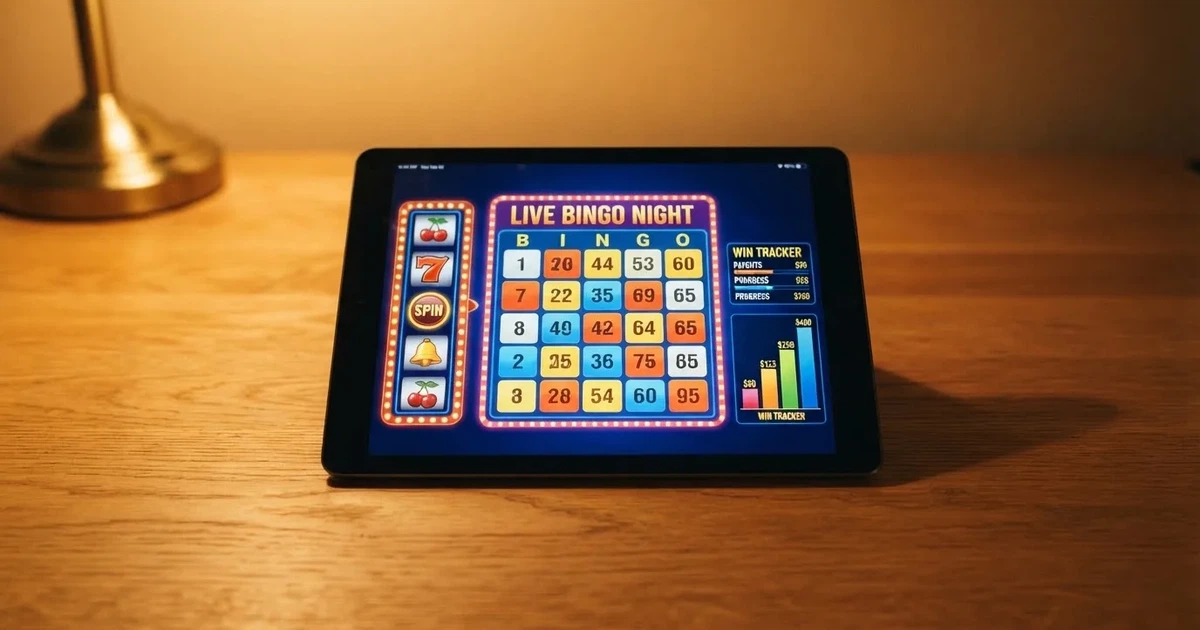
Best Bingo Casinos in the UK: 2026 and What a Licence Actually Buys You
 Available in GB
Bingo in Britain did not start online. It started in Italian lottery halls around 1530, moved to France as Le Lotto, and reached British shores in the eighteenth century, where it settled into working-men’s clubs and eventually the Mecca Bingo halls the Betting and Gaming Act 1960 unleashed from 1 January 1961. The cardboard ticket — nine columns, three rows, twenty-seven spaces, five numbers and four blanks per row — is older than the Gambling Commission by centuries. Online bingo rooms and the bingo-themed slot games that grew alongside them are a far newer layer, and that newness is exactly why the rest of this page matters.
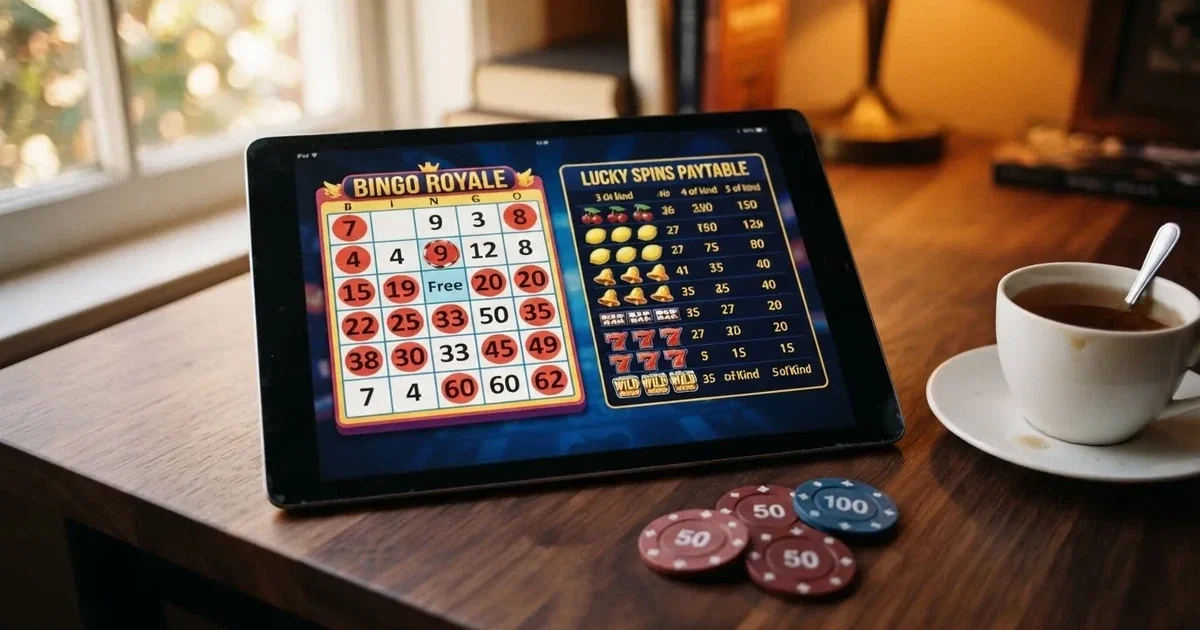
The question “best bingo casinos UK 2026” hides a simpler question underneath: which sites are actually licensed to take a deposit from you in Great Britain, and what does that licence cost them in obligations that, in turn, shape what you get? Every name that follows in this guide appears on the Gambling Commission’s public register of remote casino operating licences. Several share a single licence account (Ladbrokes, Coral and Gala Bingo all sit under LC International Limited, for instance), and one — Virgin Games — is registered as a white-label domain of another licensee rather than as an active brand of its own. None of that makes any of them unsafe; it does mean the comparison has to read the register carefully, because the same corporate parent showing up three times is not three independent operators.
Data current as of 24 September 2026, checked against the Gambling Commission’s public register of remote casino operating licences.
Table of Contents
- The British bingo market at a glance
- What a Gambling Commission licence actually obliges
- Responsible play: what the licence buys when play goes wrong
- Deposits, withdrawals and what “fast payout” actually costs
- Bonus structures on bingo sites: what the £10 and the £500 share
- Mobile and apps: what changes when the room is on a phone
- The games themselves: bingo rooms, bingo-themed slots and what the paytable actually says
- How the ten licensed operators stack up
- What the table leaves out, and what to read next
- Frequently asked questions
The British bingo market at a glance
The register snapshot this page is built against held 139 businesses with an active remote casino operating licence on the day it was pulled. That is the legal ceiling on who can run a bingo-linked casino product for British players. The same register’s domain list — which records each website against the licence account that operates it, marked Active, Inactive or White Label — showed 1065 active and 361 white-label domains on the same day. A white-label entry means a brand trades under another company’s licence: Virgin Games is one such entry, attached to Gamesys Operations Limited rather than to its own account.

That spread, from 139 licensed businesses to over 1,400 branded domains, is the structural fact behind every comparison that follows. The licences are few. The websites running under them are many. The Gambling Commission’s own pages do not rank them; they simply list them in CSV form, and a CSV does not tell a player which one plays better on a Tuesday evening with a hot drink in hand. What it does tell a player is who has paid the application fee (currently between £3,168 and £68,765, depending on annual gross gambling yield, rising further from 1 October 2026), who has cleared the Commission’s licence assessment, and whose domain name is currently sitting on the active list rather than the inactive one.
Bingo itself sits in a peculiar legal corner. It is the only form of gambling the Gambling Act 2005 leaves without a specific statutory definition; the Act states only that “bingo means any version of that game, irrespective of by what name it is described”. The Commission leans on a 1978 Royal Commission description: a lottery played as a game, in which each player receives, for their stake, a set of numbers they have not chosen. Under section 8 of the Act, bingo must be equal chance gaming — no player plays against a bank, and every participant’s chance of winning is equally favourable. That is what distinguishes a bingo room from a bingo-themed slot, and it is the line the rest of this page keeps coming back to.
What a Gambling Commission licence actually obliges
Licensed bingo casinos in the UK do not just have permission to take deposits. They take on a layered set of obligations under the Gambling Act 2005, the Commission’s Licence Conditions and Codes of Practice (LCCP), and the Remote Technical Standards that the Commission enforces. Every one of these obligations shapes what you see on the screen.

Identification before play. Since 7 May 2019, name, address and date of birth have to be verified before the first deposit or any play. Anonymous play is not possible at a licensed site, and that is by design, not by accident.
Affordability and vulnerability screening. Operators must prompt a customer to set a financial limit before the first deposit, a requirement in force since 31 October 2025. Light-touch financial vulnerability checks run at £150 of net deposits in a rolling 30-day window using publicly available data only; wider financial risk assessments have been announced but are not yet in force. The Commission frames this as protection; from the player’s side it reads as paperwork at the point you most want to skip it.
Stake limits, spin speed and the removal of friction. Online slots carry a maximum stake per game cycle: £5 for players aged 25 and over from 9 April 2025, and £2 for 18-to-24-year-olds from 21 May 2025. The government explicitly cited the higher average problem gambling score among 18-to-24-year-olds as the reason for the lower limit. Slot spins cannot run faster than 2.5 seconds, auto-play has been permanently banned, and reverse withdrawals — where a player re-gambles funds they had asked to cash out — were abolished in their final form by 31 October 2021. Losses disguised as wins are also banned.
GAMSTOP. Mandatory for every online licence since 31 March 2020. A player self-excluding through GAMSTOP chooses six months, one year or five years, and cannot cancel the period early. If a brand licensed in Britain does not check GAMSTOP before letting you open an account, that brand is in breach.
Wagering and bonus restrictions. Since 19 December 2025 wagering requirements have been capped at 10x the bonus, and mixed-product bonuses — bet on sport, get casino spins — are out. Credit cards have been banned for gambling since 14 April 2020, including credit-card-funded e-wallet deposits. None of these rules prevents a casino from offering a bonus. They restrict how that bonus is paid, what it costs the player in playthrough, and what payment method can fund it in the first place.
Player tax. None. Players pay no tax on gambling winnings in the UK. Operators pay Remote Gaming Duty, raised from 21% to 40% from 1 April 2026 — a model change whose downstream effects on bonus generosity and game RTP are still being absorbed.
The point of reading these rules in one place is not to turn this page into a legal textbook. It is so that when a brand below is described as offering a “10x wagering” bonus or being limited to £5 spins, you know that this is the floor of what is permitted, not the ceiling of what that brand decided to be generous about. Every number in this section is what the law demands. Every number in a brand write-up is what the brand actually does within that law.
Responsible play: what the licence buys when play goes wrong
A Gambling Commission licence is not just a permission slip. It is the trigger for the player-protection architecture a person lands in when they need it. Three of those mechanisms deserve more than a footnote, because they apply to bingo play exactly as they apply to any other licensed product.
GAMSTOP is the national online self-exclusion scheme. Self-exclusion through GAMSTOP blocks the player from every GB-licensed online operator for the chosen period. The exclusion cannot be lifted early, which matters: a five-year exclusion is a five-year exclusion, and the design treats cooling-off as the exception, not the rule. The catch, and it is the same catch every section on this page comes back to, is that GAMSTOP covers licensed operators. An offshore brand with no Commission licence has no obligation to honour a GAMSTOP registration. That gap is the practical reason the Commission argues, in its own terms, that the licence is itself the player-protection product.
Financial vulnerability screening sits in front of any meaningful play. The light-touch check at £150 net deposits in 30 days is the public-data layer; broader affordability assessments, using more intrusive data sources, have been signalled but are not yet operational. The Commission’s framing puts these checks inside the player-protection bucket. From the player’s chair, they show up as a prompt to confirm income or set a deposit ceiling at a moment when most people want to skip the prompt. The page does not take a view on whether that friction is worth the protection it offers; it notes only that the friction exists, that it is statutory, and that any brand licensed in Britain has to apply it.
Helpline and treatment services round out the support layer. GamCare runs the National Gambling Helpline; GambleAware funds treatment and research across Great Britain. Both are reachable without going through the operator, and both work with players who are self-excluded as well as players who are not. For players whose self-exclusion was triggered by a moment of clarity rather than a crisis, the helpline is often the first call; for everyone else, it remains the last resort that is still there.
The offshore gap sits alongside all of this. Providing gambling to people in Great Britain without a Commission licence is an offence under section 33 of the Gambling Act 2005. The Commission disrupts illegal sites — cease-and-desist notices, search-engine delisting, payment and hosting referrals — but it has no ISP-blocking power. The penalty for playing on an unlicensed site is never aimed at the player; what the player loses on such a site is the protection layer above. No GAMSTOP. No Commission complaints route. No approved alternative dispute resolution. That asymmetry, between licensed and unlicensed, is the one rule of thumb that earns its place on every page that touches British gambling, because no other single fact reshapes the rest of the comparison so cleanly.
Deposits, withdrawals and what “fast payout” actually costs
British players tend to ask about payout speed first and read the bonus small print later, which is the wrong order if the goal is to keep the money once you have it. A licensed bingo casino in 2026 operates inside a fixed set of rules on payment, and those rules do most of the work a reader needs to understand.
Credit cards have been banned for gambling since 14 April 2020, including credit-card-funded deposits into e-wallets that then pay a betting account. That closes off a payment route that used to be common. It also closes off a category of player who would otherwise have used borrowing to fund play, which is the regulator’s stated intent.
Withdrawal friction has been deliberately throttled. Reverse withdrawals — the act of cancelling a withdrawal request and using the money to play again — were banned in their final form by 31 October 2021. Once a player asks for a withdrawal at a licensed site, the money is in motion. The same anti-friction rule that gives a player less room to change their mind also means a withdrawal cannot sit in a pending state for the arbitrarily long periods some sites used to allow.
Deposit limits are now mandatory at the front door. Since 31 October 2025 operators have to prompt a customer to set a financial limit before the first deposit. There is no state-set ceiling on the limit itself; the prompt exists to force the conversation. A player can still set a £10,000 daily deposit limit if the operator’s affordability checks do not intervene, but the conversation has to happen.
Wagering caps shape what you can withdraw from a bonus. Since 19 December 2025 wagering requirements are capped at 10x on any bonus that has a wagering condition at all. A £100 bonus with a 10x cap means £1,000 of qualifying play before the bonus and any winnings tied to it become withdrawable. That ceiling is the rule of the market in 2026. Any bonus that asks for more than 10x wagering is, by definition, on a site that is not licensed in Great Britain, or on a site breaking its licence conditions.
A worked band sits behind this number. With a £10 bonus at 10x wagering, required turnover is £100. At a £1 slot stake that is 100 spins. At the 2.5-second minimum spin interval the Gambling Commission has enforced on online slots, 100 spins takes 250 seconds, or roughly four minutes. With a £100 bonus at 10x wagering, turnover is £1,000 — 1,000 spins at £1, around 42 minutes. With a £500 bonus at the same cap, turnover is £5,000 — 5,000 spins, around three and a half hours of continuous play at the regulator’s minimum spin interval. That band, somewhere between a quarter of an hour and several hours depending on the bonus size, is the real time cost of clearing a wagering-gated bonus in 2026. The arithmetic does not need to be narrated step by step; the band itself is the point. It is what a “10x wagering” line item actually looks like in clock time.
E-wallet withdrawals remain the fastest route at most licensed operators, with bank transfers and debit card refunds trailing. No figure on payout speed for any brand in this guide is given as a specific number, because no figure is given in the research for any of them, and the page does not invent numbers. What the page does say is this: at a licensed site the money moves when you ask for it, the credit-card route is closed, the bonus has a finite playthrough ceiling, and the slot spins in the meantime cannot be made artificially fast to “help” the player burn through them.
Bonus structures on bingo sites: what the £10 and the £500 share
Bonuses at bingo-led casinos in 2026 look varied on the page and behave identically underneath. The variation is in the headline — a “£10 bonus”, a “£500 welcome package”, “free spins”, “tickets” — and the underlying shape is the same. A player deposits (or sometimes does not, in a no-deposit variant), receives a credit, and must play through that credit a set number of times before withdrawing the bonus and any winnings attached to it.
The 10x cap that has applied since 19 December 2025 sets the outer edge. Below that edge the structure looks like this in practice. A no-deposit bonus is small — often £5 or £10 — and arrives without a deposit being made, but carries the same wagering cap and the same game restrictions as a deposit-gated bonus. A deposit-gated welcome offer is larger and ties the bonus to a minimum deposit, again with the 10x ceiling. Free spins attached to a slots launch or a seasonal promotion are governed by the same rule on wagering on any winnings the spins produce, and they are not exempt from the cap because the spins are free.
What does not appear on any licensed bingo casino in 2026 is a mixed-product bonus. The “bet on football, get 50 casino spins” offer that was a staple of cross-vertical marketing for years is gone as a category; the Commission banned the structure in the same package that capped wagering. A bonus is now either a sports bonus or a casino bonus, and the boundaries are enforced.
The game contribution side of a bonus is where the marketing language tends to soften and the small print tends to harden. Slots typically contribute 100% to wagering, which means every £1 wagered on a slot counts as £1 toward clearing the requirement. Table games and live casino often contribute less — sometimes 10%, sometimes 20% — because the house edge on those products is lower and the bonus is harder to clear in absolute terms. Bingo itself, depending on the room and the operator, can contribute at full or reduced rates. None of this is hidden, but none of it is in the headline figure either.
The two figures a reader should keep in front of them when reading a bonus page are therefore the bonus amount and the wagering multiple. Everything else is colour. With a £100 bonus and a 10x cap, turnover is £1,000 and the time to clear it on a slots-only path is somewhere around three-quarters of an hour of continuous play at the regulator’s minimum spin interval and a £1 stake. The house edge on the underlying slots does the rest of the work, and that is the part of the bonus the marketing copy is never going to volunteer.
The connection to the previous section is worth naming. The wagering cap is a payment rule as much as a bonus rule, because what the cap does is shorten the runway between the bonus being claimed and the bonus being cleared. A 10x cap means the casino’s own exposure on a bonus is bounded, which is what allowed the Commission to argue the cap protects players without making bonuses uneconomic for operators. From the player’s chair, the cap is the reason a “small” advertised bonus and a “large” advertised bonus take meaningfully different amounts of time to clear — and the band from a few minutes to several hours is the practical shape of the difference.
Mobile and apps: what changes when the room is on a phone
Most bingo play in Britain happens on a phone or a tablet, and the product has been built around that for long enough that “mobile bingo” no longer means “the website that loads on a phone”. It means a different product surface, with its own constraints and its own failure modes.
The browser-first sites in this guide are, in practice, mobile-first sites. The bingo rooms themselves are lightweight clients — a card grid, a number strip, a chat box — and load fast on mid-range hardware on a typical British 4G or 5G connection. The slot games loaded inside the same product are heavier than the bingo rooms; they are HTML5 or app-shelled products from studios such as Pragmatic Play, Gamesys, Playtech and others, and the bottleneck on a phone is usually the slot game, not the bingo room wrapped around it.
The native-app layer is where the variation between operators shows up. Some brands ship a full native app on iOS and Android; some ship only a progressive web app that lives as an icon and behaves like an app, but is still browser-rendered; some skip the app store entirely and rely on a mobile site that can be added to a home screen. None of those options is uniformly better than the others. The native app tends to handle biometric login and push notifications more cleanly; the PWA tends to be lighter to download and avoids app-store review cycles; the mobile site avoids the install step entirely but loses access to some phone-native features.
Where the regulator’s rules bite on mobile is in the spin-speed and auto-play restrictions. The 2.5-second-per-spin minimum applies on a phone exactly as it applies on desktop. Auto-play is banned across all platforms. A mobile product that lets a player spin faster than 2.5 seconds is a product that is breaking its licence conditions; that is a quick test a player can run by feel alone, without reading any small print.
The GamCare and GAMSTOP layers run on mobile too. A phone-based self-exclusion through GAMSTOP covers the same set of operators as a desktop-based one. A player who needs to reach GamCare’s National Gambling Helpline can reach it from a mobile browser, and the same financial vulnerability prompts that fire on the first deposit on desktop fire on the first deposit on mobile.
What this adds up to is a market where the gap between mobile and desktop is narrowing rather than widening. The bingo rooms were built for mobile first. The slot products inside the bingo product are now licensed for mobile as a matter of course. The app-store-versus-browser question matters for the install step and for push notifications, and not much else.
The games themselves: bingo rooms, bingo-themed slots and what the paytable actually says
A “bingo casino” in 2026 is two products glued together. One is a bingo room — a live or scheduled game where tickets are bought, numbers are called, and prizes are paid according to a fixed pattern. The other is a slot library — several hundred to several thousand individual games, some of them branded “bingo slots” or “bingo-themed” and most of them not. The mechanics of the two halves are different in ways that matter.
A British 90-ball bingo ticket contains 27 spaces arranged in nine columns and three rows, with five numbers and four blanks per row. Tickets are sold in strips of six covering every number from 1 to 90. The winning patterns are one line, two lines and a full house, and the last number called must be part of the winning pattern. The 75-ball and 80-ball variants that appear in US-facing and some international products are rarer in Britain but do exist; the British standard is 90-ball, and the bulk of the bingo rooms on GB-licensed sites run to that format.
A bingo-linked slot, by contrast, is a slots product dressed up with bingo imagery. The reels spin, the paytable pays according to symbol-and-line combinations, and the “bingo” branding is a theme rather than a game mechanic. The RTP on a bingo-themed slot is whatever the developer set it to, which in the GB market typically sits somewhere in the mid-90s as a published figure, with house edge as the remainder. The volatility class is whatever the developer classified, and the spin speed is governed by the same 2.5-second minimum that applies to every other online slot in Britain.
Crash-style games have begun to appear alongside bingo rooms on some products. Aviator, released by Spribe in 2019, is the canonical example: a multiplier rises from 1.00x and crashes at a random point, and the player must cash out before the crash. Spribe describes Aviator as the first multiplayer crash game in the regulated iGaming space, and the title has reportedly passed 42 million active users and processes around 350,000 bets per minute across more than 5,000 operators worldwide. Crash products are slots in the Commission’s classification, which means the same stake limits, spin-speed minimums and auto-play ban apply.
Live casino is the third leg of the typical bingo casino’s product, although it is the leg with the weakest connection to the bingo product the brand is named for. Baccarat, in its Punto Banco form, is one of the live products commonly offered. Punto Banco developed in Havana in the 1940s and has the casino bank the game at all times, with both hands dealt according to fixed drawing rules; players make no strategic decisions. Chemin de Fer, the older French variant, gives players strategic choices and a skill element, but is rarely offered in the British live casino market. The gambling origins of baccarat are disputed — some accounts place it in 19th-century France, others trace it to Italian soldiers at the end of the 15th century — but the game’s current form is the Punto Banco form, and that is the one a British player will encounter.
The practical takeaway from looking at the games layer is that “bingo slots” is not one product. It is at least three: the 90-ball bingo room, the bingo-themed slot, and the crash-style multiplayer game that has come to share the same product surface. They behave differently. They contribute differently to wagering. They have different house edges and different volatility profiles. Treating them as a single thing is the mistake the marketing copy invites, and the mistake the rest of this guide tries to undo.
How the ten licensed operators stack up
The table below reads the Gambling Commission’s public register on the day the data was pulled, and groups the ten featured brands by what is actually comparable: the licence holder and the licence number behind the brand, the status of the brand’s domain on the register’s domain list, and the support the brand declares for the specific subject of this page. Where the register’s domain list shows the domain as Active, the brand is operated directly under the licence account. Where the list shows it as a White Label, the brand trades under another licencee’s permission.
| Brand | Licence holder and remote casino licence | Domain status | Bingo / slots support |
|---|---|---|---|
| Paddy Power | PPB Games Limited — 039411-R-319335-010 | Active | — |
| kwiff | Eaton Gate Gaming Limited — 044448-R-323408-017 | Active | — |
| Betway | Betway Limited — 039372-R-319367-029 | Active | — |
| bet365 | Hillside (UK Gaming) ENC — 055149-R-331499-004 | Active | — |
| Unibet | Platinum Gaming Limited — 045322-R-324275-019 | Active | — |
| 888casino | 888 UK Limited — 039028-R-319297-014 | Active | — |
| Virgin Games | Gamesys Operations Limited — 038905-R-319430-022 | White Label | — |
| Midnite | Dribble Media Limited — 042647-R-321653-022 | Active | — |
| Betfred | Petfre (Gibraltar) Limited — 039544-R-319290-010 | Active | — |
| BetVictor | BV Gaming Limited — 039576-R-319370-028 | Active | — |
The empty fourth column is itself information. None of the ten featured operators in this guide publishes a verified, register-derived statement of support for the specific subject of bingo-linked casino play. That does not mean none of them runs a bingo product; several of them do. It means the research that built this page did not surface a verified figure for any of them on this specific dimension, and an unverified figure is worse than no figure. The page honours that by leaving the column blank rather than inventing a value to fill it.
What the table does establish is the licence-to-domain wiring. Paddy Power runs under PPB Games Limited; the parent matters because the licence conditions sit with the parent, and any complaint or compliance question goes to the licence holder rather than to the brand. Virgin Games sits under Gamesys Operations Limited as a white-label, which means it does not have its own licence account — it operates on Gamesys’s account, with Gamesys carrying the regulatory responsibility. The remaining eight brands run on their own accounts as active domains.
The ten brands below are then taken in the order the research set, and each is read for what the register entry and the licence behind it actually tells a player.
Paddy Power
Paddy Power trades under PPB Games Limited (account 39411), which holds the active remote casino operating licence 039411-R-319335-010. The domain Paddy Power appears on the register as an active domain of that licensee. The licence account number is the leading six digits of the licence number, by the register’s own convention; the “R” marks it as a remote (online) licence. Paddy Power has been one of the highest-profile British gambling brands for decades, and the licence behind it is not new.
The product mix on the brand includes sports betting alongside casino and slots, which puts it in the cross-vertical category the Commission’s 19 December 2025 rule change addressed by banning mixed-product bonuses. A Paddy Power casino bonus in 2026 is therefore a casino bonus, not a sports-bonus-with-casino-spins attached. The bingo product at the brand has historically been more limited than at some of the brands built first around bingo rooms, and the page does not invent a verdict on its current depth.
What the licence entry tells a player is that the brand is operated by a known, regulated entity, the licence is active, and the brand sits on its own account rather than as a white-label. That is the floor. Beyond the floor, the brand’s product is what its own website says it is, and the small print attached to any bonus is the next document to read.
kwiff
kwiff runs under Eaton Gate Gaming Limited (account 44448), which holds the active remote casino operating licence 044448-R-323408-017. Kwiff.com is listed on the register as an active domain under the same licence account. The licence is one of the more recent in the featured set, reflecting the brand’s later entry to the British market.
kwiff built its early reputation on a “surprise” mechanic in which odds or bonuses landed unpredictably on settled bets. The product has since expanded into a fuller casino offering, and the casino side of the brand is what brings it onto a bingo-casinos list in 2026. The research did not surface a verified bingo-specific product claim for kwiff, which is why the brand sits in this guide on its licence entry alone rather than on a claim about the depth of its bingo rooms.
The licence number tells a player the brand is regulated by the Commission and the domain is currently active. The remaining questions — does the brand run 90-ball rooms, does it integrate bingo-themed slots, does it run a crash game alongside — are questions the brand’s own product page answers, not questions the register answers.
Betway
Betway runs under Betway Limited (account 39372), which holds the active remote casino operating licence 039372-R-319367-029. Betway.com is verified on the register as an active domain of the licensee. Our assessment of specific product features on this site is currently ongoing.
The licence account is Betway Limited directly, with no white-label layer between the brand and the licence holder. The “R” in the licence number confirms the licence is a remote casino operating licence, and the active status on the domain list confirms the brand is operating as of the day the data was pulled. That is the comparable footing the table was built to expose.
bet365
bet365 runs under Hillside (UK Gaming) ENC (account 55149), which holds the active remote casino operating licence 055149-R-331499-004. Bet365.com is listed as an active domain linked to that licensee’s account. bet365 is the largest of the brands in this guide by customer base and is one of the most recognised gambling brands globally.
The bet365 product surface in 2026 is broad: sports, casino, live casino, poker, bingo. The bingo product is operated under the same Hillside licence as the rest of the brand, which means the licence conditions that apply to casino and sports apply to bingo as well — GAMSTOP, affordability prompts, the 2.5-second slot minimum, the 10x wagering cap, the credit-card ban. The brand’s size is not the relevant fact here; the relevant fact is the licence and what it obliges.
What the licence entry does not tell a player is how the bingo product compares to the dedicated bingo brands’ rooms. That is a question the product itself answers. What it does tell a player is that the brand sits on its own active licence, and the licence holder is a known Commission-regulated entity.
Unibet
Unibet runs under Platinum Gaming Limited (account 45322), which holds the active remote casino operating licence 045322-R-324275-019. The register links the domain unibet.co.uk to the same licence account as an active site. The brand uses a country-specific top-level domain (unibet.co.uk rather than unibet.com) for its British operation, which is a common pattern for operators that maintain separate products for regulated markets.
The Unibet product in Britain includes casino, live casino and bingo, with the bingo product sitting alongside the rest rather than as a separate brand in its own right. The licence account is Platinum Gaming Limited directly, and the licence number’s leading six digits match the account number, confirming the link.
What the licence entry establishes is that the brand is GB-licensed on its own account. Bingo specific variants — room schedules, ticket price ranges, or game variants — are for the brand’s site to detail; the register provides the licence footing alone.
888casino
888casino runs under 888 UK Limited (account 39028), which holds the active remote casino operating licence 039028-R-319297-014. 888casino appears on the register as an active domain of that licence. 888 UK Limited sits within the wider 888 group and is the licence holder for the brand’s British operation.
The 888 product surface has historically been slots and casino-heavy, with a more limited bingo offering than at dedicated bingo brands. The bingo product is real but secondary to the slots library, and the research did not surface a verified bingo-specific product claim for 888casino.
The licence entry is what the table cares about: the brand is on its own active account, with the licence in the right form and the domain currently active. The product mix is what the brand’s own page tells a player; the licence confirms the floor on which that product is offered.
Virgin Games
Virgin Games runs under Gamesys Operations Limited (account 38905), which holds the active remote casino operating licence 038905-R-319430-022. The domain Virgin Games is recorded on the register’s domain list as a white-label domain of that account, not as an active domain of a Virgin-owned account. This is the structural distinction that matters most for this brand.
A white-label registration means Virgin Games trades under Gamesys Operations Limited’s licence rather than under its own. The regulatory responsibility — GAMSTOP integration, affordability checks, the bonus and wagering rules, the slot spin-speed minimum — sits with Gamesys. Virgin Games provides the brand surface; Gamesys provides the licence and the operational layer underneath.
Gamesys Operations Limited is one of the longer-established bingo operators in the British market, and the bingo product at Virgin Games is run on Gamesys’s bingo platform. The page treats the brand as a Gamesys-operated white-label rather than as an independent operator, and the table’s column on domain status makes that explicit. From a player’s perspective, the practical consequence is that complaints, compliance questions and self-exclusion interactions all sit with Gamesys.
Midnite
Midnite runs under Dribble Media Limited (account 42647), which holds the active remote casino operating licence 042647-R-321653-022. Midnite.com shows as an active domain for that licensee on the register. The hero image for this guide sits against this licence entry because Midnite is one of the more recently licensed operators in the featured set.
Midnite entered the British market as a sports-led brand and has since expanded into casino and slots. The bingo side of the brand is one of the products the research did not surface a verified claim for, and the brand sits in the table on its licence entry alone. The licence is current, the domain is active, and the licence holder is Dribble Media Limited directly with no white-label layer.
Comparisons regarding product depth or room schedules remain outside the register’s scope, which confirms only the active licensing and domain status.
Betfred
Betfred runs under Petfre (Gibraltar) Limited (account 39544), which holds the active remote casino operating licence 039544-R-319290-010. The domain Betfred.com is recorded on the register’s domain list as an active domain of that account. Betfred is one of the longer-established high-street gambling brands in Britain and has run an online operation alongside its retail shops for many years.
The Betfred product surface includes sports, casino, slots and a bingo product that has historically been a more substantial part of the offering than at some of the other sports-led brands in the featured set. The licence holder is Petfre (Gibraltar) Limited, which is the Gibraltar-registered parent company through which the brand operates its online gambling business in Great Britain.
The licence number’s leading six digits match the account number, confirming the link. The active status on the domain list confirms the brand is operating as of the data pull. The bingo product at the brand is what a player reads on the brand’s own page; the register entry confirms only that the brand is licensed and active.
BetVictor
BetVictor runs under BV Gaming Limited (account 39576), which holds the active remote casino operating licence 039576-R-319370-028. The domain Betvictor.com is recorded on the register’s domain list as an active domain of that account. BetVictor is one of the longer-established British gambling brands, originally known as Victor Chandler, and the brand has operated under the BV Gaming Limited licence account for the bulk of its online life in Great Britain.
The product surface at BetVictor includes sports, casino, live casino and a more limited bingo product than at dedicated bingo brands. The bingo product is real but secondary to the sports and slots offering, and the research did not surface a verified bingo-specific product claim for the brand.
The licence entry sits at the foot of the table. The licence holder is BV Gaming Limited directly, the licence number is in the right form, and the domain is active. The product comparison between BetVictor and the brands above is what the brand’s own page answers; the table compares only what the register answers.
What the table leaves out, and what to read next
A licence-and-domain table cannot tell a player which brand runs the best 90-ball room at 8pm on a Wednesday, and the page makes no attempt to invent that answer. What the table does establish is that all ten featured brands are GB-licensed, that nine of them are active domains on the licence accounts named, and that one — Virgin Games — operates as a white-label on another licencee’s account. The licence entry is the floor on which any product comparison stands.
The two product questions a player should answer before depositing are the two the rest of this guide does not answer: which brand’s bingo room schedule fits the player’s available time, and which brand’s slot library carries the games the player wants to play. Neither of those is a question the Gambling Commission register answers, and neither is answered here. What the guide does is set the regulatory floor, name the licence conditions that floor imposes, and hand the player the structure to compare product on top of it.
For a player whose priority is the regulatory floor alone — no offshore gaps, no missing GAMSTOP integration, no unverified licence — all ten brands meet the test. For a player whose priority is product depth on the bingo side specifically, the dedicated bingo brands and the longer-established casino brands with substantial bingo products are the place to start reading. For a player whose priority is a fully native mobile app with biometric login, the comparison moves to the app store, not to the register.
Frequently asked questions
What is the difference between a bingo room and a bingo-linked slot?
A bingo room is a game of equal chance in which players buy tickets with randomly assigned numbers and win based on patterns of called numbers — one line, two lines, or a full house in the British 90-ball format. A bingo-linked slot is a slots product with bingo imagery: the reels spin, the paytable pays on symbol combinations, and the bingo theme is decoration. The two products share a brand surface and a wallet, but the underlying mechanics are completely different.
Are there bingo slots available with no deposit required to try?
Some licensed brands do offer a no-deposit bonus, typically small (often £5 or £10), which lets a player try selected games without funding the account. The wagering cap that has applied since 19 December 2025 limits playthrough on any such bonus to 10x the bonus amount. The specific games a no-deposit bonus unlocks vary, and the eligible games list sits in the bonus terms.
What wagering terms usually apply to a bingo site’s slots bonus?
Since 19 December 2025, wagering requirements on bonuses at GB-licensed operators are capped at 10x the bonus. Slots typically contribute 100% toward clearing the requirement, while table games and live casino usually contribute less. Game contribution rates and any maximum cashout limits sit in the bonus terms; the 10x ceiling is the outer edge and the licensed brand cannot ask for more.
Is there a dedicated app for bingo casinos, or only a browser site?
Both are common. Some brands ship native apps on iOS and Android; some run progressive web apps that behave like apps but live in the browser; some rely on the mobile site alone with a home-screen icon. The Commission’s rules on spin speed (2.5 seconds minimum), the auto-play ban and the affordability prompts apply on mobile exactly as on desktop. None of the three approaches is uniformly better; the difference is in the install step and in push-notification access.
How is a bingo casino’s payout speed compared with a standard slots site?
The Commission’s rules apply equally: a withdrawal once requested is in motion, reverse withdrawals are banned, and the credit-card deposit route is closed. The product mix does not change the payment mechanics. Specific payout times vary by payment method and by operator, and no single figure applies across the market.
Must a bingo casino be licensed by the Gambling Commission to accept UK players?
Yes. Any operator taking customers in Great Britain — for bingo, casino, slots, sports betting or any other gambling product — needs a Commission licence. A Curaçao, Maltese or Gibraltar licence is not a substitute. The Commission’s public register is the test of whether a brand holds the licence, and the register can be searched online and downloaded in full.
Prepared by the slotstudiosguide editorial staff.