
Best Android Casinos UK 2026 — What the Licensed Market Actually Looks Like on a Phone
 Available in GB
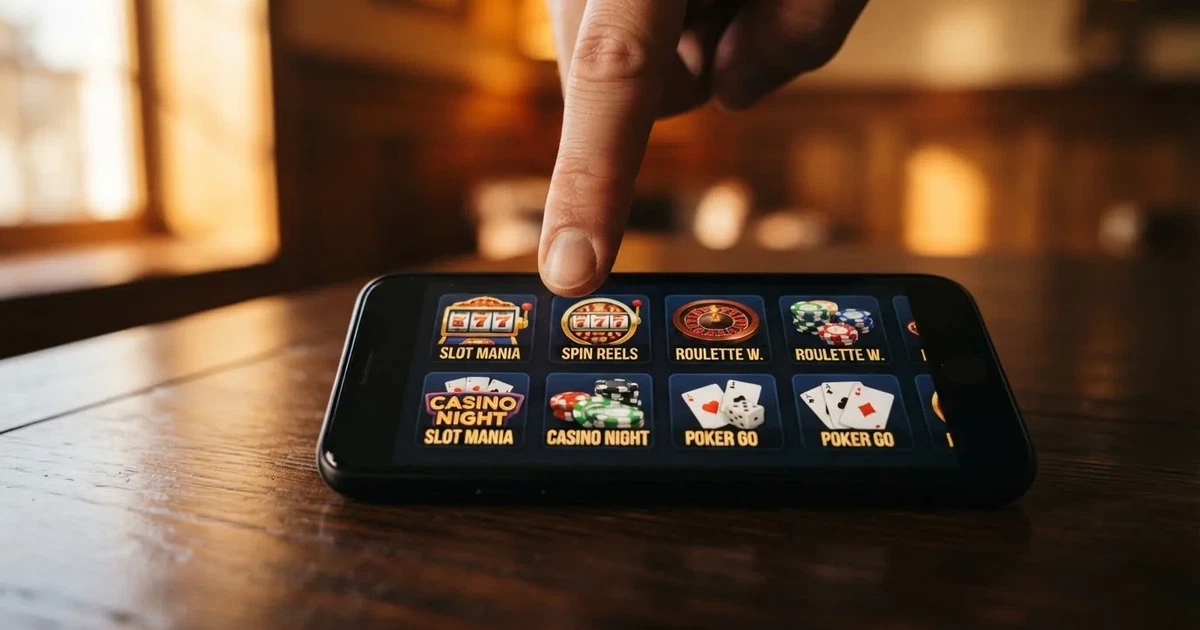
The Android casino question is not really about Android. It is about which UK Gambling Commission-licensed brands hold up on a touchscreen, and which ones treat the mobile player as an afterthought dressed up as an app. The browser-versus-app split matters less than it used to: most of the names a UK player recognises run their full catalogue through the phone browser, and a small number publish a downloadable APK or Play Store listing on top of that.
Data current as of 24 September 2026, verified against the Gambling Commission’s public register of gambling businesses.
Table of Contents
- What an Android Casino in the UK Actually Has to Clear
- The Legal Frame: A Commission Licence, Not a Smartphone, Is What the UK Tests
- The Rules That Apply to Every Operator Reviewed Below
- Responsible Gaming on Android: GAMSTOP Runs Regardless of Device
- Crypto and Anonymity: Why the Two Travel Together but Not Here
- Payments and Payout Speed on Android
- Bonuses and Free Spins: What the 10x Wagering Cap Means in Practice
- Mobile and App Experience on Android
- The Ten Licensed UK Android Casinos, Compared
- Betfred — The High-Street Brand Running a Full Mobile Catalogue
- Jackpotjoy — The Gamesys Bingo Brand on the Same Licence as Virgin Games
- William Hill — Another High-Street Name, Slightly Different Mobile Build
- kwiff — The Newer Mobile-First Brand With a Different Operating Company
- PokerStars — The Poker Brand Whose Casino Is an Afterthought That Works
- Ladbrokes — The LC International Brand With the Largest Footprint
- Paddy Power — The Flutter Sportsbook Brand With a Capable Casino Attached
- Unibet — The Scandinavian Operator’s UK Brand on Platinum Gaming
- Virgin Games — The White-Label Brand Running on Gamesys’s Licence
- Casumo — The Recro-Licensed Brand With the Most Distinctive Mobile Identity
- What the Ten Brands Share and Where They Differ
- Choosing the Right UK Android Casino
- Offshore and the Cost of the Lighter Checks
- What to Check Before Depositing on a UK Android Casino
- Frequently Asked Questions
What an Android Casino in the UK Actually Has to Clear
An Android casino is not a product category the regulator recognises. The Gambling Commission licences remote casino operators; whether a player reaches them on a Samsung, a Pixel, an iPad or a desktop does not change the licence conditions. What changes is the surface: a smaller viewport, a touchscreen instead of a mouse, a battery that drops if the lobby is poorly optimised, and a deposit flow that has to fit a banking app’s verification step.
That is the trade-off this page is built around. The brand list comes from the public register, the per-brand material is what the operator publishes, and the conclusion on each one is what the reader can actually expect when they open the site on their phone.

The register itself is the starting point. On 18 September 2026, 139 businesses held an active remote casino operating licence. The same register’s domain list — 1065 active and 361 white-label entries on the same date — is the only way to confirm that a website a UK player sees in an ad actually sits under one of those licences. A white-label domain trades under another company’s licence, which matters because Virgin Games, for instance, runs on Gamesys Operations Limited’s account rather than its own.
The shape of that landscape is what the next sections build out: the legal frame, the responsible-gaming rules that apply on Android exactly as on any other device, the payment and bonus mechanics that determine what an offer is worth, and the mobile-experience layer that decides whether the rest of it is usable.
The Legal Frame: A Commission Licence, Not a Smartphone, Is What the UK Tests
The Gambling Act 2005 covers online casino in Great Britain, and the Gambling (Licensing and Advertising) Act 2014 made that coverage point-of-consumption: any operator taking UK customers needs a Commission licence wherever it sits. A Curaçao, Maltese or Gibraltar licence alone is not enough. The remote casino operating licence is the licence class, and it is the class every operator reviewed on this page holds.

A licence number on the register has a fixed shape: it is a six-digit account number followed by an R, a unique identifier, and a suffix. The R marks a remote (online) licence, and the suffix increments each time the licence is renewed. Ladbrokes’ licence is 054743-R-330863-014; Casumo’s is 061549-R-336718-002. The format is the quickest sanity check that what a brand claims in its footer matches what the register lists.
Since 7 May 2019, name, address and date of birth have to be verified before a first deposit or any real-money play. That rule does not soften because the player is on a phone. A licensed Android casino still runs the same identity checks as the desktop site, which is the structural reason the “anonymous Android casino” search keeps surfacing offshore brands rather than Commission-licensed ones.
The Rules That Apply to Every Operator Reviewed Below
Four layers of Commission rules shape what a player meets at every UK-licensed Android casino. Each one applies on the phone exactly as on the desktop.
Stake limits. From 9 April 2025, online slots carry a £5 maximum stake per game cycle for players aged 25 and over; from 21 May 2025, the cap drops to £2 for 18-to-24-year-olds. The cap is per cycle, not per spin-streak, and it is enforced at the game level — a button-mash workaround is not how it works.
Deposit and play controls. There is no state-set deposit or loss ceiling in the UK, but from 31 October 2025 every operator must prompt the player to set a financial limit before the first deposit takes effect. Auto-play has been banned since 31 October 2021, a spin may not resolve faster than 2.5 seconds, and losses disguised as wins are not permitted.
Credit cards. Banned for any gambling funded from a credit card since 14 April 2020, including credit-card-funded e-wallet top-ups. Debit cards and bank transfers are unaffected.
Bonuses. Since 19 December 2025, wagering requirements are capped at 10x, and mixed-product bonuses — bet on a football match, get casino spins — are banned. The wagering cap is the single most consequential change to UK bonus terms in years, and it is what the bonus section below has to be measured against.
A useful way to read the rulebook: nothing on this page recommends a particular operator, and every operator reviewed holds a Commission licence, which means every one of them applies these rules. What differs between brands is execution, not compliance.
Responsible Gaming on Android: GAMSTOP Runs Regardless of Device
GAMSTOP self-exclusion has been a mandatory condition of every online operating licence since 31 March 2020. A player who registers with GAMSTOP is blocked from every UK-licensed operator for six months, one year, or five years; the period cannot be shortened once it starts.
For an Android player, that means exactly what it means on a desktop. If the player has self-excluded, neither the app nor the mobile browser will let them deposit. There is no operator-side override; the block sits at the scheme level.
Financial vulnerability checks add a second layer. From 28 February 2025, operators run a check at £150 net deposits in a rolling 30 days, using public-data sources. The check is lightweight by design — it is not a credit search — but a flag triggers a friction step before further deposits clear.
The Android-specific risk to know about is the browser-versus-app distinction. A self-excluded player who still has the app installed on their phone can open it; the block kicks in when they try to log in, but the app icon is still on the home screen. Removing the app is part of the self-exclusion process in practice. The Commission does not codify that, but a self-excluded player who sees a brand’s icon every time they unlock their phone is not in a good position to hold the line.
GAMSTOP sits alongside the National Gambling Helpline (GamCare) and GambleAware, which provide free support and counselling. None of this is unique to Android — it is what licensed UK play looks like, full stop.
Crypto and Anonymity: Why the Two Travel Together but Not Here
Players searching for crypto casino Android options often expect Bitcoin or Ethereum deposits alongside a lighter identity process. At a UK-licensed site, neither holds. The verification regime since 7 May 2019 — name, address, date of birth — applies before any deposit, cryptocurrency or otherwise. A licensed operator that accepted an unverified Bitcoin deposit would be in breach of its licence.
That is the structural answer to the anonymity question, and it is the same answer whether the player is on a Pixel in London or a desktop in Cardiff. Crypto deposits are not banned outright, but they are not anonymous at a licensed site because the account still has to be verified before the first deposit clears. Offshore brands without a Commission licence do accept unverified crypto, and the protection the player gives up in that trade is detailed in the offshore section below.
Bitcoin at a UK-licensed operator is therefore a payment-method choice rather than a privacy choice. The player is identified, the funds come from a verified source, and the wagering cap and stake cap apply. What changes is the volatility of the deposit itself, which is a different sort of risk.
Payments and Payout Speed on Android
The mobile payment question collapses to two: how the player gets money in, and how fast it comes out.
Deposits. Debit cards and bank transfers are the standard, and both work on Android. Apple Pay is iOS-only by definition — the wallet runs on Apple devices and cannot be used on an Android handset. A small number of licensed operators accept e-wallets and prepaid vouchers, with AstroPay being the most widely deployed; AstroPay’s UK entity, Larstal Limited, holds FCA authorisation under the Electronic Money Regulations 2011, so a UK player using it is dealing with an EMI rather than a grey-market intermediary. AstroPay itself was founded in 2009 and operates from Uruguay, with separate regulated entities in the Isle of Man, Brazil and Denmark; the UK authorisation is the one that matters for UK deposits.
Withdrawals. Most UK-licensed casinos pay back through the same channel as the deposit. Bank withdrawals in the UK typically clear through the Faster Payments Service, which has run 24/7 since 2008 and operates under a £1,000,000 per-transaction scheme limit — individual banks apply their own lower limits, which is where the practical cap sits. Most withdrawals arrive within minutes, though the scheme itself allows up to two hours, and operator-side processing can add a queue on top of that.
The realistic picture on Android: a player depositing by debit card sees the balance update within seconds; a player withdrawing by bank transfer typically sees funds within an hour, sometimes within minutes, occasionally longer. What slows a withdrawal down is rarely the rail — it is the operator’s pending period, which is the time between a withdrawal request and the operator approving it, and which is set by the operator’s own terms.
Bonuses and Free Spins: What the 10x Wagering Cap Means in Practice
The bonus landscape in the UK changed on 19 December 2025. Wagering requirements are capped at 10x the bonus (or the bonus-plus-deposit, where the bonus is deposit-gated), and mixed-product bonuses — a sports bet that comes with casino spins attached — are banned. The cap is the ceiling; what an operator chooses to set below it is its own commercial call.
The reason the cap matters is that most pre-2025 UK bonuses cleared with 35x wagering, and a non-trivial number ran at 50x or higher. A £100 bonus at 35x is £3,500 of turnover; at 10x it is £1,000. That is a three-and-a-half-fold reduction in the play required to convert a bonus into withdrawable cash, and it is what the 10x band actually buys a player.
The wagering-turnover band for a £100 bonus under the cap:
| Bonus amount | Wagering factor | Required turnover |
|---|---|---|
| £100 | 5x | £500 |
| £100 | 10x | £1,000 |
The £1,000 turnover is the worst case under the cap. At a £1 slot stake, that is 1,000 spins; at 2.5 seconds per spin (the Commission-mandated floor), that is about 42 minutes of continuous play. The £500 turnover at the lower factor is half that — roughly 21 minutes at £1 per spin.
None of which is the cost. The cost is what the bonus is worth once the wagering clears, which depends on the game, its RTP, and whether the operator excludes certain slots from the wagering contribution. A £100 bonus with a 10x cap and a 96% RTP slot is worth somewhere in the region of £96 in expected return on the bonus alone, before any session-level variance. A bonus that excludes high-RTP games from wagering contribution is worth less than the headline number, because the player is grinding through lower-RTP games to clear it.
The deeper point: the 10x cap is a structural improvement, but it does not turn a bonus into free money. The house still has its edge, and the wagering requirement still has to be met before the bonus funds are withdrawable. What the cap does is close the gap between the marketing line and the play-through, and that is the change worth measuring.
A side-effect of the cap, and the one operators have not advertised, is the disappearance of mixed-product offers. The “bet £10 on football, get 50 casino spins” construction is gone. Players who liked the cross-product play will not find it under the post-2025 rules; players who found the cross-product terms confusing will not miss them.
Mobile and App Experience on Android
The mobile question is the one this page is built around, and it is the layer that most separates one operator from the next.
Browser versus app. Every UK-licensed casino reviewed here runs on a mobile browser. The site is the product; the app, where it exists, is a wrapper around it. A small number of operators publish a downloadable Android app through Google Play or as a sideloaded APK from their own site. Browser play is the common case and the one the Commission does not differentiate.
Touchscreen handling. Slot games that were designed for a 1920×1080 monitor do not always behave on a 6.1-inch touchscreen. The elements that suffer most are bet-adjustment controls, autoplay toggles (now redundant since the auto-play ban), and paytable screens that require horizontal scrolling. Operators whose games come from a small number of providers — typically Pragmatic Play, NetEnt, Play’n GO and Evolution for live — tend to look and feel similar across brands because the games are the same.
Load time. A lobby that pulls in high-resolution thumbnails over a 4G connection is slow. Operators that lazy-load thumbnails and defer game assets until the player taps a thumbnail tend to feel faster than operators that pre-render the entire grid. The difference is not glamorous and it is rarely visible in a marketing review, but it is what a player on a train notices.
Banking flow on Android. A deposit that takes four taps on desktop can take seven on a phone if the operator has not collapsed the verification step. The 31 October 2025 financial-limits prompt adds another screen before the first deposit goes through. A well-built flow surfaces that prompt once and remembers the choice; a poorly built flow makes the player confirm the limit on every login.
The Android-specific caveat, and the one that does not have a clean answer: notifications. An app can ping the player about new games, promotions and reality-check reminders. The browser cannot. A player who turns off notifications loses that channel; a player who leaves them on gets an intervention layer they did not ask for. Both are real choices, and the app-versus-browser trade-off is partly about which one the player prefers.
The Ten Licensed UK Android Casinos, Compared
The comparison below covers the ten brands reviewed further down, with the licence-holder name, the active-or-white-label status on the Commission register, and the subject-support marker from research. Every brand holds an active remote casino licence as of 18 September 2026; the table is sorted by licence account rather than by recommendation.
| Brand | Licence holder and GB remote casino licence | Domain status on the register | Subject support |
|---|---|---|---|
| Betfred | Petfre (Gibraltar) Limited, 039544-R-319290-010 | Active | — |
| Jackpotjoy | Gamesys Operations Limited, 038905-R-319430-022 | Active | — |
| William Hill | WHG (International) Limited, 039225-R-319373-015 | Active | — |
| kwiff | Eaton Gate Gaming Limited, 044448-R-323408-017 | Active | — |
| PokerStars | Stars Interactive Limited, 039108-R-319334-026 | Active | — |
| Ladbrokes | LC International Limited, 054743-R-330863-014 | Active | — |
| Paddy Power | PPB Games Limited, 039411-R-319335-010 | Active | — |
| Unibet | Platinum Gaming Limited, 045322-R-324275-019 | Active | — |
| Virgin Games | Gamesys Operations Limited, 038905-R-319430-022 | White-label | — |
| Casumo | Recro Limited, 061549-R-336718-002 | Active | — |
The subject-support column reads as em dashes across the board. Research found no per-brand crypto, payment-method or anonymity support to attribute, so the column ships blank rather than guessing; the table does the work it can, which is to put the licence holder and the register status beside each name.
The point worth pulling out from the table is the Gamesys duplication. Jackpotjoy and Virgin Games both sit under Gamesys Operations Limited’s licence; Virgin Games is listed as a white-label domain, which means it trades on the parent’s licence without holding its own. A player comparing the two is comparing a parent brand and a white-label, not two independent operators. The same pattern shows up across the broader market — Ladbrokes, Coral and Gala Bingo all sit under LC International Limited, for instance — and the register’s domain-status field is the way to spot it.
Betfred — The High-Street Brand Running a Full Mobile Catalogue
Betfred is the Android casino that comes from a bookmaking background. The remote casino licence sits with Petfre (Gibraltar) Limited (account 39544), and Betfred is on the register as an active domain of that account. The licence number is 039544-R-319290-010.
The mobile experience is the same catalogue the desktop player sees, run through a responsive browser. There is no separate Android app of substance — the brand’s Play Store presence is a sports-betting product, and the casino runs through the mobile browser. That is the trade-off: a sports app that handles casino reasonably, or a browser session that handles the full casino catalogue.
The high-street heritage shows in the responsible-gaming layer: deposit limits, reality checks, and GAMSTOP registration all surface early in the account setup. The financial-limits prompt that became mandatory on 31 October 2025 is the kind of thing Betfred already had in skeleton form, because it ran a similar prompt before the rule was in force. The execution is plainer than the design-led competitors, but it does the job.
A player who knows Betfred from the shop and wants the same brand on the phone gets exactly that, with the same licence, the same compliance posture, and the same wagering cap. The brand’s strongest suit on Android is the one its competitors struggle to match: name recognition that predates the online market.
Jackpotjoy — The Gamesys Bingo Brand on the Same Licence as Virgin Games
Jackpotjoy is the flagship of Gamesys Operations Limited (account 38905), with licence 038905-R-319430-022 and the Jackpotjoy domain listed as active. Virgin Games sits under the same licence, as a white-label.
The mobile experience is browser-led. Gamesys’s product design is more distinctive than most — the lobby is built around a vertical tile grid that scrolls well on a phone, and the bingo side of the catalogue (where Jackpotjoy’s heritage sits) is more polished than the casino side. Slots work fine; bingo works better.
The relevant Android trade-off is that Jackpotjoy is a bingo-first brand running a casino alongside. A player whose primary interest is slots will find the catalogue slimmer than Betfred’s or William Hill’s; a player who likes bingo with casino on the side will find a more coherent product.
The licence-sharing with Virgin Games is the structural point. A player opening Jackpotjoy and a player opening Virgin Games are both customers of Gamesys Operations Limited under the same remote casino licence; the player-protection regime is identical, the GAMSTOP registration is shared, and the bonus terms tend to follow the same template. The brand choice is about catalogue and tone, not about regulatory posture.
William Hill — Another High-Street Name, Slightly Different Mobile Build
William Hill runs under WHG (International) Limited (account 39225), with licence 039225-R-319373-015 and William Hill as an active domain. The product is similar in shape to Betfred’s — a bookmaker-led operator running a full casino alongside the sportsbook — but the mobile execution is a little different.
The William Hill Android experience runs through the browser, with a Play Store app that handles sports and casino in a single product. The casino lobby is heavier than Betfred’s; the brand has more games, more providers, and a more cluttered layout as a result. On a phone with a smaller viewport, the clutter shows.
The trade-off for the player is breadth versus clarity. William Hill has more to offer in the catalogue than most of the brands reviewed here, but the player pays for it in scroll time and load time. A player who knows what they want to play and types the name into the search box will not notice; a player who browses will.
The licence and compliance posture match the rest of the reviewed set. William Hill has been on the Commission register since the early 2010s and has the kind of compliance history that a careful player looks for. The wagering cap applies, the GAMSTOP block applies, and the stake limits apply.
kwiff — The Newer Mobile-First Brand With a Different Operating Company
kwiff sits with Eaton Gate Gaming Limited (account 44448), under licence 044448-R-323408-017, with kwiff listed as an active domain. The operating company is newer than the high-street names above — the licence account number is in the 44,000s rather than the 39,000s — and the brand has been built around mobile from the start.
The mobile experience is the brand’s distinguishing feature. The lobby is single-column by default, the navigation is thumb-friendly, and the loading state is shorter than most competitors’. On a mid-range Android handset the difference is visible; on a flagship it is less so.
The catalogue is slimmer than the high-street names, because the operating company is smaller and the games library reflects that. A player who wants the widest possible slot catalogue will not find it here; a player who wants a fast, clean mobile experience and is willing to accept a smaller library will.
kwiff’s “supercharged” odds mechanic — the brand’s flagship feature, where random bets get a boosted price — is sports-led and does not apply to the casino side. The casino is a solid browser-based product, but the brand’s marketing line is about the sportsbook, and the casino has to live with that.
PokerStars — The Poker Brand Whose Casino Is an Afterthought That Works
PokerStars is the Flutter-owned poker brand, sitting under Stars Interactive Limited (account 39108) with licence 039108-R-319334-026. The PokerStars domain is listed as active.
The casino side of PokerStars is a real product, not a stub — the slots catalogue is broader than most players expect, and the live-dealer offering is competitive. What marks PokerStars out is the poker room, which is the strongest browser-based poker product on a UK-regulated site. A player who wants casino and poker under one account gets that here, with the casino as the second screen.
The mobile experience runs through the browser, with a separate PokerStars app on Google Play that handles the poker room. The casino is browser-only. The split is not awkward in practice — a player who opens the app for poker and switches to the browser for casino does it without friction — but it is a structural difference from brands that put everything in one app.
The Flutter ownership ties PokerStars to Paddy Power on the corporate side. The two brands sit under different operating companies and different licences — Paddy Power under PPB Games Limited, PokerStars under Stars Interactive Limited — but the responsible-gaming and payments infrastructure is shared at the parent level. A player with a Flutter-wide self-exclusion request will see it land across both brands, which is the same protection as GAMSTOP and a useful belt-and-braces for a player who wants to limit Flutter brands specifically.
Ladbrokes — The LC International Brand With the Largest Footprint
Ladbrokes sits with LC International Limited (account 54743), under licence 054743-R-330863-014, with Ladbrokes listed as an active domain. LC International also runs Coral and Gala Bingo, so a player comparing the three is comparing brands on the same licence, not three independent operators.
The mobile experience is browser-led, with a Play Store app that covers sports and casino. The catalogue is the largest of the brands reviewed here — LC International’s platform serves Ladbrokes, Coral and Gala Bingo, and the combined library is wider than any single competitor. On a phone, that breadth shows up as a heavier lobby and a longer initial load.
The Android-specific trade-off is the icon. The Ladbrokes app is sports-led, with the casino as a tab inside it; a player who opens the app for slots still has to navigate past the sportsbook. A player who prefers casino-first navigation finds Coral’s app slightly more casino-focused, even though both sit on the same licence.
The compliance posture is identical to the rest of the reviewed set, and LC International’s compliance history is among the longest. A player who values a long-licensed operator over a mobile-first newcomer gets that here.
Paddy Power — The Flutter Sportsbook Brand With a Capable Casino Attached
Paddy Power sits with PPB Games Limited (account 39411), under licence 039411-R-319335-010, with Paddy Power as an active domain. The brand is the Irish bookmaker that has run a UK-licensed casino alongside its sportsbook for years.
The mobile experience runs through the browser, with a Play Store app that is sports-led and casino as a tab. The catalogue is broad; the live-dealer offering is solid. The mobile build is similar in shape to Ladbrokes’s, because the Flutter platform shares much of the underlying code.
The Flutter connection is the structural point, the same way it is for PokerStars. Paddy Power and PokerStars share a parent company, but they sit under different operating licences. A player with a Flutter-wide self-exclusion will see it land across both brands; a player with a single-brand self-exclusion will only see it land on the brand they asked.
The casino side of Paddy Power is not the brand’s headline product, and a player who opens the app expecting a casino-first navigation will be on the wrong page. The browser is the better entry for casino play; the app is better for the sportsbook.
Unibet — The Scandinavian Operator’s UK Brand on Platinum Gaming
Unibet sits with Platinum Gaming Limited (account 45322), under licence 045322-R-324275-019, with unibet.co.uk listed as an active domain. The brand is the UK arm of the Kindred Group, which runs Unibet across several European markets.
The mobile experience is the cleanest of the brands reviewed here. Unibet’s design language is consistent across markets, and the UK build does not feel like a port — it was built mobile-first and adapted for the Commission’s rules. The lobby is single-column by default, the navigation is thumb-friendly, and the loading state is short.
The catalogue is competitive, though not the widest. Unibet does not have the combined-platform breadth of LC International’s brands or the depth of William Hill. What it offers instead is execution: the same slot from the same provider tends to look a little more polished on Unibet’s platform than on most competitors’.
The Kindred ownership ties Unibet to a European parent with a longer compliance history than most UK brands. A player who values a parent company with multi-jurisdiction regulatory experience gets that here.
Virgin Games — The White-Label Brand Running on Gamesys’s Licence
Virgin Games is the second Gamesys Operations Limited brand in the reviewed set, with Virgin Games listed as a white-label domain of account 38905. The licence is 038905-R-319430-022, shared with Jackpotjoy.
A white-label site is one that trades under another company’s licence rather than holding its own. The practical effect is that the operator behind Virgin Games is Gamesys, and the responsible-gaming and payments infrastructure is the same as Jackpotjoy’s. The catalogue and brand presentation differ; the regulatory posture is identical.
The trade-off for the player is brand versus licence. A player who wants the Virgin brand experience on a phone gets it here, with the same protection as any other Gamesys-licensed site; a player who is comparing licences will find the same number twice in the table. The white-label status is the honest read: same operator, different wrapper.
The mobile experience runs through the browser. There is no Virgin Games Android app of substance; the Virgin Games brand is browser-led by design. A player who wants an app will not find one; a player who is happy in the browser gets a clean product.
Casumo — The Recro-Licensed Brand With the Most Distinctive Mobile Identity
Casumo sits with Recro Limited (account 61549), under licence 061549-R-336718-002, with Casumo as an active domain. Recro is a smaller operator than the high-street names, and Casumo is the brand that built its identity around mobile-first design before the rest of the market caught up.
The mobile experience is the brand’s flagship. The lobby is built around a horizontal reel of game thumbnails that scrolls smoothly on a phone, the navigation is one-handed, and the brand’s adventure-game progression layer (rewards, trophies, level-ups) sits on top of the casino rather than behind it. A player who values the gamification layer gets it here; a player who finds it gimmicky will want to look elsewhere.
The catalogue is narrower than the high-street brands, because Recro’s platform serves Casumo primarily. The slot library is competitive but not the broadest, and the live-dealer offering is solid rather than expansive.
The licence account number is the highest of the reviewed set — 61,549 against the 39,000s of the older brands — which reflects Recro’s later entry to the UK market. The compliance posture matches the rest of the set, and Casumo’s compliance history under Commission oversight is clean. A player who values a mobile-first design identity and is willing to trade catalogue breadth for it gets that here.
What the Ten Brands Share and Where They Differ
The structural commonalities are what the table captures. Every reviewed brand holds a Commission remote casino licence. Every reviewed brand applies the same stake limits, the same credit-card ban, the same wagering cap, and the same GAMSTOP integration. Every reviewed brand verifies the player before the first deposit.
The differences are in execution. The high-street names — Betfred, William Hill, Ladbrokes, Paddy Power — offer the broadest catalogues and the longest compliance histories, but their mobile builds are heavier because they were designed for desktop first. The mobile-first brands — kwiff, Unibet, Casumo — offer cleaner phone experiences at the cost of catalogue breadth. The white-label and shared-licence cases — Virgin Games on Gamesys’s licence, the three LC International brands, the two Flutter-owned brands — point to the structural fact that the ten reviewed brands reduce to fewer independent operators than the brand count suggests.
The wagering cap is the same on every brand: 10x maximum. What varies is the bonus value at that cap, the games that contribute to wagering, and the time it takes to clear a bonus at a given bet size. The bonus section above walks through the maths; the per-brand variation in bonus terms is what a player comparing offers has to read carefully.
The mobile-and-app layer is the one this page is built around, and the differences are real. A player with a mid-range Android handset on a 4G connection will notice the difference between Casumo’s mobile build and Ladbrokes’s within the first ten seconds of opening the lobby. A player on a flagship handset on Wi-Fi will notice less of it. The trade-off is honest on every brand, and the right pick depends on the phone and the connection as much as on the catalogue.
Choosing the Right UK Android Casino
Three considerations decide which of the ten brands fits a particular player.
The first is catalogue breadth. A player who wants the widest slot library, the most providers, and the deepest live-dealer offering should look at the high-street names first — Ladbrokes, Coral and Gala Bingo all sit under LC International’s licence, and William Hill runs a comparable spread. A player who is happy with a competitive but narrower catalogue gets a cleaner mobile experience at kwiff, Unibet or Casumo.
The second is mobile execution. The mobile-first brands out-execute the high-street brands on a phone; the high-street brands out-catalogue the mobile-first brands on the desktop. A player who plays exclusively on Android and wants the cleanest experience picks one of the three mobile-first brands; a player who splits time between phone and desktop picks a high-street brand with a competent browser build.
The third is brand and ownership. A player who has a long-standing account with a high-street name can carry that account to a phone without changing operator; the same account works. A player who has had a good experience with a smaller operator gets a more focused product by staying there. The structural protection — GAMSTOP, the Commission register, the wagering cap — is identical either way.
The honest answer for a player comparing options: any of the ten brands reviewed will meet the Commission rules and the wagering cap, and any of them will run on a phone. The differences between them are about taste, catalogue, and mobile polish, not about safety or compliance. The 10x wagering cap is the structural improvement that lifts every brand at once; the per-brand variation is in everything else.
Offshore and the Cost of the Lighter Checks
The search for anonymous Android casino options pulls players toward it. The trade is explicit: no identity check, no GAMSTOP integration, no Commission complaints route, no approved ADR. What the player gives up is the protection the licence provides.
The Commission’s response to unlicensed operators is enforcement rather than player-side penalty. Section 33 of the Gambling Act 2005 makes it an offence to provide gambling to people in Great Britain without a licence; the Commission uses cease-and-desist notices, payment and hosting referrals, and search-engine delisting to disrupt unlicensed sites. The Commission does not have ISP-blocking power and cannot stop a determined player from reaching an unlicensed site. The player pays no UK penalty, but the player also has no UK recourse if the operator refuses to pay out.
The calculation is straightforward: an unlicensed site does not verify the player’s identity, does not run a financial vulnerability check at £150 net deposits, and does not block the player through GAMSTOP. The player who wants those protections chooses a Commission-licensed brand from the ten reviewed; the player who does not is making a deliberate trade, and the trade has a price.
For the great majority of UK players, the licensed market is the right answer. The wagering cap, the stake limits, and the GAMSTOP integration are structural improvements that the unlicensed market does not match. The Android experience is comparable or better at the licensed brands; the protection is meaningfully stronger.
What to Check Before Depositing on a UK Android Casino
Three checks before a first deposit, in the order they matter.
1. The brand is on the Commission’s public register. Search by domain at gamblingcommission.gov.uk. The remote casino licence number should match what the brand publishes in its footer. The licence account number is the leading six digits. If the brand is not on the register, the player is looking at an unlicensed operator and the rest of the checks do not apply.
2. The wagering terms are at or below the 10x cap. Any bonus with a wagering requirement above 10x is in breach of Commission rules and should be reported. Any mixed-product bonus — bet on sports, get casino spins — is in breach and should be reported. A player who sees either has found an operator that is not applying the December 2025 rules.
3. The first-deposit flow surfaces the financial-limits prompt. The prompt has been mandatory since 31 October 2025. A flow that lets the player deposit without surfacing a limit-setting screen is either pre-dating the rule or applying it loosely. Either way, the player should set a deposit limit before depositing, and an operator that does not surface the prompt is not the right one.
A fourth check, and the one a phone player in particular should run: open the lobby on the phone the player actually uses. A desktop review of mobile play misses more than it catches. The lobby that loads fast on the reviewer’s handset may load slowly on the player’s. Five minutes on the actual device is worth more than any review.
Frequently Asked Questions
No. Every UK-licensed casino reviewed here runs in a mobile browser, and most do not require a separate app. A small number publish an Android app through Google Play, but the browser experience is the primary product. The browser-versus-app choice is about notifications and home-screen access, not about catalogue access.
Can I deposit with cryptocurrency on an Android casino?
It depends on the operator, but not in the way the search suggests. UK-licensed casinos that accept cryptocurrency still verify the player’s identity before the first deposit, so the deposit is not anonymous. Offshore brands that accept unverified crypto do not hold a Commission licence and do not offer GAMSTOP integration. The structural answer is that crypto at a licensed site is a payment-method choice, not a privacy choice.
How quickly do withdrawals process on an Android casino?
Most UK-licensed operators process withdrawals within hours, and bank withdrawals typically arrive through the Faster Payments Service within minutes or up to two hours. The operator’s own pending period is the variable — that is the time between a withdrawal request and the operator approving it — and is set by the operator’s terms. The rail itself is rarely the bottleneck.
Do Android casinos offer the same welcome bonuses as the desktop site?
Yes. The bonus is attached to the account, not to the device. A player who opens the same account on a phone and on a desktop sees the same welcome offer, the same wagering requirement, and the same bonus terms. The wagering requirement is capped at 10x under Commission rules from 19 December 2025, and that cap applies regardless of the device the player uses to clear it.
How responsive are touchscreen controls on an Android casino site?
It depends on the operator’s mobile build. The mobile-first brands — kwiff, Unibet, Casumo — tend to be more responsive because their lobbies were designed for touchscreens first. The high-street brands — Betfred, William Hill, Ladbrokes, Paddy Power — tend to feel heavier because their lobbies were designed for desktop and adapted for mobile. A few minutes on the actual device is the way to tell which is which.
Must an Android casino be Gambling Commission-licensed to accept UK deposits?
Yes. Any operator taking UK customers, on any device, needs a Commission licence under the Gambling (Licensing and Advertising) Act 2014. A Curaçao, Maltese or Gibraltar licence alone is not a substitute. The Commission’s public register is the way to verify a licence, and the licence number on the register has a fixed format. A player who cannot find a brand on the register is looking at an unlicensed operator, and the protection that comes with a Commission licence does not apply.
Prepared by the slotstudiosguide editorial staff.