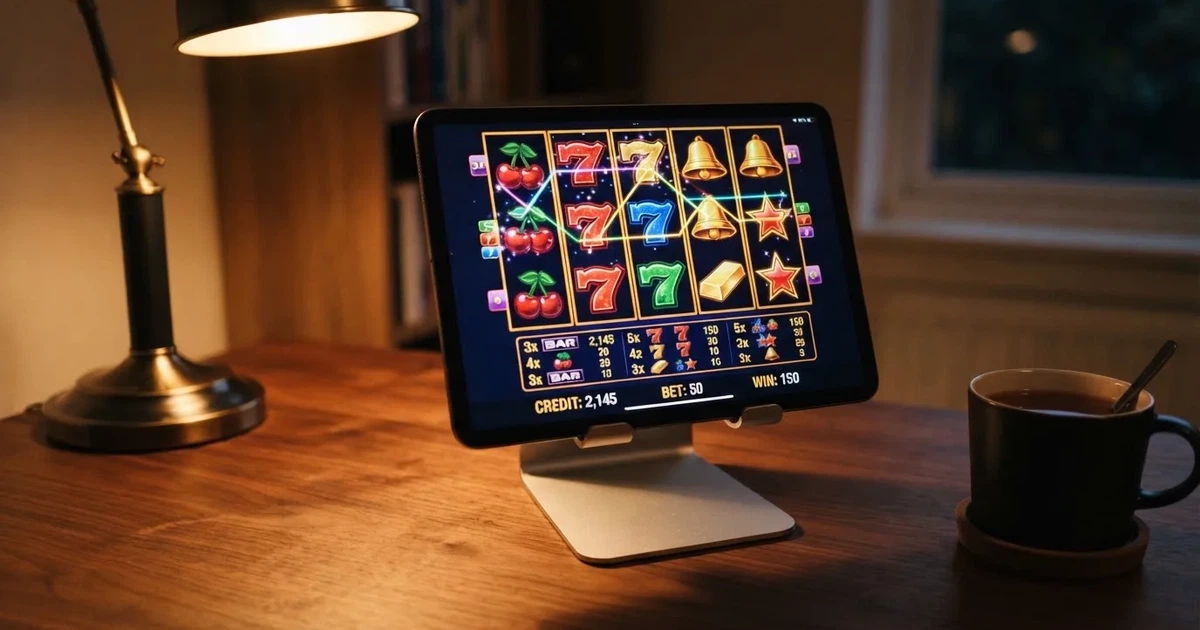
Finding Barcrest slots under a UK Gambling Commission licence
 Available in GB
Data current as of 24 September 2026 and verified against the Gambling Commission’s public register of gambling businesses.

The headline finding is short and easy to miss. A casino offering Barcrest slots to UK players must hold a Gambling Commission remote operating licence; nothing else counts, regardless of where the operator is incorporated. The Commission’s public register is the only test that matters, and on it the trading name “Barcrest” is registered to Global Draw Limited, account 2875, holding a non-remote and remote Gaming Machine Technical Full licence dated from 1 January 2009. Barcrest games reach players through licensed operators, not through the developer directly, and the same operators are the ones bound by the rest of UK rules: identity checks, GAMSTOP, the £5 maximum stake for adults 25 and over, and the 10x wagering cap that landed on 19 December 2025. A site claiming to carry Barcrest slots without those licences is breaking the law on both sides — the developer does not license to it, and the player is unprotected.
Table of Contents
- What a Barcrest slot actually is, and why it shows up where it does
- The £5 stake ceiling and the £2 youth tier
- What a Barcrest no-deposit bonus actually offers
- Free spins on Barcrest slots, and how they sit inside the offer
- Barcrest slots on a mobile browser
- The mechanics of the most-played Barcrest titles
- The ten licensed UK operators that carry Barcrest titles
- How the licensed UK market looks on the register
- The legal frame around the catalogue
- How a player sits inside the protection regime
- Tax and what a UK player actually keeps
- The frame around the catalogue: what the catalogue is and what it is not
- What a player actually does
- Where the catalogue sits on the broader UK slot market
- What this page is not
- Frequently Asked Questions
What a Barcrest slot actually is, and why it shows up where it does
Barcrest is a UK gaming brand now owned by Light & Wonder, the same group that carries Bally, WMS and Shuffle Master under one roof. The corporate line runs back further than the slots: Light & Wonder traces to Autotote, an Australian totalizator business George Julius founded in 1917. It became Scientific Games Corporation in 2001 and rebranded to Light & Wonder in March 2022, with its gaming division generating US$3.2 billion of revenue in 2024. Barcrest was acquired from IGT in 2010, and the trading name Barcrest sits on the Great Britain register against Global Draw Limited (account 2875) under Gaming Machine Technical Full licences active from 1 January 2009. In the slot catalogue, the recurring figures are Rainbow Riches, the family that grew around it, and the “Deal Games” format Barcrest is named as the owner of — features that pull a bonus round onto the reels themselves rather than spinning it out on a separate screen.

The developer does not run the site. Barcrest games are licensed to operators, who run them against the Commission’s operating-licence conditions. That is why the same Rainbow Riches title shows up at multiple UK brands: the game is the same, the operator behind it is what changes, and what changes with it are the bonus terms, the deposit and withdrawal rails, and the protection regime a player sits under.
The £5 stake ceiling and the £2 youth tier
A UK slot player aged 25 or over is now capped at £5 per game cycle, the figure that landed on 9 April 2025. A player between 18 and 24 is capped at £2 per game cycle, in force from 21 May 2025. Every UK-licensed operator implements that ceiling on every slot spin, and the Commission polices it through the Remote Technical Standards. Spin speed is regulated alongside it: a slot may not auto-play, and a single game cycle may not run faster than 2.5 seconds. Losses dressed up as wins — a banner that flashes “WIN” alongside a balance that just went down — are banned on the same basis. A reader who plays Barcrest titles on an offshore site gives those rules up; nothing about the game itself changes, but the protection around it does.

What the rules do not do is set a deposit or loss ceiling from the regulator’s side. Operators must prompt each new customer to set a financial limit before the first deposit, a condition that came in on 31 October 2025, and from 28 February 2025 a financial vulnerability check triggers at £150 in net deposits across any rolling 30-day window. Beyond those triggers the player decides the boundary.
What a Barcrest no-deposit bonus actually offers
“No deposit” reads like a free bet; it is rarely that. A no-deposit bonus at a UK-licensed casino is a small allocation of free play — usually free spins on a named slot or a tiny cash credit — issued without a top-up, and almost always gated by the same machinery every other bonus is gated by. The two pieces that matter are the wagering multiple and the maximum cashout, and from 19 December 2025 the wagering multiple cannot exceed 10x the bonus amount for any UK-licensed offer. The other piece — what a player can actually withdraw at the end — is set by the operator, and a no-deposit bonus is the offer type where the cap is most often written small.
The honest reading is that a no-deposit bonus is a chance to try a slot the reader was going to try anyway. It is not, on the numbers alone, a way to build a bankroll: the wagering cap and the maximum cashout together keep what a player can walk away with well below the headline figure. Where the bonus is free spins on a Barcrest title, the same machinery applies — 10x on whatever the spin value totals to, capped at whatever the operator states, and the spin value itself is usually £0.10 or below. A reader who treats the offer as a free sample of the slot and reads the small print before playing it has the offer on its own terms; a reader who treats it as a stake for a payout has been sold a different product.
The 10x wagering cap has a direct arithmetic footprint, and it is the one the page is built around.
The wagering-turnover band
The arithmetic here is plain, and it answers a specific question: how long does it take a UK player to clear the wagering on a bonus of a given size under the 10x cap in force since 19 December 2025? The required turnover is the bonus amount multiplied by 10; the number of spins depends on what the player stakes per spin, and the time depends on how fast those spins can legally run.
For a £10 bonus, the required turnover is £100, and that is the same figure whether the bonus is cash or a batch of free spins converted into bonus funds. At a £0.10 spin, £100 buys 1,000 spins; at a £0.20 spin, 500 spins; at a £0.50 spin, 200 spins; at the £1 spin that younger players in particular hit as their first natural stake, 100 spins. At the £2-per-spin ceiling that applies to 18–24 players, the same £100 is 50 spins; at the £5-per-spin ceiling that applies to 25 and over, the same £100 is 20 spins. Across a 2.5-second minimum spin interval — the floor below which no licensed slot may run — the time on the reels runs from under a minute at the £5 stake to roughly 42 minutes at £0.10.
For a £25 bonus, turnover is £250. At £0.10, 2,500 spins (about 1 hour 44 minutes); at £0.20, 1,250 spins (about 52 minutes); at £0.50, 500 spins (about 21 minutes); at £1, 250 spins (about 10 minutes); at £2, 125 spins (about 5 minutes); at £5, 50 spins (about 2 minutes). For a £50 bonus, turnover is £500, and the same six stake points give the player 5,000 spins at £0.10 (about 3 hours 28 minutes), 2,500 spins at £0.20 (about 1 hour 44 minutes), 1,000 spins at £0.50 (about 42 minutes), 500 spins at £1 (about 21 minutes), 250 spins at £2 (about 10 minutes), and 100 spins at £5 (about 4 minutes). For a £100 bonus, turnover is £1,000; at £0.10 the player runs 10,000 spins over roughly 6 hours 57 minutes, and at £5 the same turnover sits in 200 spins over about 8 minutes.
Read as a band rather than a single figure: a £10 no-deposit bonus takes a £0.10-per-spin player around 42 minutes to clear and a £5-per-spin player around 50 seconds to clear, and the time falls by a factor of 50 across that stake range. A £100 bonus takes the same player 7 hours and the £5-stake player 8 minutes. The wider wagering-cap question is settled — the multiple cannot exceed 10x — but the time-on-reels figure varies enormously by stake, and the operator sets that stake by what the slot allows. The point is the band, not the midpoint, and the band widens with stake the way the time shrinks.
Why the band matters more than the midpoint
The 10x cap is the new ceiling, not the new floor. Many UK operators ran 35x or 50x requirements before 19 December 2025, and the bonuses they list now sit at 10x at most, with several at the cap. The reader who treats “10x wagering” as a single piece of information has missed the variable that determines what the offer costs: the stake per spin, which the operator sets per slot, and which the player cannot negotiate. A £10 bonus at 10x on Rainbow Riches at £0.10 takes nearly three quarters of an hour; a £10 bonus at 10x on a slot that allows £1 stakes takes roughly four minutes. The number on the page is the same in both cases; what the player is doing with their time is not.
The other variable the band leaves out is the maximum cashout on a no-deposit bonus, which is where the offer’s actual ceiling lives. A bonus that is cleared in eight minutes with a £5 cashout cap is a different product from one cleared in forty minutes with no cashout cap, and the two are read off the same 10x figure with no clue from the wagering line that they are. The arithmetic tells the player how long the offer takes; the small print tells them what it is worth.
Free spins on Barcrest slots, and how they sit inside the offer
Free spins on a Barcrest title are a sub-type of the bonus machine, and from 19 December 2025 they sit under the same 10x wagering cap as everything else. The shape is well known: a player opens an account, the operator credits a fixed number of free spins on a named slot, the spins play at a fixed stake, whatever the spins return enters the bonus wallet, and the wallet is then subject to a wagering multiple before it can be withdrawn. The fixed stake is usually £0.10, sometimes lower for promotional runs, and very rarely higher; the spin count is the figure most heavily marketed, because it is the largest number on the page. A 50-free-spin promotion at £0.10 is £5 of bonus funds, and £5 of bonus funds at 10x wagering is £50 of required turnover, which is 500 spins at £0.10, or roughly 21 minutes of slot time at the minimum spin interval.
The wagering cap applies to the bonus funds that come out of the free spins, not to the spins themselves. A player cannot withdraw the spin winnings until the wagering is complete, and the same maximum-cashout ceiling that applies to other no-deposit offers applies here. Where the operator publishes a maximum cashout, it is the ceiling on the whole chain — spin value, spin winnings, bonus winnings after wagering — and not just on one element.
A second shape is the “mixed-product” bonus, where the player bets on sport and receives casino spins in return. That shape is now banned under the post-19 December 2025 rules: a UK operator cannot bundle a sports free bet with casino free spins on a Barcrest title, regardless of how the offer is framed. The page reads it as a closed category, and any reader who sees a cross-vertical offer is reading an offer that should not be on a UK-licensed site at all.
Barcrest slots on a mobile browser
A Barcrest slot on a phone or tablet browser is the same game as the desktop version, with the same RTP and the same paytable. The titles are HTML5, the technology stack is shared, and the major UK operators run a single account across desktop and mobile. There is no separate download requirement for a Barcrest title, no app store gate, and no per-operator download bundle for the slots themselves; the operator’s main app or mobile site is the wrapper, and the games are loaded inside it.
The shape that matters in practice is screen orientation. Rainbow Riches and the rest of the Barcrest catalogue are designed in landscape, and on a phone held in portrait the reels shrink and the paytable compresses; on a tablet in landscape the slot reads at near-desktop size. A reader who plays on a phone keeps the experience; a reader who plays on a tablet gets the closer-to-native view. The slot itself runs at the same spin speed in both cases — 2.5 seconds minimum — and the £5 and £2 stake ceilings apply on mobile exactly as on desktop.
Network conditions matter more than the device. A slot is a continuous client-server connection; the reels animate locally, but the spin outcome, the bonus trigger, and the wallet update all come back from the operator’s server. A flaky 4G connection turns the spin-and-wait into a longer one and can break a free-spins bonus round mid-sequence if the connection drops. A reader who plays on mobile data should treat the connection as part of the slot’s environment, not as a separate concern, because it is.
The mechanics of the most-played Barcrest titles
The catalogue a UK player meets at a licensed site runs to a small group of titles that dominate the rotation. Rainbow Riches is the flagship, a five-reel Irish-themed slot with a “Road to Riches” feature, a “Wishing Well” bonus and a “Pots of Gold” feature, all of which pay on the bonus round rather than the base spin. Rainbow Riches Pick n Mix is a tighter version with a configurable bonus feature; Rainbow Riches Megaways runs on the Big Time Gaming mechanic with up to 248,832 ways to win on any spin; Rainbow Riches Cluster Magic pays on clusters rather than paylines. The family name carries the brand; the differences between the variants are about how the bonus is triggered and what the bonus pays.
Barcrest’s other regulars include the Deal Games family — a mechanic where the bonus round is played out on the reels themselves rather than on a separate game screen. The slot flips between base mode and a deal mode, the deal mode carries the bonus, and the bet sizing on the deal often exceeds the base. It is the mechanic the developer is named as the owner of, and the experience is closer to a fruit-machine bonus ladder than to a free-spin round.
A reader looking at a Barcrest paytable for the first time should look at three figures: the RTP, the volatility, and the maximum payout per spin. The RTP is the long-run return to player and is published per title by the operator; the volatility describes how the wins are distributed (low, medium, high or a similar banding) and the maximum payout per spin is the figure that says what the bonus round can actually deliver. Most Barcrest titles sit at medium-to-high volatility, and most of the bonus rounds are structured to deliver large payouts rarely rather than small payouts often — the marketing phrase is “big-win potential”, and it is a real feature, not a slogan.
The numbers the page cites are not pulled from individual paytables: research did not collect per-title RTPs for the Barcrest catalogue, and the page does not invent them. The honest statement is that a player should read the paytable for the title they are about to play and look at the RTP and volatility figures the operator publishes, because those figures vary by title and by operator configuration and the only authoritative version sits inside the game.
The ten licensed UK operators that carry Barcrest titles
Every brand below is taken from the Gambling Commission’s public register of gambling businesses as of 18 September 2026. Each domain listed below is verified as active on the Commission’s register. The list is what the register says, not what the operators’ marketing says, and the order is the order research set. Several brands share a single licensee; Ladbrokes sits under LC International Limited, and Jackpotjoy and Virgin Games sit under Gamesys Operations Limited. The shared-licensee structure does not make the brands the same product — they run on separate sites, with separate wallets and separate promotions — but the corporate ceiling above them is one.
1. Betfred
Licence: Gambling Commission remote casino operating licence 039544-R-319290-010, held by Petfre (Gibraltar) Limited, account 39544. Betfred has a long UK high-street footprint, and that shows in the slots lobby: a wide range of providers, Barcrest titles included, and a sportsbook that sits beside the casino. A player prioritising slots might look elsewhere, while those who want a combined wallet have the standard Betfred package.
2. Jackpotjoy
Licence: Gambling Commission remote casino operating licence 038905-R-319430-022, held by Gamesys Operations Limited, account 38905. Built on a foundation of bingo, the brand retains that emphasis, but the slots lobby carries Barcrest titles and the wallet works across the verticals. It suits players who mix slots with a few bingo rounds; dedicated slots players will find the bingo interface omnipresent.
3. William Hill
Licence: Gambling Commission remote casino operating licence 039225-R-319373-015, held by WHG (International) Limited, account 39225. Following the 888 transition, the platform is now Bally-like, with major Barcrest titles in the rotation. Promotions lean towards sports odds boosts rather than casino bonuses. A casino-first player may prefer a more focused environment.
4. kwiff
Licence: Gambling Commission remote casino operating licence 044448-R-323408-017, held by Eaton Gate Gaming Limited, account 44448. Kwiff’s “surprise bet” mechanic is the main draw, but the casino vertical offers a standard slots lobby with Barcrest titles. The slots catalogue is more limited than at larger, casino-centric brands.
5. PokerStars
Licence: Gambling Commission remote casino operating licence 039108-R-319334-026, held by Stars Interactive Limited, account 39108. Primarily a poker site, the casino is a secondary vertical, though it does carry the major Barcrest titles. Players looking for a pure casino site may find the poker-heavy interface distracting.
6. Ladbrokes
Licence: Gambling Commission remote casino operating licence 054743-R-330863-014, held by LC International Limited, account 54743. Operating within the Entain group, it shares its catalogue with Coral and Gala Bingo, meaning Barcrest titles are well-represented. Promotions are sports-focused, making it better suited to mixed-vertical players.
7. Paddy Power
Licence: Gambling Commission remote casino operating licence 039411-R-319335-010, held by PPB Games Limited, account 39411. Running within the Entain group, it offers a similar catalogue to Ladbrokes but with a high-energy promotional calendar. It is a good choice for those who enjoy brand-led marketing, though casino-focused players might prefer a quieter experience.
8. Unibet
Licence: Gambling Commission remote casino operating licence 045322-R-324275-019, held by Platinum Gaming Limited, account 45322. A Kindred Group brand, it offers a solid casino product alongside a sportsbook. Promotions are balanced, and the casino experience is more central than at many competitors. It is a strong candidate for those prioritising casino play.
9. Virgin Games
Licence: Gambling Commission remote casino operating licence 038905-R-319430-022, held by Gamesys Operations Limited, account 38905. Operating on the Gamesys stack, it offers a similar experience to Jackpotjoy, with Barcrest titles included. The two sites share core features, though they maintain distinct brand identities.
10. Casumo
Licence: Gambling Commission remote casino operating licence 061549-R-336718-002, held by Recro Limited, account 61549. The domain Casumo.com is listed on the register as an active domain. Casumo is casino-first in a way the other brands on this list are not, with a slots catalogue that runs wide and a promotional structure built around the casino calendar rather than the sports calendar. The major Barcrest titles are in the rotation. A reader who plays casino as the primary activity has a strong option here; a reader who plays sports primarily will see a casino product with no sportsbook beside it.
How the licensed UK market looks on the register
The Commission’s public register held 139 businesses with an active remote casino operating licence on 18 September 2026. The register’s domain list held 1,065 active entries and 361 white-label entries on the same date. A remote casino licence number has the form account-R-number–suffix, where the leading six digits repeat the licence holder’s account number and the R marks a remote (online) licence. The register can be searched online and downloaded in full as CSV or Excel, which is the route a reader who wants to verify a brand takes. The 10 brands above are a sample from a much wider licensed set, not the licensed set itself.
The shape of the list is a mixed one: shared licensees, white-label arrangements, and standalone operations. The shared-licensee structure means a reader sees Ladbrokes, Coral and Gala Bingo under one LC International Limited roof, Jackpotjoy and Virgin Games under one Gamesys Operations Limited roof, and Betfair and Paddy Power under the wider Entain structure. The white-label structure means a brand can trade under another company’s licence without holding its own, and the register flags that with a “White Label” status. A standalone operation holds its own licence and runs its own domain; most of the names on this list are standalone, with Virgin Games the clearest example of the white-label pattern.
The legal frame around the catalogue
UK online gambling is regulated by the Gambling Commission under the Gambling Act 2005, which covers Great Britain — England, Scotland and Wales — and not Northern Ireland. Since the Gambling (Licensing and Advertising) Act 2014, any operator taking customers in Great Britain needs a Commission licence wherever it is based; a Curaçao, Maltese or Gibraltar incorporation is not a substitute. The minimum age is 18, and name, address and date of birth are verified before the first deposit or any play, a condition in force since 7 May 2019.
A casino carrying Barcrest slots without a Commission licence is breaking the law on both sides of the transaction. The developer is not licensing the titles to it, because the developer does not license to operators that fail the regulator’s fit-and-proper test. The player is unprotected, because the operator is not part of GAMSTOP, not subject to the Commission’s complaints route, and not bound by any approved ADR. Providing gambling to people in Great Britain without a licence is an offence under section 33 of the Gambling Act 2005, and the Commission disrupts illegal sites through cease-and-desist notices, search-engine delisting, and payment and hosting referrals. The Commission has no ISP-blocking power, so a site that is disrupted today can reappear at a new address tomorrow. No penalty is aimed at the player; what the player loses on an unlicensed site is protection, not a prosecution.
What the offshore / non-GAMSTOP pitch is selling
A site that markets itself as “Barcrest slots, no GAMSTOP” is marketing an unlicensed site. The pitch usually combines three claims: that GAMSTOP is too restrictive, that identity checks slow down play, and that the bonus terms are looser than at a licensed brand. The first two claims are real features of the unlicensed product; the third is, on the data the player can check, less clear. UK wagering requirements are now capped at 10x, and offshore sites have no cap. A 35x or 50x requirement is not “looser” than a 10x requirement; it is heavier by a factor of three to five. The other “looseness” the pitch promises — no maximum cashout, no deposit limits — is the absence of the rules, not a relaxation of them.
The honest answer to “where can I play Barcrest slots without GAMSTOP” is that the legal answer in Great Britain is “nowhere under a Commission licence”, and the practical answer is that offshore sites exist for that demand. A reader who wants to self-exclude has used GAMSTOP because they want to be excluded, and an offshore site that respects neither GAMSTOP nor the identity check undoes both protections. A reader who wants looser bonus terms is not going to find them on an unlicensed site, because the licensed ceiling is now lower than most unlicensed floors.
The identity check, and why anonymity is not an option
Since 7 May 2019, a UK-licensed casino verifies name, address and date of birth before the first deposit or any play. The verification is not optional, and it cannot be opted out of by paying in cash or by using an offshore payment rail. The site that promises “no verification” is promising an unlicensed product. A reader who wants the privacy of an anonymous account has no UK-licensed option; the trade-off between privacy and protection runs through the licence itself.
The credit-card ban, and what is left
Credit cards have been banned for UK gambling since 14 April 2020, including credit-card-funded deposits routed through e-wallets. The rails that remain are debit cards, bank transfers, and a small set of approved e-wallets; PayPal is approved at most UK-licensed brands, and Apple Pay and Google Pay are increasingly available. A reader who only has a credit card will need to use a different payment method, regardless of which UK brand they choose.
How a player sits inside the protection regime
GAMSTOP is a mandatory condition of every UK online licence since 31 March 2020. Self-exclusion periods run for six months, one year or five years and cannot be cancelled early. A player who has self-excluded through GAMSTOP cannot open an account at any UK-licensed operator for the duration of the exclusion, and the operator is required to check GAMSTOP at account creation and at every deposit. The register is the operator’s gate; the player who wants to be excluded has a single registration that covers every licensed brand.
The other piece is the financial vulnerability check, which runs at £150 of net deposits across a rolling 30-day window from 28 February 2025 and uses public data only. The check is not a credit check; it is a flag for signs of financial distress in publicly available records, and it triggers a customer conversation rather than an automatic block. Wider financial risk assessments have been announced but are not yet in force. A reader who is depositing £150 in a rolling 30-day window will see the trigger; a reader depositing less will not.
Help is available outside the operator. The National Gambling Helpline (GamCare) and GambleAware are the main routes, and a player who wants to talk to someone outside the operator’s customer-service channel has both. The page reads these as the routes a player uses, not as recommendations the page makes.
Tax and what a UK player actually keeps
UK players pay no tax on gambling winnings; the tax is on the operator, not the player. Remote Gaming Duty was raised from 21% to 40% from 1 April 2026, and the rate change is a model for the page — readers should check HMRC for current rates. A player who wins £1,000 at a UK-licensed casino keeps £1,000. A player who wins £1,000 at an offshore site keeps £1,000, but loses the protection regime, the complaints route, and the GAMSTOP binding, and the offshore site is under no obligation to pay out at all. The arithmetic on the win is the same; the experience around the win is not.
The frame around the catalogue: what the catalogue is and what it is not
The Barcrest slot catalogue a UK player meets at a licensed site is a subset of the developer’s full output. Some titles are released to UK operators and not to others; some titles are configured at different RTP levels by different operators; some titles are part of promotional runs that move titles in and out of the lobby on a weekly basis. The reader who wants to play a specific Barcrest title should check the lobby of the brand they play with before depositing, because the catalogue moves.
The catalogue is also a Barcrest catalogue rather than a Light & Wonder catalogue. Light & Wonder owns Barcrest, Bally, WMS and Shuffle Master, but a UK operator licences each studio’s titles separately, and a Barcrest-themed slot is not automatically a Bally-themed slot. A reader who plays across the studios should expect them to be sold separately.
What a player actually does
A player who wants to play Barcrest slots at a UK-licensed casino takes the following steps, in order: chooses one of the licensed brands from the register (the page’s list, or the register’s full list); completes the identity check on first deposit; sets a financial limit before the first deposit; makes a deposit by debit card, bank transfer or approved e-wallet; opens the Barcrest title they want from the slots lobby; reads the paytable for the title’s RTP and volatility; sets the stake within the £2 or £5 ceiling that applies to their age; plays at the 2.5-second minimum spin interval; on a win, withdraws back to the original deposit method where the operator allows it. Each step has a rule attached to it, and each rule has a regulator’s name behind it.
The steps are the same at every brand on this list because the rules are the same. The differences between brands are about the catalogue, the bonus terms, the wallet structure, and the brand’s own promotional rhythm — not about the rules a player plays under.
Where the catalogue sits on the broader UK slot market
The wider UK slot market is dominated by a small group of studios whose titles show up at most licensed brands: NetEnt, Play’n GO, Pragmatic Play, Blueprint Gaming, Big Time Gaming, and the studios under the Light & Wonder umbrella. Barcrest sits inside that last group, and its titles are widely licensed across the UK. A reader who plays Barcrest at a UK brand will usually find several of those other studios in the same lobby, and the comparison between studios is best done by reading paytables rather than by chasing a brand name.
The wider UK slot market also carries a number of smaller studios whose titles are less widely licensed. AMATIC Industries, founded in 1993 and headquartered in Rutzenmoos, Austria, holds an active Great Britain Remote Gambling Software licence from the Gambling Commission, account 47992, in force from 27 April 2017; the studio lists more than 130 slot titles on its own website without publishing RTP figures for them. Betsoft Gaming, founded in 2006, holds certification from the Italian ADM, Gaming Labs International (GLI) and Quinel, and a company trading as Bet Software (PTY) Ltd holds a Remote Gambling Software licence for Great Britain, number 050689-R-328022-004, in force since 21 February 2018. The Betsoft “THE” series launched on 12 January 2026. These studios are not Barcrest studios and their games are not the games the page is about; they sit in the same slots lobby, and a reader comparing studios should know they exist.
What this page is not
This page is not a recommendation of where to play. The 10 brands above are taken from the Commission’s public register; the page describes what each brand offers under licence, not which one a reader should choose. The page is not a list of all UK-licensed operators carrying Barcrest titles — the register holds 139 active remote casino operating licences, and the 10 on this list are a sample. The page is not an endorsement of any offer listed in any bonus column; the 10x wagering cap is the legal ceiling, and the page describes the cap rather than the offers sitting under it. The page is not a substitute for the operator’s own terms; a player claiming a bonus reads the operator’s terms, because the small print is where the offer’s actual ceiling lives.
The page is also not advice on whether to play. The house has an edge on every slot a UK player can name, and the rules around the slots — stake ceilings, identity checks, GAMSTOP — are framed around the recognition that the edge is real and the player is the one paying it. The arithmetic in the wagering-turnover band above is statistical, not predictive: it is an average over many spins under the stated assumptions, and it is not what any single player will experience.
Frequently Asked Questions
Which licensed UK casinos carry Barcrest slots?
A Gambling Commission remote casino operating licence is the only route. The 10 brands in the ranking above all hold one; the Commission’s public register holds 139 businesses with an active remote casino operating licence as of 18 September 2026, and the register is searchable online and downloadable as CSV or Excel. A site carrying Barcrest titles without a Commission licence is offering them illegally.
What does a Barcrest no-deposit bonus actually offer?
A small allocation of free play — usually free spins on a named Barcrest slot or a tiny cash credit — issued without a top-up, with a wagering multiple (capped at 10x since 19 December 2025) and a maximum cashout set by the operator. The offer is a chance to try a slot, not a way to build a bankroll; the small print is where the actual ceiling lives.
Do Barcrest slots come with their own free spins promotions?
Yes, frequently. The shape is a fixed number of free spins on a named Barcrest title at a fixed stake (usually £0.10), with the winnings entering a bonus wallet subject to the 10x wagering cap and a maximum-cashout ceiling. Mixed-product bonuses that bundle sports bets with casino spins have been banned since 19 December 2025.
How do Barcrest slots perform on a mobile browser?
The same as on desktop — same RTP, same paytable, same spin mechanics. The titles are HTML5 and load inside the operator’s main app or mobile site; there is no separate download for the slots themselves. A flaky connection can break a free-spins bonus round mid-sequence, so a player on mobile data should treat the connection as part of the slot’s environment.
Can I try Barcrest slots in a demo mode before depositing?
Most UK-licensed operators offer demo play on slots without a deposit, though demo play is not available once a player is logged in and GAMSTOP-registered in some configurations. Demo play uses the same RNG as real-money play and is a fair sample of the slot’s behaviour; the wagering on demo play does not count toward any bonus requirement.
Must a casino be Gambling Commission-licensed to offer Barcrest slots to UK players?
Yes. Under the Gambling (Licensing and Advertising) Act 2014, any operator taking customers in Great Britain needs a Commission licence wherever it is based. A Curaçao, Maltese or Gibraltar incorporation is not a substitute. The Commission’s public register is the test of whether a brand holds a licence.
Written by the editors at slotstudiosguide.