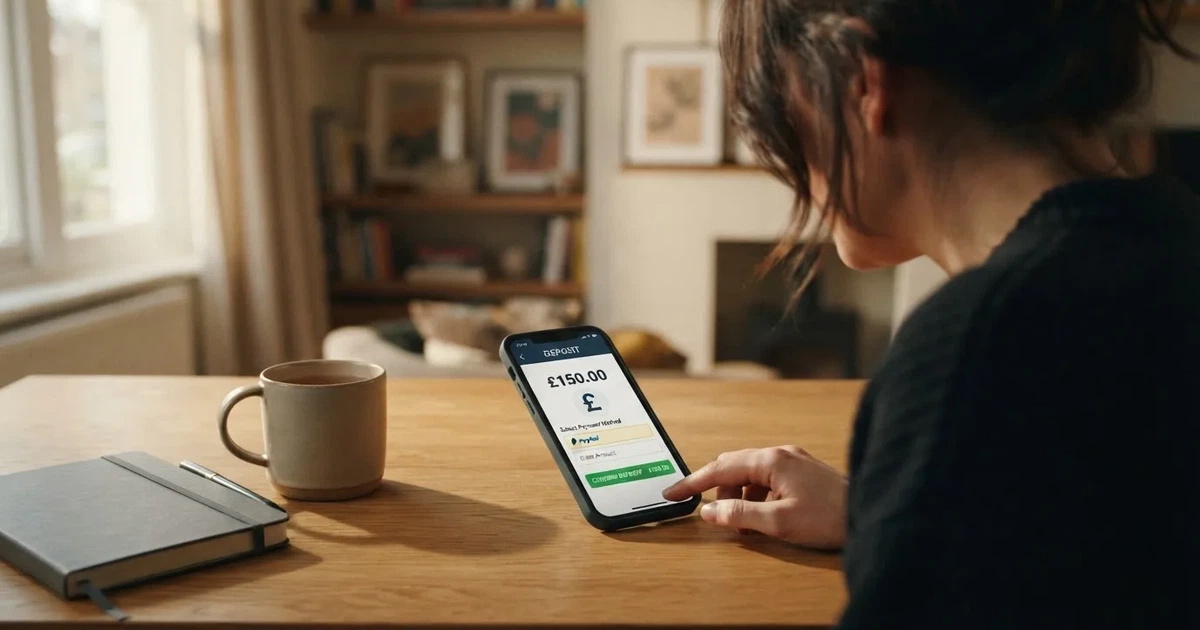
What UK-licensed casinos actually let you fund with — and why credit card is not on the list
 Available in GB
The premise of the search is a closed door. Since 14 April 2020, no operator holding a Gambling Commission licence may accept a credit card deposit from a customer in Great Britain, whether the deposit is made directly with the card or routed through an e-wallet that was itself funded by a credit card. A player typing “casino sites that accept credit card UK 2026” is asking, in effect, for a category that the regulator has removed. The honest answer on this page is what remains: the licensed operators, the methods they actually take, and the cost of working inside the rules the Commission has written since.
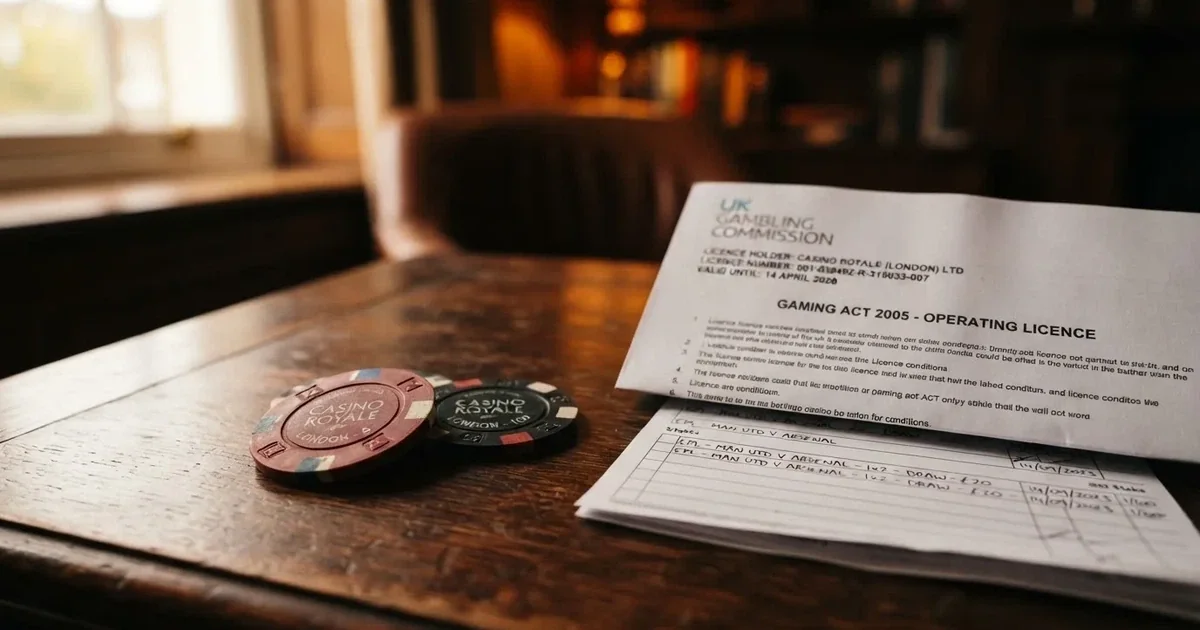
Data current as of 23 September 2026, checked against the Gambling Commission’s public register.
Table of Contents
- The settlement that produced the ban
- The protection regime that surrounds every deposit
- Funding a UK-licensed account in practice
- What wagering-turnover means in pounds
- Comparing ten licensed brands on what they accept and how they sit on the register
- What the page’s reading of the comparison amounts to
- Frequently asked questions
The settlement that produced the ban
Why 14 April 2020 changed the funding menu
The Gambling Commission announced the credit card ban after its own research found that 22% of online gamblers who used credit cards to fund their play were classed as problem gamblers — a figure drawn from the Commission’s pre-ban evidence base and used to justify the policy. UK Finance, the banking trade body, had separately recorded that around 800,000 UK consumers used a UK-issued credit card to gamble in 2018, which gave the regulator both a population to size the intervention against and a behavioural signal to act on.

The Commission framed the measure as consumer protection rather than payment-policy housekeeping. Borrowing to gamble carries a structural cost the player cannot see in any single session: interest, fees on cash advances, and a credit file footprint that outlives the stake. The ban was designed to remove the route, not to soften it.
What the ban covers, and the one carve-out it leaves
The order prohibits credit card gambling across all remote channels and across non-remote (high-street) betting. It also captures credit card funding that arrives at the casino indirectly — through an e-wallet such as PayPal or Skrill that was itself topped up by credit card — unless the e-wallet provider can demonstrate that it blocks credit card funding of gambling transactions at source. In practice, no major e-wallet serving UK customers does so; the practical effect is that a UK player cannot, anywhere on a licensed site, route a credit card deposit through a third party.

The one carve-out is narrow. Non-remote lotteries — the National Lottery and the small society lotteries run from physical premises — can still take credit card payment for tickets bought face to face. Online casino play, online betting, online bingo and online lottery play do not fall inside that exemption.
What a player meets at the cashier instead
The licensed cashier looks much as it did before the ban, minus one rail. Debit cards are the default — Visa Debit, Mastercard, Maestro where still issued. Bank transfer (Faster Payments) is widely supported and is the route many British players use for first deposits above the £100 mark. E-wallets (PayPal, Skrill, Neteller) are accepted by most licensees but, as noted, cannot themselves have been credit-card-funded. Prepaid vouchers such as Paysafecard work for deposits but not for withdrawals, so the player pays them in cash at a shop and waits for a separate bank transfer back. Apple Pay and Google Pay sit on top of an underlying debit card and therefore remain usable. AstroPay, which the page returns to in the section on payment methods, operates as an electronic money institution in the UK through its FCA-authorised entity Larstal Limited.
None of these is a credit card. The remainder of the page is about which licensed operators take which of them, and what each choice costs.
The protection regime that surrounds every deposit
The licence is the test, and the register is where it is checked
Every operator taking a deposit from a customer in Great Britain must hold a Gambling Commission operating licence, whatever jurisdiction it is otherwise incorporated in. A Curaçao, Malta or Gibraltar licence does not cover players based in Great Britain, because the Gambling (Licensing and Advertising) Act 2014 brought remote operators serving British customers inside the Commission’s reach regardless of where they sit. On 18 September 2026 the Commission’s public register of gambling businesses listed 139 businesses holding an active remote casino operating licence.
The register is the place to check a brand. Each licence number on it has the form account-R-number-suffix, where the leading six digits repeat the licence holder’s account number and the R marks a remote (online) licence. A player who wants to confirm a brand is licensed does not need to read the licence terms: a search of the register, by domain or by company name, returns the licence number, the account holder and the status of every domain the holder runs.
Identity verification, mandatory before a first deposit
Since 7 May 2019 every UK-licensed operator has had to verify a customer’s name, address and date of birth before that customer’s first deposit or, in some cases, before any play at all. The verification is done against public data — electoral roll, credit-reference files, sometimes phone-based KYC — and is not optional. A credit card deposit would, in any case, have been the moment the card’s name was cross-checked against the account name; the verification rule simply moves that check earlier and applies it regardless of which funding method is chosen.
The practical consequence is that a player who tries to deposit before completing verification is bounced out of the cashier and asked for documents. A player who completes verification once can move money in and out without re-presenting documents at the same brand, though a withdrawal over a certain threshold will usually trigger a fresh source-of-funds check.
The 10x wagering cap and what it does to a bonus offer
Since 19 December 2025 the Commission has capped wagering requirements at 10x the bonus amount on every UK-licensed online casino, and has banned mixed-product bonuses that hand out casino spins in return for a sports bet. This is the calculation the page works through below, and it is the reason a bonus offer at a UK-licensed site now has a fixed ceiling on how hard it can be to clear.
A bonus with a 10x wagering requirement on £100 means the player must stake £1,000 in total before the bonus converts to withdrawable cash. A £500 bonus means £5,000. The cap is per bonus, not per player, and it does not affect the size of the bonus on offer; it only bounds how many times that bonus must be turned over before withdrawal. The number that follows — what that turnover actually costs the player in expected loss — is on the calculation page of this article.
Reality checks, time-out, and the financial vulnerability threshold
Three further rules run alongside the funding menu. First, since 31 October 2021 auto-play has been banned and no slot spin may complete in under 2.5 seconds; “losses disguised as wins” — slot celebrations that present a net loss as a win — are also banned. Second, every online licence requires the operator to prompt the customer to set a deposit limit before the first deposit, and the prompt cannot be skipped; the limit can be set high or low, but it must be set. Third, GAMSTOP, the national online self-exclusion register, is a mandatory condition of every online licence since 31 March 2020, with exclusion periods of six months, one year or five years that cannot be cut short.
A separate financial vulnerability check runs automatically at £150 of net deposits in a rolling 30-day window, using public data only. The check is a soft prompt rather than a hard block: it asks the customer to confirm that the deposit pattern still reflects their intentions. Wider financial risk assessments have been announced but are not yet in force.
What the offshore route actually costs the player
There are casino sites that will accept a credit card from a UK customer; none of them is licensed by the Gambling Commission, and none of them is reached by typing a UK-friendly search query. The Commission’s position is that providing gambling to people in Great Britain without a licence is an offence under section 33 of the Gambling Act 2005, and it disrupts such sites through cease-and-desist notices, payment and hosting referrals, and search-engine delisting, though it has no power to order ISP-level blocking.
The cost of taking that route is not a fine — the Commission does not penalise the player — it is the loss of every protection the licensed regime offers. No GAMSTOP means a self-excluded player can open a new account the same afternoon. No ADR route means a dispute over a confiscated balance has nowhere to go. No source-of-funds check means a player who has set a deposit limit on a licensed site can simply move to an offshore site and start over. A player who needs the protection that the licensed regime offers has to stay inside it; the rest of the page compares what that costs.
Funding a UK-licensed account in practice
What a debit card deposit looks like
A debit card deposit at a UK-licensed casino is, for most players, the same three clicks it would be at any online checkout. The cashier asks for the amount, the card details, and the issuing bank authorises the payment through the standard 3-D Secure flow. Money usually clears the casino account within seconds, and the balance appears in the player’s wallet almost immediately.
The minimum deposit is set by the operator and is usually £5 or £10. The maximum is set by the operator’s own deposit-limit policy, capped by the limit the player set during the first-deposit prompt. There is no Commission-set daily, weekly or monthly ceiling; the operator’s responsible-gambling team can apply a lower one on a case-by-case basis, and the customer can drop theirs at any time.
Bank transfer and the Faster Payments route
Bank transfer via Faster Payments is the other near-universal rail. The player either copies the operator’s sort code and account number into their banking app or, more often, follows a deposit page that opens their banking app pre-populated. Faster Payments credits the casino’s receiving account within minutes, often seconds, and the casino’s wallet reflects the deposit on receipt.
Bank transfer is the route most often used for first deposits over a few hundred pounds, because the per-transaction ceiling on a contactless debit card is the practical limit and a bank transfer has none. Withdrawals back to the same bank account are also routed through Faster Payments and arrive the same day or the next working morning, depending on the operator’s processing window.
E-wallets, prepaid vouchers and mobile wallets
PayPal, Skrill and Neteller are accepted by most of the major licensees, but with two footnotes that matter. First, a withdrawal back to an e-wallet can be faster than a withdrawal back to a debit card — minutes in some cases, rather than hours — because the e-wallet is already inside the casino’s payment system. Second, the e-wallet cannot have been topped up by credit card; the Commission’s ban runs through the e-wallet unless the wallet provider can demonstrably prevent credit card funding, and the major UK-facing wallets do not.
Paysafecard is a prepaid voucher that works for deposits but not for withdrawals. A player buys a £10, £25, £50 or higher voucher at a shop with cash or debit and types the 16-digit code into the cashier. The deposit clears immediately. When the player wants to withdraw, the money has to come back through a different rail — bank transfer, typically — because the voucher has no account attached to receive funds. AstroPay, by contrast, is a digital wallet with virtual and physical debit cards and peer-to-peer transfer features, and its UK entity Larstal Limited is authorised by the Financial Conduct Authority under the Electronic Money Regulations 2011.
Apple Pay sits on top of an underlying debit card and therefore remains usable at any cashier that has integrated it. The transaction is authenticated through Face ID or Touch ID on the device and is tokenised end-to-end, so the merchant never sees the card number. Google Pay works the same way on Android. Both are deposit methods; withdrawals usually return to the underlying debit card.
Where the bank itself intervenes
The bank can step in before the cashier does. HSBC declines credit card payments it identifies as gambling, using the merchant category code assigned by Mastercard or Visa, and the block applies to every HSBC credit card with no opt-out. HSBC also states that it cannot guarantee every gambling transaction will be blocked and that the customer remains liable for any that go through. Monzo’s gambling block, the first in-app gambling block from a UK bank when it launched in 2018, lets a customer toggle payments to gambling merchants off, with a cooldown of between 2 days and 1 year before the block can be lifted. By the time of writing, over 275,000 Monzo customers had activated it.
The point of these bank-level blocks is that they catch deposits the casino’s own cashier would have caught. The merchant category code is set by the card scheme and is checked at authorisation; if the merchant is coded as gambling, the payment is refused. A UK player who has set up a bank-side gambling block and tries to deposit at a UK-licensed casino will be bounced at their banking app, regardless of which cashier rail they use.
The credit-card carve-out that does not apply to casino play
The carve-out mentioned earlier — non-remote lotteries — is small enough to be worth naming, because a player who has heard that “credit cards still work somewhere” may otherwise assume that the carve-out is wider than it is. The exemption covers only face-to-face lottery sales; online lottery, online bingo, online betting and online casino play are not inside it. A player who tries to buy a lottery ticket online with a credit card at a UK-licensed operator will be refused.
What wagering-turnover means in pounds
The arithmetic, applied to a representative bonus
A bonus carries a wagering requirement: a multiple of the bonus amount that must be staked before the bonus converts to real money. The Commission has capped that multiple at 10x since 19 December 2025, and the page uses that ceiling as the working figure.
Take a £100 bonus with a 10x wagering requirement. The required turnover is £100 × 10 = £1,000. At a £1 stake per slot spin, that is 1,000 spins. A £500 bonus at the same 10x ceiling gives £5,000 of turnover, which is 5,000 spins at £1 each, or 2,000 spins at the £2.50 maximum-stake tier available to players aged 25 and over on online slots. The turnover figure is fixed by the bonus and the cap; what the player actually loses over those spins is a separate calculation and is the subject of the expected-loss page below.
The honest reading of the wagering cap is that it bounds how long it takes to clear a bonus, not how much the bonus is worth. A £100 bonus with a 10x cap is cleared in fewer spins than the same bonus with a 40x cap would have been in 2024. The expected loss over those spins — the actual cost to the player — has not changed because of the cap.
The band the page can defend
A 10x wagering requirement on a bonus between £100 and £500 produces turnover between £1,000 and £5,000, depending on the size of the bonus. That is the band the page is willing to publish as a fact: the result is a turnover figure, not a time figure, because the time depends on the stake-per-spin, the game chosen, and the spin rate (capped at 2.5 seconds per spin by the Commission’s technical standards ). The wider the bonus range the operator offers, the wider the turnover band; the cap of 10x is fixed, so the only variable is the bonus amount itself.
What the band does not capture is the expected loss. A £1,000 turnover at an online slot with a 96% RTP carries an expected loss of £40 (£1,000 × 4%). A £5,000 turnover at the same RTP carries an expected loss of £200. The expected-loss calculation is the page’s next move, and it is what tells a player what a bonus actually costs.
What the cap does not do
A wagering cap of 10x does not stop an operator from setting a low maximum stake per spin while a bonus is being cleared, nor from restricting which games count toward the wagering requirement. A bonus whose wagering only counts on a single slot, at a £0.50 maximum stake, with a 96% RTP, can still take a long time to clear; the cap bounds the turnover, not the friction. A player who reads the bonus terms should look for the per-spin stake cap and the game-eligibility list before deciding whether the bonus is worth claiming.
Comparing ten licensed brands on what they accept and how they sit on the register
The set, and the register entry each brand carries
The ten brands below are taken from the Gambling Commission’s public register as it stood on 18 September 2026. Each is listed against the licence account that runs it, with the remote casino operating licence number that the brand operates under. Several of the brands share a single licence holder — LC International Limited, for example, runs Gala Bingo alongside other properties — and the table records the licence holder as the Commission’s register names it, not the consumer-facing brand name.
A few of the entries are white-label domains: Virgin Games is recorded on the register as a white-label domain of Gamesys Operations Limited, meaning the brand is run under another company’s licence rather than holding its own. A white-label arrangement is a permitted structure under the Commission’s rules; it does not affect the protection regime the player sits inside, but it does affect which company is the registered licence holder behind the brand.
The table below lists the brand as the player meets it, the licence holder as the Commission names it, the active remote casino licence number, the domain’s status on the register, and the subject support — which, given the 2020 ban, is “no-data” for every brand. The table does not score the brands against each other; it places each one on the register so a player can check the licence for themselves.
| Brand | Licence holder and GB remote casino licence | Domain status on the register | Subject support |
|---|---|---|---|
| Betfair | PPB Games Limited, 039411-R-319335-010 | Active | — |
| kwiff | Eaton Gate Gaming Limited, 044448-R-323408-017 | Active | — |
| 888casino | 888 UK Limited, 039028-R-319297-014 | Active | — |
| Grosvenor Casinos | Rank Interactive (Gibraltar) Limited, 057924-R-334666-005 | Active | — |
| Gala Bingo | LC International Limited, 054743-R-330863-014 | Active | — |
| Virgin Games | Gamesys Operations Limited, 038905-R-319430-022 | White Label | — |
| PokerStars | Stars Interactive Limited, 039108-R-319334-026 | Active | — |
| 32Red | Platinum Gaming Limited, 045322-R-324275-019 | Active | — |
| bet365 | Hillside (UK Gaming) ENC, 055149-R-331499-004 | Active | — |
| MrQ | Tek Fox Ltd, 060629-R-337532-004 | Active | — |
The register’s domain list recorded 1,065 active and 361 white-label domain entries against the 139 active remote casino operating licence accounts on 18 September 2026. The table above is a slice of ten of those entries, picked to span major licensees, white-label arrangements, and a couple of the smaller standalone brands; it is not the population of UK-licensed online casinos, and the absence of a brand from this list does not mean it is unlicensed.
What the absence of subject support actually means here
A player who has read the table to this point and seen “—” in the subject-support column might reasonably ask whether the dash means “the brand does not support credit card” or “the data is missing.” Neither is right. The dash is the article-language no-data marker, used here because the question of whether a UK-licensed operator supports credit card deposits has been settled by the regulator: every brand in the table is bound by the same prohibition, so the answer for every brand is the same, and the column exists to make that uniformity visible.
The brands are not equally good on everything else. The rest of this section works through each one in turn, using only the facts the Commission’s register and the operator’s public material supply, and closing with the page’s own judgement of what each is worth to which kind of player. The comparison is on what each brand does well, not on which one is “best.”
Betfair — the exchange’s casino floor
Betfair’s casino product sits inside the same brand that runs the betting exchange, and the licence behind it is held by PPB Games Limited at account 39411. The casino product is broader than the exchange’s sportsbook — slots, live dealer, table games — but the brand identity is built on the exchange, and the casino section is where the player ends up rather than where they start. A player who wants the casino product specifically is buying into a brand whose centre of gravity is elsewhere.
A player for whom brand familiarity matters — who wants the reassurance of a household name in UK gambling — gets that here. Players prioritising a casino-first experience will find a more dedicated product elsewhere on this list.
kwiff — the smaller, faster brand
kwiff is held by Eaton Gate Gaming Limited under account 44448 and carries the active remote casino licence 044448-R-323408-017. It is a smaller brand than the others on this list and has built its identity around speed of settlement and a tightly focused game lobby. Seeking a leaner experience with fewer tabs and faster cashier pages is the primary draw here, though those looking for a more expansive game library may find the selection restrictive.
888casino — the long-standing proprietary brand
888casino runs under 888 UK Limited at account 39028 and carries the active remote casino licence 039028-R-319297-014. The 888 group has held a UK licence for the better part of two decades and runs its own proprietary live-dealer product alongside third-party slots. The brand is one of the few on this list whose name the player will recognise without needing to check the register; for a player who values brand history, that is a meaningful signal. For a player who values novelty of game library, the proprietary content is the differentiator rather than the slot catalogue.
Grosvenor Casinos — the high-street name online
Grosvenor Casinos operates under Rank Interactive (Gibraltar) Limited at account 57924, with the active remote casino licence 057924-R-334666-005. The brand is the digital front door of the Grosvenor estate of high-street casinos, and the online product reflects that: a strong live-dealer section, table games laid out for players who already know Grosvenor’s floor, and a slots lobby that fills out the rest. A player who has played at a Grosvenor casino in person and wants the same identity online gets that. A player who has not, and is choosing purely on the online product, gets a strong but not distinctive offering.
Gala Bingo — the bingo-led licence holder
Gala Bingo is one of several brands under LC International Limited, which holds account 54743 and the active remote casino licence 054743-R-330863-014. The brand is a bingo site first and a casino second; the slots and table games are present, but the lobby weight and the promotional calendar both lean toward bingo rooms. A player who wants both products under one licence holder gets exactly that, complete with the expected bingo-led calendar; however, those seeking a casino-dominant lobby may find the focus lies elsewhere.
Virgin Games — the white-label route to Gamesys
Virgin Games runs as a white-label domain of Gamesys Operations Limited, which holds account 38905 and the active remote casino licence 038905-R-319430-022. A white-label domain trades under another company’s licence, which is why the licence holder named in the table is Gamesys Operations Limited rather than any Virgin entity. The player-facing brand is Virgin, and the cashier, the games lobby and the responsible-gambling tools are Virgin’s product; the licence behind them is Gamesys’s. A player who values the Virgin name gets a familiar front; a player who reads the small print gets the licence holder they would otherwise have to find themselves.
PokerStars — the poker-led stack
PokerStars is run by Stars Interactive Limited at account 39108, with the active remote casino licence 039108-R-319334-026. The brand’s reputation was built on poker, and the casino product is a sister offering rather than the centre of gravity. The slots lobby is broad, the live-dealer section is solid, and the player who wants poker alongside casino gets a peerless combination here. Players who prefer the casino to be the primary focus might find the poker product overshadows the lobby.
32Red — the established casino brand
32Red runs under Platinum Gaming Limited at account 45322 and carries the active remote casino licence 045322-R-324275-019. The brand has been a casino name in the UK since the early 2000s and is one of the few on this list whose identity is the casino product itself. The lobby leans on Microgaming-derived content and a focused live-dealer section. For those looking for a dedicated casino brand, this is a strong choice, although players seeking breadth across multiple verticals might prefer a larger operator.
bet365 — the household name with the casino floor
bet365 is held by Hillside (UK Gaming) ENC at account 55149, with the active remote casino licence 055149-R-331499-004. The brand is one of the most recognised in UK gambling, and its casino product sits inside the same platform as its sportsbook. The casino product is broad and well-finished; the player who is already a bet365 customer for sports gets a familiar cashier and a familiar wallet. If you prefer a casino-only specialist, the brand’s primary focus on sports may be less appealing.
MrQ — the standalone casino brand
MrQ is held by Tek Fox Ltd at account 60629 and carries the active remote casino licence 060629-R-337532-004. The brand is one of the smaller standalone operators on this list, with a tight slots lobby, a focused live-dealer product and a no-wagering approach to promotions that sets it apart from the bigger names. A player who values a leaner operator and a clean promotional structure finds that here; a player who values brand recognition and game-library breadth finds the lobby narrower.
What the page’s reading of the comparison amounts to
The register is the test, and ten brands is a sample, not the population
The ten brands in the table are ten of the 1,065 active domain entries on the Gambling Commission’s register on 18 September 2026. The 139 active remote casino operating licence accounts that sit behind those entries include major names not on this list — Ladbrokes and Coral under LC International, for example — and smaller white-label brands whose domain counts are recorded against the same parent accounts. The page’s choice of ten was a slice across majors and smaller operators; it was not a ranking, and the absence of a brand from the table says nothing about whether that brand is licensed.
A player who wants to check any brand against the register does so directly. The licence number, the licence holder and the domain status are all public; the search takes a few seconds and removes any doubt about whether the brand holds a current Commission licence.
What the wagering cap has done to the bonus market
The 10x wagering cap that took effect on 19 December 2025 has narrowed what a UK-licensed casino can offer as a welcome package. A bonus that took £20,000 of turnover to clear in 2024 takes £2,000 to clear in 2026, all else equal. The result is that bonus offers at UK-licensed casinos are now structurally easier to clear than they were, and the promotional calendar has rotated toward smaller bonuses with cleaner terms, larger spin packages on named slots, and cashback arrangements that do not carry a wagering requirement at all.
A player who values the size of the bonus above all else finds the market thinner than it was. A player who values how long it takes to clear a bonus finds the market easier to work with. The cap did not change the house edge; it changed the friction around clearing a bonus, and the friction was where most of the player cost sat.
Where the reader’s money actually goes
The honest summary of where the cost sits in a UK-licensed casino is three places. The house edge on the slots and table games is the largest and the one the player cannot negotiate. The wagering friction on a bonus is the second, and the 10x cap has reduced it. The payment friction — the difference between Faster Payments and an e-wallet withdrawal, for example — is the third and the smallest.
What the page has not done is name one of the ten brands as the place to play. The Commission’s register treats all ten as licensed, the protection regime applies identically to all ten, and the cost to the player is determined by the games the player chooses and the limits the player sets rather than by which of the ten brands the player has opened an account with. A reader who wants a verdict of that kind is asking the wrong question of the register; the question to ask is which of the ten brands carries the games, the cashier and the limits that fit the reader’s own play.
Frequently asked questions
Is it legal for a licensed UK casino to accept credit card?
No. The Gambling Commission’s ban on using credit cards to gamble took effect on 14 April 2020 and covers all forms of remote gambling plus non-remote betting. A Curaçao, Malta or Gibraltar licence does not override the ban; any operator taking a deposit from a customer in Great Britain needs a Commission licence and is bound by the prohibition. The ban also captures credit card funding that arrives through an e-wallet, unless the wallet provider can demonstrably block credit card funding at source. The one carve-out is non-remote (face-to-face) lotteries.
Is there a minimum deposit when paying with credit card?
There is no credit card route at a UK-licensed casino, so the minimum does not apply. The minimum deposit that does apply is the one set by the operator and the funding method the player is actually using — typically £5 or £10 on a debit card, and similar on an e-wallet or bank transfer. The Commission does not set a deposit minimum; it requires the operator to prompt the player to set a deposit limit before the first deposit, but the limit is the player’s choice.
How long does a credit card deposit take to show up in my account?
A credit card deposit is not accepted at a UK-licensed casino. A debit card deposit, by contrast, usually clears the casino account within seconds of the bank authorising the payment, and Faster Payments via bank transfer is similarly fast. A withdrawal back out follows the operator’s processing window — from minutes on a same-day-pay licence to a few working days at brands that hold withdrawals for review. The funding method on the way in is not the deciding factor; the operator’s own payout timetable is.
Do I need to verify my identity before depositing with credit card?
Verification is required before the first deposit or first play regardless of which funding method the player uses, since the Commission’s 7 May 2019 rules. The check covers name, address and date of birth and is run against public data; it is not optional. A player who tries to deposit before completing verification is bounced out of the cashier until the documents are in. A credit card deposit would, in any case, have triggered the same check, because the card’s name would be cross-checked against the account name at authorisation.
Does GAMSTOP self-exclusion cover an account funded with credit card?
GAMSTOP covers every account at every UK-licensed online operator regardless of how the account is funded. Self-exclusion is registered with the player, not with the funding method; once a player has registered with GAMSTOP for six months, one year or five years, no UK-licensed casino may allow them to open an account, deposit, or play. The exclusion cannot be cancelled early, and the operator’s own self-exclusion tools run alongside GAMSTOP rather than as a substitute for it. An offshore, unlicensed site does not honour GAMSTOP, which is the practical reason to stay inside the licensed regime.
Are there any fees for depositing with credit card?
The Commission’s ban removes the question. At a UK-licensed casino, debit card deposits are usually free on the operator’s side, though the player’s bank may charge a cash-advance fee if the deposit is miscoded, which is rare on a debit card. E-wallet deposits sometimes carry a small fee, set by the e-wallet rather than by the casino; Paysafecard has no deposit fee but, as noted, does not accept withdrawals. Bank transfer via Faster Payments is generally free on both ends. The cost to the player is in the wagering and the house edge, not in deposit fees.
Created by the ”slotstudiosguide” editorial team.