The true cost of UK-licensed casino sites that accept debit cards
 Available in GB
Anyone can name a casino. The harder question is what a deposit at one actually costs the player behind it — in time, in turnover, in money they will not see again. This page works through that, using only the operators that hold a Gambling Commission remote casino licence and the rules those licences carry.

Current as of 23 September 2026 · verified against the Gambling Commission’s public register of gambling businesses.
Table of Contents
- Why a UK licence is the only place to start
- The rules that follow a player whether they used a card or not
- What a debit card deposit actually does at a UK casino
- A turnover band worth knowing before claiming any bonus
- The ten brands on the register
- How the ten compare on what the register actually shows
- A practical frame for choosing
- What the register does not tell a player
- Frequently asked questions
Why a UK licence is the only place to start
A debit card deposit at an online casino looks ordinary: card details, an amount, a confirmation. The ordinary part is the part the operator can copy from any e-commerce site. The part that makes it gambling, and the part that decides what protections apply, sits one layer back: the licence the operator holds.
In Great Britain that licence comes from the Gambling Commission under the Gambling Act 2005, extended to offshore operators by the Gambling (Licensing and Advertising) Act 2014. Since that second act, any operator taking customers in England, Scotland or Wales needs a Commission licence wherever it is incorporated. A Curaçao, Maltese or Gibraltar licence on its own does not cover players based in Great Britain. Northern Ireland sits under separate arrangements and is not covered here.
The register is the test. The Gambling Commission’s public register lists every business that holds an active remote casino operating licence and the domains those businesses run. On 18 September 2026 the register listed 139 such businesses. Each licence number follows a format of a six-digit account number followed by an R and a unique suffix, as displayed on the register. Each website is recorded against its licence account with a status of Active, Inactive or White Label; the same snapshot counted 1065 active and 361 white-label domain entries. A white-label site is one that trades under another company’s licence rather than holding its own.
That figure is large and easy to mistake for a recommendation. It is not one. A licence means the operator has cleared the entry checks; it does not mean the operator treats its customers well, pays out fast, or offers a fair deal on a bonus. The register is the floor, not the ceiling.
What a UK-licensed operator has to do
The Commission’s Licence Conditions and Codes of Practice (LCCP) and Remote Technical Standards attach a long list of obligations to a remote casino licence. The ones that touch a debit-card-using player directly:
- Know-your-customer checks before play. Since 7 May 2019, name, address and date of birth are verified before the first deposit or any play. A player who cannot pass those checks cannot deposit.
- Stake caps on online slots. A single spin on an online slot is capped at £5 for players aged 25 and over (from 9 April 2025) and £2 for players aged 18 to 24 (from 21 May 2025). The cap applies to the stake, not to a potential payout.
- Speed limits on play. Auto-play has been banned since 31 October 2021; a slot spin may not complete faster than 2.5 seconds; “losses disguised as wins” — a celebratory sound on a net loss — are banned.
- A financial limit before the first deposit. Since 31 October 2025 the operator must prompt the customer to set a financial limit before the first deposit. The state does not set the ceiling; the customer does.
- No credit-card gambling. Credit cards have been banned for gambling since 14 April 2020, including credit cards routed through e-wallets.
- Wagering requirements capped at 10x. Since 19 December 2025 the multiplier that converts a bonus into required turnover is capped at 10. Mixed-product bonuses — “bet on sport, get casino spins” — are banned.
The 10x cap is the one that touches a player’s wallet most directly. A £100 bonus with a 10x requirement is £1,000 of turnover before withdrawal. That number — and what it represents in time at the reels — is the centre of the cost conversation later in this page.
Where the protection stops
An unlicensed site carries none of this. Section 33 of the Gambling Act 2005 makes providing gambling to people in Great Britain without a licence an offence; the Commission can issue cease-and-desist notices, push for search-engine delisting and refer sites to payment and hosting providers, but it has no power to block sites at ISP level. No penalty is aimed at the player. What the player loses on an unlicensed site is the protection: no GAMSTOP, no Commission complaints route, no approved alternative dispute resolution.
For a player comparing sites on the basis of debit card acceptance, the practical reading is straightforward. The list of sites that take a Visa or Mastercard debit card from a UK customer is longer than the list of sites that hold a UK licence. The intersection of the two — the only set worth comparing — is the one the register defines.
The rules that follow a player whether they used a card or not
A deposit method is a funding route, not a status. The rules attached to the account — age checks, GAMSTOP, financial vulnerability checks, reality checks, time-outs — apply identically regardless of whether the player topped up with a debit card, an e-wallet or a bank transfer.
GAMSTOP and the licence it sits on
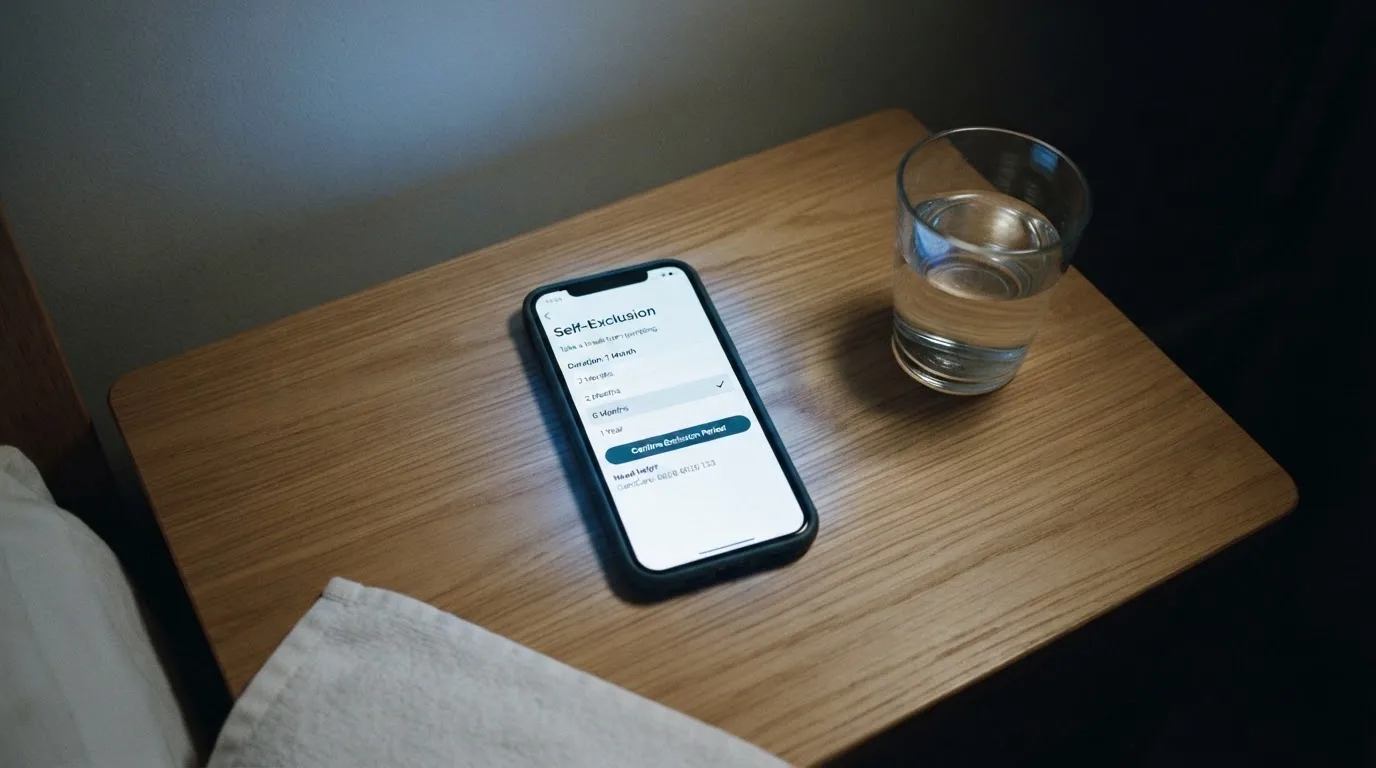
GAMSTOP is the national online self-exclusion scheme. Since 31 March 2020 it has been a mandatory condition of every online Gambling Commission licence: a player who has registered with GAMSTOP for six months, one year or five years cannot open an account, deposit or play at any UK-licensed remote operator for the duration of the exclusion. The exclusion cannot be cancelled early.
For a player funding an account through a debit card, GAMSTOP works the same way. The card is not the lock; the operator’s licence is. If a registered player tries to deposit, the operator’s enrolment check rejects the attempt regardless of the funding method.
The financial vulnerability check
From 28 February 2025 operators run a light-touch financial vulnerability check at £150 of net deposits in any rolling 30-day window, using public data only. A check that flags concerns triggers a softer interaction: a prompt to set a lower deposit limit, a reminder of GAMSTOP, a hand-off to support. It is not a refusal to take deposits, and it is not a credit check.
The wider financial risk assessments the Commission has signalled were not in force as of 18 September 2026. When they land, the thresholds, the data sources and the response options will all change.
Bank-side controls that bite before the casino sees the deposit
Some UK banks let a customer block gambling transactions at the bank, before the money ever leaves the account. Barclays, for example, lets customers block debit card payments to gambling providers it can detect, managed through the “Manage your cards” section of the Barclays app. The block sits at the bank’s discretion; customers remain responsible for transactions the bank cannot detect. Monzo and Starling — the two UK challenger banks most often held by younger players — apply similar blocks, with the practical effect that a player who has self-excluded through their bank’s gambling controls cannot deposit at a licensed site even if their GAMSTOP registration has lapsed.
Two practical notes follow. First, bank-side blocks vary by card type and merchant category code; a debit card deposit that routes through an e-wallet can in some cases sit outside the block. Second, the block does not equal GAMSTOP — the bank knows about transactions, not about a player’s pattern of play.
Reality checks, time-outs and the daily prompt
The LCCP also requires the operator to offer reality checks at intervals during play, time-outs of 24 hours to six weeks on the customer’s request, and self-exclusion at the operator level for six months or longer. None of this depends on the funding method. The 31 October 2025 rule that requires a prompt to set a financial limit before the first deposit also applies to a debit card funding the same way.
What a debit card deposit actually does at a UK casino
A debit card draws money directly from the cardholder’s bank account at the time of the transaction — that is the defining difference from a credit card, which defers payment to a later statement. In the UK the two dominant networks are Mastercard and Visa; American Express, Discover and UnionPay are also in the global top five but their UK debit card footprint is much smaller. The historic UK debit brands Switch and Solo were absorbed into Maestro in the 2010s for international compatibility.
Minimums, maximums and the operator’s own ceiling
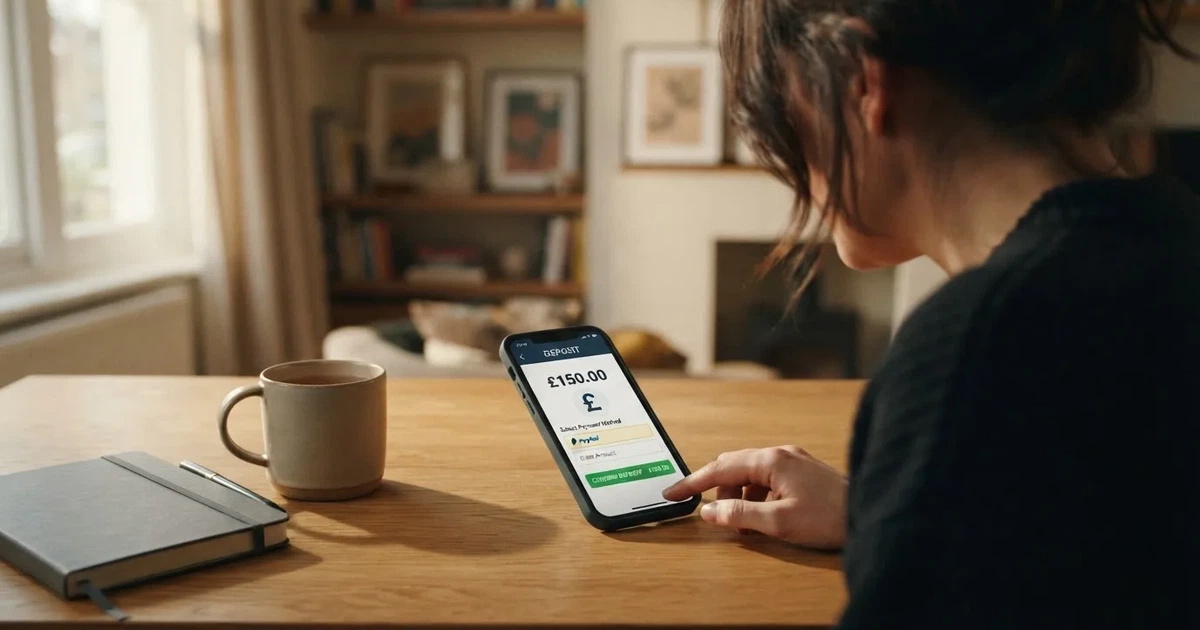
There is no statutory minimum deposit at a UK-licensed casino. The minimum is set by the operator, and a £10 floor is the working norm across the operators in this guide. The maximum is also operator-set, framed by the financial limit the player chooses before the first deposit and by the bank’s own transaction limits — many UK banks impose a default daily cap on card payments that a player has to lift explicitly to fund a larger deposit.
How fast a debit card deposit lands
A licensed casino credits a deposit made through a debit card almost immediately — typically within seconds of the bank’s authorisation. The delay that matters is on the way out: a debit card withdrawal follows the same settlement timetable as other methods, from minutes on the operator’s side up to a few working days on the bank’s side once the payment is released. The casino cannot make a bank settle faster than its processing window allows.
Verification before the first deposit
Because of the 7 May 2019 rule, identity verification happens before the first deposit, not at withdrawal. A player who cannot verify name, address and date of birth does not reach the cashier at all. The verification is one-off: a follow-up deposit at the same account does not require a fresh check unless the operator’s ongoing monitoring flags something.
Fees
The standard UK picture is fee-free: a licensed operator does not charge for a debit card deposit, and a UK bank does not charge its customer for a debit card transaction at a licensed gambling merchant. Costs that look like fees are usually currency conversion on a non-sterling card or a bank’s own cash-transaction handling charge — both sit with the cardholder, not the casino.
When the bank is not a UK high-street name
A debit card issued by a UK challenger bank — Monzo, Starling — works the same way at the casino end as a Barclays or HSBC card: it is a Visa or Mastercard debit card, the operator processes it through the same rails. The bank-side difference is in the gambling controls the challenger tends to apply by default, and in the speed of the customer’s own app notifications.
Mobile wallets such as Apple Pay sit one step removed. Apple Pay protects card data through tokenisation: the actual card number is replaced with a device-specific tokenised Device Primary Account Number and a dynamic security code is generated for each transaction. The deposit still settles against the underlying debit card and still arrives within seconds, but the merchant sees a token, not a PAN. For the player’s purposes the practical difference is the bank’s gambling block: a block placed on the underlying debit card transfers to the wallet automatically, while a block placed only on the wallet can leave the card exposed.
A turnover band worth knowing before claiming any bonus
The 10x wagering cap that came into force on 19 December 2025 changes what a bonus is worth, and it does so in a way the marketing rarely explains. Two worked examples put it on the page.
For a £100 bonus, the 10x wagering cap results in a £1,000 turnover requirement. At a £1 stake per spin, that means 1,000 spins. At the regulatory minimum spin interval of 2.5 seconds, those spins cover roughly 42 minutes of continuous play. A £250 bonus similarly requires £2,500 in turnover, resulting in 2,500 spins and roughly 1 hour 44 minutes of play. A £500 bonus entails £5,000 of turnover, 5,000 spins, and about 3 hours 28 minutes of play. The pattern is mechanical: bonus × 10 ÷ stake ÷ spins-per-second dictates the play time.
The condition on the band matters. At a £0.10 stake the spins triple and the play time stretches past two hours for a £100 bonus. At a £5 stake the spins collapse to 200 and the play time is closer to eight minutes. Both ends of the band are achievable at a single licensed site on the same day; the marketing tends to print only one. The honest framing is a band — minutes for high-stake, low-spin play; hours for low-stake, high-spin play — and the reader’s choice of stake and slot sets where in the band they actually land.
What the cap does not do is soften the expected loss. The house edge on a typical online slot sits between 3% and 6% of turnover; at the median of 4.5%, the £1,000 of turnover required to clear a £100 bonus carries an expected loss of about £45, before any payout. The bonus is paid in time at the reels and in money the player is statistically certain to leave on the floor. That arithmetic is the reason the cap is a cost ceiling, not a kindness.
The ten brands on the register
The list below is built from the Gambling Commission’s public register. Every brand is a domain that sits against a current remote casino operating licence. The order reflects the licence holders and the structure of the GB market, not a ranking of where a player should put their money.
Betfair — the exchange that runs a casino alongside it
Betfair runs under PPB Games Limited (account 39411), holding remote casino operating licence 039411-R-319335-010; Betfair.com is an active entry. The casino sits beside the betting exchange that built the brand, which means the cashier and the verification flow are designed for high-volume punters as much as for slot players. The 10x wagering cap applies to any casino bonus the operator offers; the exchange’s own commission structure is a separate product and is not subject to the cap.
The brand suits a player who treats the casino as a side product to sports or exchange betting, and who wants one verified identity across both. The casino lobby is narrower than a casino-first brand’s, and a slot-only player will find more depth at one of the dedicated brands below.
kwiff — the surprise-free welcome
Kwiff operates under Eaton Gate Gaming Limited (account 44448), holding remote casino operating licence 044448-R-323408-017; Kwiff.com is an active entry. The site’s pitch has historically been its “surprise” mechanic — boosted odds and unexpected offers on individual bets — and the casino product carries the same house style of small, frequent touches rather than a large headline welcome.
A player who finds large welcome packages more off-putting than attractive will read kwiff’s structure as designed for them. A player hunting a deep loyalty programme or a wide slot catalogue will not.
888casino — the legacy brand under its own licence
888casino runs under 888 UK Limited (account 39028), holding remote casino operating licence 039028-R-319297-014; 888casino is an active entry. 888 is one of the longer-established names in the UK online casino market and operates its own proprietary platform alongside third-party studios. The licence has been live through several renewals, which is itself a piece of evidence the operator has cleared the Commission’s ongoing fitness checks.
The brand suits a player who wants a recognisable name with its own licence rather than a white-label arrangement. The catalogue is broad; the wagering terms on bonuses are bound by the same 10x cap as every other licensed operator.
Grosvenor Casinos — the high-street name online
Grosvenor Casinos runs under Rank Interactive (Gibraltar) Limited (account 57924), holding remote casino operating licence 057924-R-334666-005; Grosvenor Casinos is an active entry. The brand carries the weight of a UK high-street casino chain, and the online product sits behind the same licence holder as several other Rank brands. The cashier and the verification flow are the same Rank platform that supports the chain’s other sites.
A player who has walked into a Grosvenor on a Saturday night knows roughly what to expect: a mainstream lobby, mainstream slots, mainstream table limits. The online product is the digital expression of that positioning rather than a rebrand of a digital-only operator.
Gala Bingo — bingo first, casino second
Gala Bingo runs under LC International Limited (account 54743), holding remote casino operating licence 054743-R-330863-014; Gala Bingo is an active entry. The licence holder is the same LC International that backs Ladbrokes and Coral, which means the same compliance and payments infrastructure sits behind three well-known high-street brands. The product, though, is bingo-first: the lobby and the community features are built around the bingo rooms, with slots and casino games attached.
The brand suits a player who wants bingo as the main event with casino games for breaks between sessions. A slot-only player will find a thinner casino catalogue here than at a casino-first brand.
Virgin Games — a white-label under Gamesys
Virgin Games runs under Gamesys Operations Limited (account 38905), holding remote casino operating licence 038905-R-319430-022; Virgin Games is listed on the register as a white-label domain. A white-label site trades under another company’s licence rather than holding its own; the operator is Gamesys, the brand on the front of the site is Virgin. The register records the distinction explicitly, and it is the one to check when a player wants to know who they are dealing with.
For a player, the practical meaning is that complaints and ADR routes run through Gamesys as the licence holder, not through Virgin as the brand. The product and the bonuses are a Gamesys build with a Virgin skin.
PokerStars — the poker room that carries a casino
PokerStars runs under Stars Interactive Limited (account 39108), holding remote casino operating licence 039108-R-319334-026; Pokerstars.uk is an active entry. The brand is the largest poker room in the regulated UK market and the casino product sits beside the poker client, sharing the wallet and the loyalty programme. A player who plays poker and wants a casino for downtime gets a single verified identity and a single cashier.
The casino is the secondary product here and the slot catalogue is narrower than at a casino-first brand. A player whose only interest is slots will find more depth elsewhere.
32Red — the Microgaming-era casino
32Red runs under Platinum Gaming Limited (account 45322), holding remote casino operating licence 045322-R-324275-019; 32red is an active entry. The brand’s history sits inside the Microgaming platform era, and the casino lobby still leans on that catalogue. The licence holder is a long-standing one and the register shows a clean record on the public file.
A player who values a deep slot catalogue with a recognisable software lineage will read 32Red as designed for them. A player who wants the newest live-dealer formats from every studio will find a thinner selection.
bet365 — the high-volume operator
Bet365 runs under Hillside (UK Gaming) ENC (account 55149), holding remote casino operating licence 055149-R-331499-004; Bet365.com is an active entry. Bet365 is the largest UK-facing sportsbook and one of the larger online casino operators in the market by handle, and the licence has been live through several renewals. The casino product is built for high-volume play — fast cashier, a deep slot catalogue, in-play features that mirror the sportsbook’s design.
The brand suits a player who wants one verified identity across sports and casino and who plays at scale. A casual slot player will find the lobby denser than they need.
MrQ — the no-wagering pitch
MrQ runs under Tek Fox Ltd (account 60629), holding remote casino operating licence 060629-R-337532-004; Mrq.com is listed on the register as an active domain. MrQ’s pitch is its no-wagering bonus structure: what the marketing calls “real cash” winnings are withdrawals without a turnover multiplier attached. The 10x cap that landed on 19 December 2025 does not affect an offer that carries no wagering requirement in the first place, and MrQ’s structure has been built around that fact for some time.
The brand suits a player who reads the small print and dislikes the turnover multiplier on a bonus. The trade-off is that headline bonus amounts tend to be smaller at no-wagering brands than at brands paying a multiple — the operator has to fund the cash-back promise out of the headline number.
How the ten compare on what the register actually shows
The comparison below uses the four fields research supports for every brand: the licence holder, the licence number, the domain status on the register, and whether research carries a fact on subject support. A dash marks the field where research has no figure.
| Brand | Licence holder and GB remote casino licence | Domain status on the register | Subject support |
|---|---|---|---|
| Betfair | PPB Games Limited, 039411-R-319335-010 | Active | — |
| kwiff | Eaton Gate Gaming Limited, 044448-R-323408-017 | Active | — |
| 888casino | 888 UK Limited, 039028-R-319297-014 | Active | — |
| Grosvenor Casinos | Rank Interactive (Gibraltar) Limited, 057924-R-334666-005 | Active | — |
| Gala Bingo | LC International Limited, 054743-R-330863-014 | Active | — |
| Virgin Games | Gamesys Operations Limited, 038905-R-319430-022 | White Label | — |
| PokerStars | Stars Interactive Limited, 039108-R-319334-026 | Active | — |
| 32Red | Platinum Gaming Limited, 045322-R-324275-019 | Active | — |
| bet365 | Hillside (UK Gaming) ENC, 055149-R-331499-004 | Active | — |
| MrQ | Tek Fox Ltd, 060629-R-337532-004 | Active | — |
The table is a register snapshot, not a buying guide. Every brand on it clears the floor; the question of which one to use depends on catalogue, cashier speed and bonus structure — the things research does not pin to a debit-card-specific figure for any of these brands.
The status column is the one that matters most when the licence holder is not the brand name on the front of the site. Nine of the ten sit as Active domains on the register; Virgin Games sits as a white-label domain under Gamesys Operations Limited. That status does not change the protections a player has, but it does change who the player is in a contractual relationship with when something goes wrong.
A practical frame for choosing
Three decisions do most of the work in picking a site from the register.
Whether the licence holder matches the brand. A white-label site is a brand on the front, a different operator behind. The protections are the same — the licence is the same — but the complaints route, the ADR route and the responsible gambling team all sit with the licence holder. A player who has had a dispute with a brand before knows how much this matters.
Whether the cashier suits the bank. A player with a UK challenger-bank debit card and bank-side gambling controls may find those controls transfer automatically to Apple Pay or Google Pay tokens on the same card. A player without those controls, on a high-street bank, will find the cashier simpler and the deposit limits more permissive.
Whether the bonus is a multiplier or cash. The 10x cap means a £100 bonus is a £1,000 turnover requirement at the ceiling. A no-wagering bonus is what it says: the winnings are cash, not credit tied to a multiplier. The headline number on a multiplied bonus is larger; the actual amount a player keeps is, on average, smaller because of the expected loss over the turnover.
Everything else — slot catalogue, live dealer studios, mobile app polish, customer support hours — sits on top of those three.
What the register does not tell a player
A licence tells a player what the operator has cleared. It does not tell a player what the operator is good at. The Commission’s register is a public file of businesses and domains, not a customer-satisfaction survey.
The data a player cannot pull off the register includes:
- Payout speed by method. The Commission records complaints and compliance actions but does not publish per-operator average withdrawal times. A site that releases a debit card withdrawal in two hours and a site that takes three working days both hold valid licences.
- Bonus generosity. A licence is compatible with a stingy welcome and a generous one. The 10x cap is a ceiling, not a floor.
- Game RTP settings. Some operators run slot games at the developer’s published RTP and some run lower-RTP variants. A licence does not tell a player which is which; the in-game information panel does, on a per-title basis.
- Customer service quality. The Commission does not score customer service. A player who has needed help at 11pm on a Sunday knows what the score is.
For a player who wants those answers before depositing, the only honest source is their own first session — a small deposit, a single withdrawal request, a test of the cashier’s actual behaviour. The licence guarantees the floor; the rest is what the player finds when they use the site.
Frequently asked questions
Is it legal for a licensed UK casino to accept debit card?
Yes. A debit card is a permitted funding method at any Gambling Commission-licensed remote casino, subject to the same identity verification, GAMSTOP and stake-cap rules that apply to any other deposit route. Credit cards have been banned for gambling since 14 April 2020, but a debit card — which draws directly from the cardholder’s bank account — has never been restricted.
Is there a minimum deposit when paying with debit card?
There is no statutory minimum. The minimum is set by the operator and £10 is the working norm across the brands in this guide. Some operators set a £5 floor on certain methods; some set £20 on the first deposit only. The minimum is published at the cashier before the player confirms the transaction.
How long does a debit card deposit take to show up in my account?
A debit card deposit credits the casino balance within seconds of the bank’s authorisation. The withdrawal back out to the same card is slower — from minutes on the operator’s side to a few working days once the payment reaches the bank. The casino cannot make the bank settle faster than its processing window.
Do I need to verify my identity before depositing with debit card?
Yes. Since 7 May 2019, name, address and date of birth are verified before the first deposit or any play at a UK-licensed remote casino. The check is one-off at the operator level; a follow-up deposit does not require a fresh verification unless the operator’s ongoing monitoring flags a change.
Does GAMSTOP self-exclusion cover an account funded with debit card?
Yes. GAMSTOP applies to the player’s account at the operator, not to the funding method. A registered player cannot deposit or play at any UK-licensed remote operator for the duration of the exclusion — six months, one year or five years — regardless of how they would have funded the account. The exclusion cannot be cancelled early.
Are there any fees for depositing with debit card?
Not at the casino or the bank in the standard UK case. A licensed operator does not charge for a debit card deposit, and a UK bank does not charge its customer for a debit card transaction at a licensed gambling merchant. Costs that look like fees usually sit at the currency-conversion step on a non-sterling card or at a bank’s own handling charge, both of which the cardholder sees on their statement rather than at the cashier.
Written by the editors at slotstudiosguide.