
The 200% match bonus at UK-licensed casinos: how the tripled balance is shaped by the rules around it
A 200% deposit bonus is the simplest of the welcome-offer arithmetic. Deposit £100 and the casino credits £200 on top; deposit £50 and you get £100; deposit £10 and you get £20. The “200%” is the multiplier on the player’s own money, not a cap on the gift — the cap, where one exists, sits beside it and is set per offer. The headline number reads like a generous thing, and on a thin deposit it is exactly that: a £10 top-up becomes a £30 balance, and the player walks into the games with three times what they brought. The catch lives one step further down, in the rules that govern what a bonus balance must do before it can leave the building. Those rules belong to the Gambling Commission and they apply to every site the Commission licenses, so the size of the gift is the operator’s call but the shape of the gift is the regulator’s.
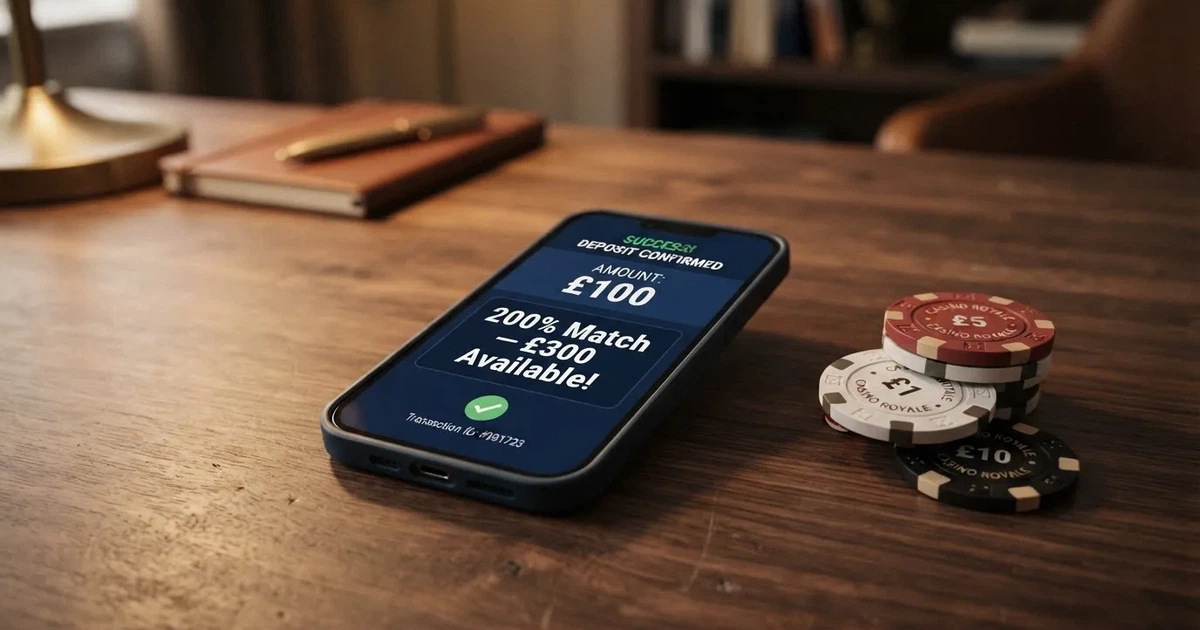
The numbers and licence data in this article were verified against the Gambling Commission’s public register of gambling businesses on 10 November 2026.
Table of Contents
- How a 200% match bonus is built and what it does to a balance
- The legal frame a 200% bonus sits inside in Great Britain
- Responsible play around a 200% welcome offer
- Funding a 200% bonus: payments, deposit minimums and the credit-card ban
- The 200% bonus in practice: a worked turnover band
- Landscape of licensed operators
- Bonus terms and limits
- Practical reading: where the 200% offer sits inside the wider bonus shelf
- How long the bonus is valid and what happens when it expires
- Where the offer is weakest
- The verdict on the 200% bonus at UK-licensed casinos
- Frequently asked questions
How a 200% match bonus is built and what it does to a balance
The mechanism has three parts and only the first one is in the headline. A deposit triggers the offer, the casino credits a bonus amount equal to 200% of the deposit, and a wagering requirement then has to be met before the bonus — and usually any winnings sitting on it — can be withdrawn. The percentage is the easy part. The cap is where offers diverge: one site will write “200% up to £50” and another “200% up to £500”, and the same “200%” label covers both.
A small deposit makes the multiplier do most of the work. A player depositing £20 with a 200% match up to £100 is credited £40 in bonus funds and sits at a £60 balance — a tripling. A larger deposit pushes against the cap. Deposit £100 under the same offer and the bonus is capped at £100, the deposit itself stays at £100, and the balance is £200 — still a tripling of the deposit’s contribution. Above the cap the bonus stops growing, so a £500 deposit under that offer still credits only £100 in bonus and the balance is £600 — a multiplier that has fallen back toward 120% of the deposit.
The reason the cap matters is that the wagering requirement, in nearly every case, applies to the bonus amount rather than to the deposit. Under a 10x requirement, the £40 bonus on a £20 deposit must be turned over £400 in real-money play before any withdrawal is allowed; the £100 bonus on a £500 deposit must be turned over £1000. A high percentage at a low cap is the friendly combination for a small bankroll. A high percentage at a high cap is a larger gift but a heavier turnover target, and the difference is the wagering multiple rather than the headline.
The 10x wagering cap and what changed on 19 December 2025
From 19 December 2025 the Gambling Commission capped wagering requirements on casino bonuses at 10x the bonus amount for UK-licensed operators. Before that date offers commonly carried wagering of 30x, 40x or higher; the new ceiling brought the upper end of the market to a single figure. The cap applies to the bonus, not to the deposit plus the bonus, so a £40 bonus at 10x means £400 of qualifying play rather than £600. This is the line the comparison of 200% offers now sits beneath, and the offers that exceed it are not legally available to a British player at a licensed site.

The cap interacts with the size of the bonus in a way that is easy to miss. A larger percentage at the same cap does not change the turnover requirement; it raises the bonus that the requirement has to be cleared against. A 100% match up to £200 and a 200% match up to £100 can carry the same £10x = £1000 turnover if the player deposits enough to hit both caps, and the player depositing at the cap ends up clearing the same total in both cases. The wagering ceiling therefore prices offers more by the cap than by the percentage, and the percentage becomes a question about how the bonus is split between the deposit and the gift rather than about how much play is required.
Why “tripled balance” is not the same as “tripled chance”
A tripled balance is what the deposit page says. What it does not say is that the wagering requirement has to be met before the bonus funds — and, in many cases, the winnings made on them — can be taken out. The bonus balance is real money in the sense that it can be wagered, and it is restricted money in the sense that it cannot be withdrawn while the requirement is open. A player who runs through a tripled balance and wins nothing walks away with whatever was on their own deposit after the wagering is complete; a player who wins substantially finds that the winnings are usually subject to the same requirement, and a separate maximum-cashout clause can sit on top.
The advertised generosity has to be read against the size of the qualifying bet and the speed at which the requirement is met. A £5 slot spin with a 2.5-second minimum cycle is the practical unit of play; a £400 turnover is eighty spins at that stake, and at one spin every two and a half seconds that is just over three minutes of play. A £1000 turnover is three hundred and thirty minutes at the same pace — about five and a half hours of continuous spins, which is closer to a session than an evening. The numbers look different again at £2 stakes, which are the cap for players aged 18 to 24 and which more than double the time.
The legal frame a 200% bonus sits inside in Great Britain
Online casino gaming in Great Britain runs under the Gambling Act 2005, and any operator taking customers in England, Scotland or Wales needs a licence from the Gambling Commission wherever the operator itself is based. The Gambling (Licensing and Advertising) Act 2014 closed the route by which an offshore licence could cover British players; a Curaçao, Maltese or Gibraltar authorisation, on its own, no longer reaches the UK market. The Commission’s public register is the test of whether a brand holds a licence, and the register lists both the licence holder and the domains that run under it.
The register’s snapshot on 18 September 2026 listed 139 businesses holding an active remote casino operating licence, with 1065 active and 361 white-label domain entries against those licences. A white-label site is one that trades under another company’s licence, which is why the domain list runs longer than the licence list. Several well-known brands share a single licence holder — Ladbrokes, Coral and Gala Bingo all run under LC International Limited, for instance — so the count of licences is not the count of brands a player sees.
Each remote casino licence number on the register has a fixed shape: a six-digit account number, an “R” marking a remote (online) licence, a sequence number and a suffix. The format reads as 054743-R-330863-014 for the licence that runs Ladbrokes, with the leading six digits matching the account number of the licence holder. The shape is consistent because the register uses it as a primary key; it is the first thing to check when a brand is being verified, and it is the last thing a licensed site wants a player to be uncertain about.
Why a licence matters to a 200% bonus specifically
The licence is what brings the wagering cap and the GAMSTOP check to the offer. A bonus at a non-licensed site is not bound by the 10x ceiling, the credit-card ban, the maximum stake rules or the self-exclusion scheme — and a player at such a site has no Commission complaints route and no approved alternative dispute resolution. The offer may look the same and the games may be the same software, but the protection is not the same, and on a bonus the protection is most of what the licence buys.
Providing gambling to people in Great Britain without a Commission licence is an offence under section 33 of the Gambling Act 2005. The Commission disrupts illegal sites through cease-and-desist notices, payment and hosting referrals, and search-engine delisting, and it has no power to require ISP-level blocking. No penalty attaches to the player who ends up on such a site; what the player loses is the protection, and the size of that loss is invisible until it is needed.
What verification and age look like at the bonus stage
Every Commission-licensed operator has verified the player’s name, address and date of birth before the first deposit or any play is allowed, and that requirement has been in force since 7 May 2019. A 200% bonus is claimed after verification, not before, so the offer page is reached by an account that already exists and has been checked. Anonymous play is not available at a licensed site, and the deposit page on which the bonus is claimed is the page of an identified account. This is the point at which the GAMSTOP check runs: a player with an active self-exclusion cannot reach the offer at all, and the periods on the scheme are six months, one year or five years, none of which can be cancelled early.
Responsible play around a 200% welcome offer
A 200% bonus is a marketing offer aimed at a player who has just decided to deposit, and the responsible-play infrastructure around it is the regulator’s counterweight to that moment. Three pieces sit close enough to the bonus that a player considering the offer should know they exist.
The first is the financial limits prompt. From 31 October 2025 a Commission-licensed operator must invite a customer to set a financial limit before the first deposit is processed. The limit is the player’s own, not the regulator’s; there is no state-set ceiling, but the prompt has to happen and the player can choose to set one or to proceed without. A welcome bonus changes the cost of the first deposit because the bonus carries its own wagering requirement, and a player setting a limit on the deposit alone is not setting a limit on the eventual turnover. The two figures should be thought of together, especially on a 200% offer where the balance is tripled.
The second is GAMSTOP self-exclusion. Every online licence issued in Great Britain carries GAMSTOP participation as a condition, in force since 31 March 2020. A player who has self-excluded cannot reach a 200% welcome offer at a licensed site; the scheme is checked before play, and the registration is national across operators. The exclusion periods are six months, one year or five years, and none of them is reversible during the term. The offer page is therefore reachable only by a player who is not on the register, and a player who is reaching for it despite an open exclusion is by definition outside the scheme’s coverage.
The third is the financial vulnerability check. From 28 February 2025 operators run a check at £150 of net deposits in a rolling 30-day window, using public data only at this stage. The check is a soft intervention — the operator may ask the player to confirm income or to set a lower limit — rather than a block, and it sits in the same flow as the deposit rather than the bonus. The wider financial risk assessments that the Commission has announced are not yet in force, and the published timeline should be checked before relying on a description of their scope.
Help is available outside the operator’s own tools. The National Gambling Helpline, run by GamCare, and GambleAware both offer confidential support; the Commission’s own site lists the routes. A 200% bonus is an offer with a short shelf life, and the support lines are not.
Funding a 200% bonus: payments, deposit minimums and the credit-card ban
The bonus is claimed at the deposit stage, so the payment method chosen at that moment has to be one the operator accepts for the offer. Credit cards have been banned for gambling across all online and offline products in Great Britain since 14 April 2020, and the ban extends to credit cards routed through e-wallets — a Visa or Mastercard credit-funded balance on a wallet cannot be used to deposit at a licensed site, even where the wallet itself is permitted. Debit cards and bank transfers were not affected by the ban and remain the standard route.
The minimum deposit on a 200% welcome offer is typically low — £10 is common, and some offers set it at £20. The cap and the minimum together define the deposit band the offer actually rewards: a player depositing below the minimum sees no bonus, a player depositing between the minimum and the cap gets the full 200%, and a player depositing above the cap leaves part of the headline on the table. The “200% up to £50” offer and the “200% up to £500” offer look the same at the headline and behave differently once the deposit is in three figures.
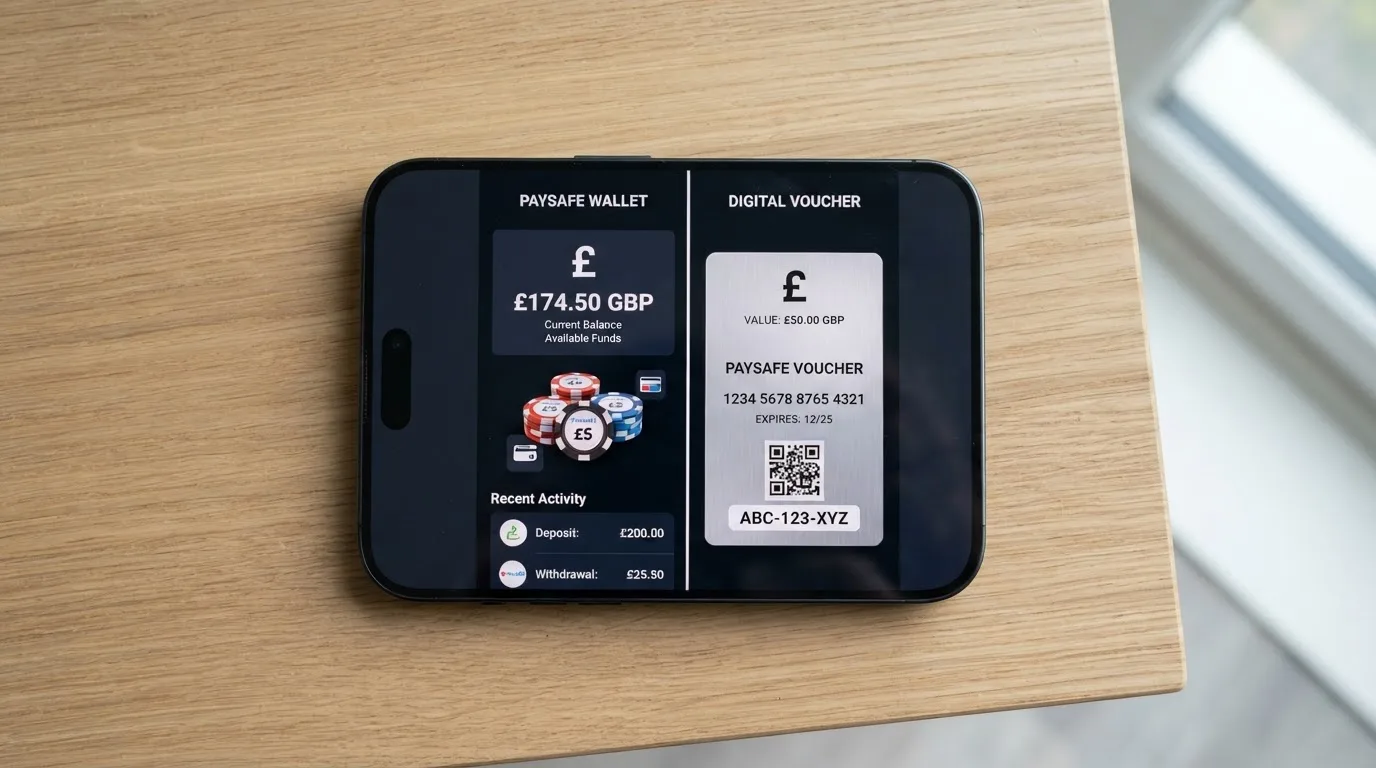
Paysafecard is a deposit route that several UK operators accept for bonuses. A paysafecard-funded deposit still counts toward the player’s own spending limit and is logged on the GAMSTOP-registered account, so the responsible-play frame applies in full. The voucher is prepaid, which means the player spends only what has been loaded onto it, and the limit-setting prompt at the first deposit runs in the usual way. There is no exemption from the verification, the GAMSTOP check or the wagering cap because the funding is anonymous at the point of sale.
Bank transfers within the UK move through the Faster Payments Service, which has run since 2008 and operates 24 hours a day, seven days a week. Most Faster Payments arrive instantly or within a couple of minutes, and the occasional delay runs to two hours. The scheme sets a £1,000,000 per-transaction limit, though individual banks impose lower limits on their customers and the practical ceiling for a casino deposit is usually the bank’s own. Faster Payments is the rail under most direct bank-to-casino deposits at UK sites.
Apple Pay, available at the operators that support it, deposits through a tokenised Device Primary Account Number rather than the underlying card number, and the token is generated per device. The card data does not leave Apple’s environment at the point of transaction, which is the security architecture that distinguishes wallet deposits from raw card deposits. Apple Pay began supporting UK-issued cards on 14 July 2015, six months after its US launch in October 2014, and the wallet is now widely accepted at UK-licensed casino sites. Deposits from Apple Pay run through the same channels as a debit card, and the credit-card ban applies through the wallet in the same way.
AstroPay, the digital wallet and prepaid provider founded in 2009 and headquartered in Uruguay, runs its UK operation through Larstal Limited, an electronic money institution authorised by the Financial Conduct Authority under the Electronic Money Regulations 2011. Deposits from an AstroPay balance count as e-money transfers rather than card transactions and are accepted at the operators that list the wallet; like paysafecard, the deposit is logged on the player’s account and the same wagering cap and verification requirements apply.
Crypto deposits are a separate question. The Commission’s licensed-operator set runs on fiat rails — debit cards, bank transfers, approved e-wallets — and a UK-licensed 200% bonus is claimed and wagered in pounds sterling. Crypto-funded welcome offers at the 200% level exist at offshore sites that do not hold a Commission licence, and the offer is the same on the page and is not the same in protection. A British player who reaches for a crypto-funded 200% bonus at a non-licensed site gives up the wagering cap, the GAMSTOP check, the ADR route and the Commission’s complaints procedure in exchange for the funding method, and the trade is invisible at the deposit screen.
The 200% bonus in practice: a worked turnover band
The arithmetic of a 200% bonus lives in three numbers: the deposit, the bonus the deposit earns, and the wagering turnover that the bonus must clear. The 10x cap that came into force on 19 December 2025 fixes the multiplier, and the deposit and the cap fix the bonus. The band that follows is the range of turnover a player is committing to when they take the offer.
Under a 200% match up to £50 with the £10 minimum, a player depositing £10 earns a £20 bonus and owes £200 of qualifying play at the 10x cap. A player depositing £25 — the half-cap point — earns a £50 bonus and owes £500. The full-cap deposit of £50 earns the £50 bonus and owes the same £500, because the bonus has stopped growing at the cap. A player depositing £100 at the same offer is over the cap and still owes £500: the headline 200% has fallen to 50% on the over-cap deposit, and the wagering has stayed at the cap.
Under a 200% match up to £500 with the £10 minimum, the same three deposit points behave differently. The £10 deposit still earns £20 and owes £200. The £250 deposit — half the cap — earns £500 and owes £5000. The full-cap deposit of £500 earns the £500 bonus and owes the same £5000. A player depositing £1000 is over the cap and still owes £5000, with the percentage back at 50% on the over-cap deposit.
The band a player is choosing between is therefore the band of possible turnover outcomes, not a single figure. A £10 deposit at the smaller offer commits the player to £200; a £500 deposit at the larger offer commits them to £5000. The same percentage at a different cap is a different offer. Reading the headline without reading the cap is how a £200 turnover becomes a £5000 one without the percentage changing.
The time that turnover takes depends on the stake and the game. At the £5 maximum stake for players aged 25 and over, with a 2.5-second minimum cycle on slots, the £200 turnover is forty spins at about a minute and forty seconds of play. The £5000 turnover at the same stake and pace is a thousand spins at roughly forty-two minutes of continuous play. The £2 stake for players aged 18 to 24, with the same 2.5-second cycle, more than doubles the time on each figure: the £200 turnover runs about four minutes and ten seconds; the £5000 turnover runs roughly one hour and forty-four minutes.
The wagering requirement is the cost of the bonus that is paid in time and game cycles rather than in pounds. The bonus itself is returned when the requirement is met; what is spent is the play that meets it, and the play is real-money play at the game’s own return-to-player rate. The £5000 turnover at a 96% RTP slot is expected to leave £200 of the turnover as the house’s edge across the session; the £200 turnover at the same game leaves £8. The bonus on the larger offer is five hundred pounds; the house’s edge on the qualifying play is two hundred. The bonus pays, and the qualifying play takes a fifth of it back on average.
The condition that has to be read alongside the band is the expiry on the bonus. A 200% offer typically carries a window — thirty days is common, shorter windows appear — and the turnover has to be completed inside it or the bonus and any winnings on it lapse. The shorter the window, the higher the stake the player has to sustain to clear the requirement, and the more the practical session looks like the top end of the band rather than the bottom.
Landscape of licensed operators
The brands below are taken from the Gambling Commission’s public register. Each entry names the licence holder, the remote casino operating licence number, and the domain the register lists against it. None of the entries is a ranking and none is a recommendation; the comparison the register enables is whether the brand holds a licence and under what account, and that comparison is the one the page can stand behind. Bonus terms are not carried in the register and are not part of this section.
| Brand | Licence holder and GB remote casino licence | Domain status on the register | Subject support |
|---|---|---|---|
| Sky Vegas | Bonne Terre Gaming Limited · 065519-R-339675-002 | Active | — |
| Midnite | Dribble Media Limited · 042647-R-321653-022 | Active | — |
| PokerStars | Stars Interactive Limited · 039108-R-319334-026 | Active | — |
| Unibet | Platinum Gaming Limited · 045322-R-324275-019 | Active | — |
| Ladbrokes | LC International Limited · 054743-R-330863-014 | Active | — |
| BetVictor | BV Gaming Limited · 039576-R-319370-028 | Active | — |
| Jackpotjoy | Gamesys Operations Limited · 038905-R-319430-022 | Active | — |
| 888casino | 888 UK Limited · 039028-R-319297-014 | Active | — |
| Gala Bingo | LC International Limited · 054743-R-330863-014 | Active | — |
| Casumo | Recro Limited · 061549-R-336718-002 | Active | — |
Bonus terms and limits
| Term | Detail |
|---|---|
| Wagering cap | 10x the bonus amount |
| Minimum deposit | Typically £10 – £20 |
| Expiry | Typically 30 days |
| Verification | Before first deposit |
| Payment methods | Debit cards, bank transfers, e-wallets |
Sky Vegas is the Sky-owned online casino brand; the licence is held by Bonne Terre Gaming Limited and the domain Sky Vegas sits against that account on the register. The licence number, in the standard account-R-sequence-suffix form, is the first place to check when verifying the brand against the Commission’s site.
Midnite sits under Dribble Media Limited at the account number 42647, with the Midnite website listed as active on the register. The licence sequence places it among the more recent authorisations on the Commission’s books, though the register does not date the licence beyond the snapshot.
PokerStars runs under Stars Interactive Limited, with PokerStars the specific domain the Commission registers. The .uk suffix is the British-facing address; the brand’s broader operation is not on this register.
Unibet is held by Platinum Gaming Limited under the account 45322, with unibet.co.uk as the registered domain. The Kindred Group’s UK operation sits in this licence.
Ladbrokes is one of three brands on this list running under LC International Limited, alongside Gala Bingo and (in the wider market) Coral. The shared licence is the structural reason three brand names sit behind one account on the register, and it does not change the brand a player is dealing with at the cashier.
BetVictor sits under BV Gaming Limited, with BetVictor as the registered domain. The licence is one of the older active authorisations on the register, in line with the brand’s longer UK presence.
Jackpotjoy is held by Gamesys Operations Limited, with Jackpotjoy on the active list. The brand’s bingo-led offer is separate from the casino bonus shelf, and the register does not distinguish between verticals on a single licence.
888casino is held by 888 UK Limited, with 888casino on the register. The licence account is one of the longer-standing ones, in line with the brand’s UK history.
Gala Bingo shares the LC International Limited licence with Ladbrokes, and Gala Bingo is registered against the same account number 54743. The shared account is the relevant fact, not the brand name, when checking the licence.
Casumo is held by Recro Limited under the account 61549, with Casumo as the registered domain. The licence is among the more recent remote casino authorisations on the register.
The shared-licence pattern is the entry that earns a second look. Three brands on the list are LC International Limited operations, which means the player choosing between them is choosing between three brand fronts that share a single licence holder, a single complaints route and a single ADR process. The Commission’s register is the place that makes this visible; the brand sites are not.
What the comparison above cannot do
The table is a register comparison, not an offer comparison. The cells carry the licence holder, the licence number, the domain and its status — nothing else. A reader choosing between the brands on the basis of this table is choosing on the basis of who is licensed and how, not on the basis of which welcome bonus is on the page this week or which has the friendlier terms. Bonus terms move; the licence is fixed for the term of the authorisation. A reader who wants a 200% welcome offer comparison needs to check each brand’s own offer page, and a reader who wants a structural comparison of who is licensed needs exactly this table.
Practical reading: where the 200% offer sits inside the wider bonus shelf
A 200% bonus is one point on a shelf that runs from 100% matches at the bottom to 500% matches and free-spin packages at the top. The percentage on its own does not place an offer on the shelf; the cap and the wagering multiple do. A 100% match up to £200 with a 10x wagering requirement is a £2000 turnover at the cap; a 200% match up to £100 with the same 10x wagering requirement is a £1000 turnover at the cap; a 500% match up to £50 with the same wagering requirement is a £250 turnover at the cap. The percentages are different and the turnover targets are different, and a player comparing offers on the turnover rather than on the percentage is reading the shelf the way the operator’s terms page reads it.
Mixed-product bonuses — offers that bundle a sports free bet with casino spins, for instance — are banned at Commission-licensed sites from 19 December 2025 onwards. A player who would have taken a sports free bet alongside a casino match has to take them as separate offers, and the casino-only 200% bonus is one of the cleaner shelves to read for that reason. The headline is the headline and the wagering requirement is the wagering requirement, with nothing in between to complicate the comparison.
Free spins attached to a 200% bonus are usually credited at a fixed stake per spin and at a fixed game, and any winnings from them are subject to the same 10x wagering requirement unless the terms state otherwise. The stake on the free spin is rarely the £5 maximum stake that applies to paid play; it is usually well below, sometimes £0.10 or £0.20, and the turnover the spins generate is correspondingly small. A player weighting a 200% bonus offer between one with a hundred spins at £0.10 and another with fifty spins at £0.20 is weighting turnover contributions, not bonus size, and the smaller-spin, larger-count offer is the heavier one on the wagering requirement even before the slots’ own RTP is considered.
Game weighting is the final layer. Slots almost always contribute 100% to wagering; table games and live casino often contribute less, sometimes 10% or 20%, and some games are excluded altogether. A player who intends to clear a £5000 turnover on roulette rather than on slots is clearing ten times as much play in qualifying terms, and the time cost of the bonus multiplies accordingly. The 200% headline does not change at the weighting; what changes is the qualifying volume of play needed to clear it.
How long the bonus is valid and what happens when it expires
A 200% welcome offer at a Commission-licensed site typically carries a thirty-day expiry, though shorter windows — fourteen days, seven days — appear on some offers. The expiry runs from the moment the bonus is credited, not from the moment the deposit is made, and the countdown is visible on the bonus page of the account. Once the window closes, any unplayed bonus balance is removed and any winnings on it are removed with it; the player’s own deposit balance, less any play already settled, remains available to withdraw.
A player who expects to clear a £5000 turnover in the available window needs to sustain roughly £170 of qualifying play per day across a thirty-day window, or about thirty-four spins at £5 stake per day. The figure is the same arithmetic as the turnover band but applied over time: the stake chosen and the pace of play set the daily turnover, and the daily turnover divided into the total requirement is the days needed. A £2 stake — the maximum for 18- to 24-year-olds — more than doubles the daily spin count, and the same thirty-day window is a heavier commitment at the lower stake.
The expiry is the rule a player forgets at the deposit page, because the deposit page is built around the headline. The expiry is what governs whether the bonus is reachable, and the bonus is only as good as the time given to clear it. The headline percentage, the cap and the expiry are the three figures to read together, and the wagering requirement is the figure all three feed into.
Where the offer is weakest
The 200% bonus is a strong headline on a small deposit and a weaker one on a large deposit, and the weakness sits in the cap. The player who can afford the full cap is leaving the over-cap percentage on the table; the player who cannot afford the full cap is taking the full percentage but at the smaller bonus. The offer does not scale in the way the headline suggests, and the player for whom it is the right offer is the player who would otherwise be depositing below the cap and getting nothing on top.
The wagering requirement is the second weakness, and it is a weakness that the 10x cap has reduced rather than removed. The £400 turnover on a £20 bonus at £5 slot stakes is forty spins of play; the £1000 turnover on a £100 bonus at the same stake is two hundred spins. The bonus pays for the play in both cases, but the play is the time cost, and the time cost is what the 10x cap cannot address. The wagering cap prices the bonus at a ceiling; the time it takes to clear the bonus is what the ceiling cannot price.
The expiry is the third weakness, and it is the one that ties the first two together. A 200% bonus with a high cap and a long wagering requirement, on a short expiry, is the offer that fails at the closing window rather than at the deposit page. A 200% bonus with a low cap and a short wagering requirement, on a long expiry, is the friendlier combination for a player who intends to play occasionally rather than to clear the requirement in a sitting. The expiry is the lever that decides how the offer behaves for the player whose schedule does not match the bonus’s.
The verdict on the 200% bonus at UK-licensed casinos
The 200% welcome bonus at a Commission-licensed site is a deposit-matching offer inside a regulated frame, and the frame does most of the work. The 10x wagering cap that came into force on 19 December 2025 has brought the upper end of the market to a single ceiling, and the credit-card ban that has been in force since 14 April 2020 has closed the funding route that would have let a player borrow their way through the requirement. The verification step, the GAMSTOP check and the financial-limits prompt are the responsible-play infrastructure that sits around the offer, and the offers themselves are the operators’ competition for the deposit.
For a player depositing below the cap and intending to play slots, the 200% bonus is the most efficient percentage on the standard shelf: a tripled balance, a turnover sized to the bonus, and a session that is sized to the stake. For a player depositing above the cap, the percentage is diluting and a smaller-match offer at a higher cap may be the better read; the comparison is on the turnover, not on the headline. For a player who would otherwise be using a credit card or a credit-funded e-wallet, the 200% bonus is not available under any framing, because the credit-card ban does not depend on the offer.
The bonus is a real-money product with a real-money cost, and the wagering requirement is the cost. The 10x cap has compressed the cost; the cap on the offer itself has bounded it; the time it takes to clear the requirement is what is left. A player reading the 200% headline at a UK-licensed site is reading the friendly face of a regulated offer, and the face is friendly because the frame behind it has done its job.
Frequently asked questions
How does a 200% casino bonus work?
A 200% casino bonus credits an amount equal to twice the deposit, up to a cap that the operator sets. A £20 deposit under a “200% up to £100” offer credits £40 in bonus funds and the playable balance becomes £60. The bonus carries a wagering requirement — capped at 10x the bonus for UK-licensed sites from 19 December 2025 — that has to be cleared before the bonus and any winnings on it can be withdrawn.
What is the usual maximum cap on a 200% match offer?
The cap is set by the operator and varies across offers. Smaller 200% welcome offers commonly cap at £50 or £100; larger offers run to £500 or more. The percentage is the same on both, but the bonus amount and the resulting wagering turnover are different because the cap is different, and reading the cap is what turns a £200 turnover into a £5000 one.
Can a 200% bonus be funded with paysafecard?
Paysafecard is accepted as a deposit method at several UK-licensed operators, and the voucher funds the deposit and triggers the bonus in the usual way. The deposit is logged on the player’s account, the verification and GAMSTOP checks apply in full, and the wagering cap applies in the usual way. There is no exemption for the funding method.
What wagering requirement applies to a 200% deposit match under current UK rules?
The Gambling Commission capped wagering requirements on casino bonuses at 10x the bonus amount for UK-licensed operators from 19 December 2025. A £40 bonus therefore carries a £400 turnover requirement, and a £100 bonus carries a £1000 turnover. The cap applies to the bonus rather than to the deposit plus the bonus.
Are crypto deposits accepted for a 200% welcome bonus?
Crypto-funded welcome offers at the 200% level exist at offshore sites that do not hold a Commission licence. UK-licensed operators run on fiat rails — debit cards, bank transfers, approved e-wallets — and a 200% welcome bonus at a Commission-licensed site is claimed and wagered in pounds sterling. A British player using a crypto-funded bonus at a non-licensed site gives up the wagering cap, the GAMSTOP check and the Commission’s complaints route.
How long is a 200% bonus valid before it expires?
A 200% welcome offer typically carries a thirty-day expiry, with shorter windows on some offers. The expiry runs from the moment the bonus is credited, and the turnover has to be completed inside it. When the window closes, any unplayed bonus balance and any winnings on it lapse, and the deposit balance is settled in the usual way.